View: List Claim type Research area Organism Taxon as written Decade Paper Intervention effect observed original result positive measured Claim · model-written summary
Straw returning decrease maize ET.
Straw returning e0 Not reported Comparator
Verbatim
e0 “Straw returning could decrease ET and increase the water use efficiency( WUE) and yield ”
✓ located verbatim in the source · abstract, characters 840–927 t0 “summer maize ”
✓ located verbatim in the source · title, characters 92–104 Other claims from this paper (17) Intervention effect Straw returning significantly decreased soil evaporation, especially early. Observation Straw returning and water supply significantly affected water consumption, leaf water use efficiency, whole-period water use efficiency and yield. Observation Straw returning and water supply significantly affected photosynthetic parameters. Observation The straw returning and water supply interaction significantly affected photosynthetic parameters with an exception for net photosynthetic rate and yield. Intervention effect Straw returning increase maize water use efficiency( WUE). Intervention effect Straw returning increase maize yield. Association Increasing water supply increased maize Yield. Association Increasing water supply decreased maize WUE. Intervention effect At water supply level 1, straw returning increased maize WUE by 35. 32% relative to non-straw returning. Intervention effect At water supply level 2, straw returning increased maize WUE by 33. 74% relative to non-straw returning. Intervention effect At water supply level 3, straw returning increased maize WUE by 51. 88% relative to non-straw returning. Intervention effect At water supply level 4, straw returning increased maize WUE by 29. 69% relative to non-straw returning. Intervention effect At water supply level 1, straw returning increased maize yield by 7. 61%. Intervention effect At water supply level 2, straw returning increased maize yield by 8. 94%. Intervention effect At water supply level 3, straw returning increased maize yield by 18. 29%. Intervention effect At water supply level 4, straw returning increased maize yield by 6. 96%. Observation Straw returning with 70% field soil water capacity supply performed best jointly for ET, yield and WUE. Intervention effect observed original result no effect not significant (as stated) measured Claim · model-written summary
Pattern B showed no significant yield increase or decrease .
no significant yield increasing or decreasing trend e0 Not reported Treatment Comparator
Verbatim
t0 “Rice ”
✓ located verbatim in the source · title, characters 119–123 e0 “there was no significant yield increasing or decreasing trend ”
✓ located verbatim in the source · abstract, characters 1786–1847 Other claims from this paper (8) Intervention effect observed original result negative measured Claim · model-written summary
Delaying the periods of nutrient supply tended to decrease blueberry yield .
delay of periods of nutrient supply e1 tended to decrease e1 Unheated Plastic House t1 Not reported Comparator
Verbatim
e0 “fruit growth and quality of 'Duke' blueberry ”
✓ located verbatim in the source · abstract, characters 76–120 e1 “The blueberry yield was tended to decrease with the delay of periods of nutrient supply ”
✓ located verbatim in the source · abstract, characters 1114–1201 t1 “Unheated Plastic House ”
✓ located verbatim in the source · title, characters 92–114 Other claims from this paper (4) Intervention effect author interpretation original result positive significant (as stated) simulated Claim · model-written summary
Proper nutrient management can significantly mitigate the overall decrease in rice yield under future climatic conditions
proper nutrient management e1 overall decrease in yield under future climatic conditions e1 Not reported Comparator
Verbatim
e1 “The overall decrease in yield under future climatic conditions can be mitigated significantly by proper nutrient management and altering planting dates ”
✓ located verbatim in the source · abstract, characters 1017–1168 e2 “rice production in Northeast Thailand ”
✓ located verbatim in the source · abstract, characters 208–245 Other claims from this paper (7) Intervention effect author interpretation original result positive significant (as stated) simulated Claim · model-written summary
Altering planting dates can significantly mitigate the overall decrease in rice yield under future climatic conditions
altering planting dates e1 overall decrease in yield under future climatic conditions e1 Not reported Comparator
Verbatim
e1 “The overall decrease in yield under future climatic conditions can be mitigated significantly by proper nutrient management and altering planting dates ”
✓ located verbatim in the source · abstract, characters 1017–1168 e2 “rice production in Northeast Thailand ”
✓ located verbatim in the source · abstract, characters 208–245 Other claims from this paper (7) Intervention effect observed original result negative measured Claim · model-written summary
Delaying planting past 20 May caused a rapid decrease in maize yield .
planting was delayed past 20 May e1 rapid decrease e1 Not reported Comparator
Verbatim
e0 “Reduced stands after planting may force maize ( Zea mays L.) producers to consider the feasibility of replanting ”
✓ located verbatim in the source · abstract, characters 9–121 e1 “a rapid decrease in yield due to planting date occurred when planting was delayed past 20 May ”
✓ located verbatim in the source · abstract, characters 1062–1155 Other claims from this paper (10) Intervention effect author interpretation original result negative measured Claim · model-written summary
Cultivating maturity group II varieties without irrigation leads to maximum yield decrease .
maturity group II e1 without irrigation e0 Not reported Comparator
Verbatim
e0 “their cultivation without irrigation will lead to a maximum decrease in yield ”
✓ located verbatim in the source · abstract, characters 1134–1211 e1 “varieties of the maturity group II ”
✓ located verbatim in the source · abstract, characters 1089–1123 t0 “Glycine max (L.) Merr.
✓ located verbatim in the source · title, characters 54–76 Other claims from this paper (4) Intervention effect observed original result negative measured Claim · model-written summary
A 400 mg Zn·kg−1 soil dose caused a minor decrease in cocksfoot yield .
400 mg Zn·kg−1 of soil e0 Not reported Comparator
Verbatim
e0 “A minor effect of zinc on cocksfoot, expressed as a decrease in yield , was observed following the application of 400 mg Zn·kg−1 of soil. ”
✓ located verbatim in the source · abstract, characters 575–711 Other claims from this paper (13) Intervention effect observed original result no effect measured Claim · model-written summary
Inter-row sowing up to 10 viable seeds m-2 did not decrease sorghum grain yield .
up to 10 viable seeds m-2 using inter-row e0 sorghum grain yield e0 do not decrease e0 Not reported Comparator
Verbatim
e0 “up to 10 viable seeds m-2 using inter-row, and broadcast seedings do not decrease sorghum grain yield ”
✓ located verbatim in the source · abstract, characters 893–994 t0 “Urochloa ruziziensis
✓ located verbatim in the source · title, characters 38–58 Other claims from this paper (6) Intervention effect observed original result negative measured Claim · model-written summary
Using potatoes as the foreplant of buckwheat gives a substantial yield decrease .
potatoes as buckwheat foreplant e0 Not reported Comparator
Verbatim
e0 “using potatoes as buckwheat foreplant gives essential yield decrease ment ”
✓ located verbatim in the source · abstract, characters 1248–1320 Other claims from this paper (13) Lexical search (BM25). All words must match; if nothing does, any word. Organism names also match every spelling of the same organism. No semantic search yet.
 Zea mays
 Oryza sativa
 Glycine max
 Dactylis glomerata
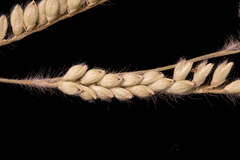 Urochloa ruziziensis