View: List Claim type Research area Organism Taxon as written Decade Paper Association observed original result negative simulated Claim · model-written summary
Yield decrease was associated with shorter growth duration together with increasing temperature.
increasing temperature e7 Decrease in yield e7 lowering growth duration e7 Verbatim
e0 “impact of climate change on rice production ”
✓ located verbatim in the source · abstract, characters 529–572 e7 “Decrease in yield were mainly associated with lowering growth duration along with increasing temperature ”
✓ located verbatim in the source · abstract, characters 2152–2256 Other claims from this paper (15) Association author interpretation review summary negative basis n/a Claim · model-written summary
Grass cover crops not properly managed decrease crop yield
grass-based cover crops t0 not properly managed e2 compete with cash crops, immobilize soil N e2 Verbatim
t0 “grass-based cover crops ”
✓ located verbatim in the source · title, characters 45–68 e2 “if not properly managed, grass cover crops can compete with cash crops, immobilize soil N, and decrease crop yield ”
✓ located verbatim in the source · abstract, characters 1130–1244 Other claims from this paper (6) Association observed review summary negative basis n/a Claim · model-written summary
Citrus rust mite causes a decrease in fruit yield , fruit quality and fruit economic value.
fruit yield, fruit quality and fruit economic value e1 Verbatim
t0 “in Citrus Production ”
✓ located verbatim in the source · title, characters 88–108 e1 “CRM causes a decrease in fruit yield , fruit quality and fruit economic value in citrus ”
✓ located verbatim in the source · abstract, characters 2186–2272 e2 “The pest Phyllocoptruta oleivora (Ashmead) or citrus rust mite (CRM) ”
✓ located verbatim in the source · abstract, characters 434–502 Other claims from this paper (12) Association author interpretation original result negative basis n/a Claim · model-written summary
Suni-bug damage is concluded to decrease profits of durum wheat millers substantially by affecting semolina yield and quality.
suni‐bug damage e1 profits of durum wheat millers e1 Verbatim
e1 “It was concluded that suni‐bug damage would decrease profits of durum wheat millers substantially by affecting semolina yield and quality ”
✓ located verbatim in the source · abstract, characters 1164–1301 Other claims from this paper (7) Association hypothesis original result negative basis n/a Claim · model-written summary
Reduced blueberry pollen flow under nets may decrease fruit yield and quality, particularly for self-incompatible varieties.
fruit yield and quality e7 decrease inferred e7 Verbatim
e0 “We used southern highbush blueberry (Vaccinium corymbosum L. interspecific hybrid) crops ”
✓ located verbatim in the source · abstract, characters 437–525 e7 “Reduced blueberry pollen flow under nets may be detrimental to fruit yield and quality for some varieties of pollinator dependent crops, particularly those that are self-incompatible ”
✓ located verbatim in the source · abstract, characters 2182–2364 Other claims from this paper (8) Association observed review summary negative basis n/a Claim · model-written summary
Oil content of sunflower decrease s as nitrogen fertilizer raises yield .
nitrogen fertilizer e2 Verbatim
t0 “Sunflower performance ”
✓ located verbatim in the source · title, characters 0–21 e2 “generally as yield s increase in response to nitrogen fertilizer there is a corresponding decrease in oil contents ”
✓ located verbatim in the source · abstract, characters 665–778 Other claims from this paper (10) Association observed review summary negative basis n/a Claim · model-written summary
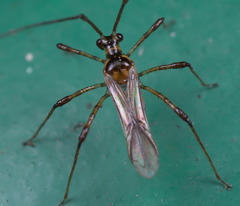
Helopeltis theivora and Oligonychus coffeae feeding on tea tender parts is reported to decrease tea yield and quality.
yield and quality e3 Verbatim
e0 “Tea (Camellia sinensis ) ”
✓ located verbatim in the source · abstract, characters 0–23 e2 “Two of the most problematic pests for tea are the Tea Mosquito Bug (Helopeltis theivora ) and the Red Spider Mite (Oligonychus coffeae ) ”
✓ located verbatim in the source · abstract, characters 260–394 e3 “These pests feed on the tender parts of the tea plant, such as leaves, buds, and young shoots, resulting in decrease d yield and quality ”
✓ located verbatim in the source · abstract, characters 396–531 Other claims from this paper (1) Association observed original result negative measured Claim · model-written summary
Weeds were badly impacting nursery plants and affected their beauty and yield .
beauty and yield e0 decrease inferred e0 Verbatim
e0 “Weeds were badly impacting nursery plants and affected their beauty and yield ”
✓ located verbatim in the source · abstract, characters 1287–1364 Other claims from this paper (8) Association author interpretation original result simulated Claim · model-written summary
Enzymes that target crosslink binding can soften the wall in its pre- yield state, according to the model.
enzymes that target crosslink binding e4 softening the wall in its pre-yield state e4 decrease inferred e4 Verbatim
t0 “expanding plant cell wall ”
✓ located verbatim in the source · title, characters 37–62 e4 “enzymes that target crosslink binding can be effective in softening the wall in its pre- yield state ”
✓ located verbatim in the source · abstract, characters 1039–1138 Other claims from this paper (4) Association author interpretation review summary negative basis n/a Claim · model-written summary
Environmental stresses such as salinity, temperature, acidity or alkalinity, drought and heavy metals can reduce nitrogen fixation in legume plants.
salinity, temperature, acidity/alkalinity, drought, heavy metals e0 nitrogen fixation e0 decrease inferred e0 Verbatim
e1 “in association within the root or the stem nodules of legume plants ”
✓ located verbatim in the source · abstract, characters 53–120 e0 “several environmental conditions such as salinity, temperature, acidity/alkalinity, drought, heavy metals, etc., are critical factors which can have detrimental effects on the steps involved in Rhizobium-legume symbiosis as infection process, nodule’s development and function, resulting in low nitrogen fixation and crop yield ”
✓ located verbatim in the source · abstract, characters 332–659 Lexical search (BM25). All words must match; if nothing does, any word. Organism names also match every spelling of the same organism. No semantic search yet.
 Oryza sativa
 Citrus
 Phyllocoptruta oleivora
 Triticum turgidum subsp. durum
 Helianthus annuus
 Camellia sinensis
 Helopeltis theivora