View: List Claim type Research area Organism Taxon as written Decade Paper Association observed original result negative measured Claim · model-written summary
Unmanaged disease can significantly decrease Waxy Yam yield and quality.
yield and quality e0 if not managed properly e0 Verbatim
e0 “leading to a significant decrease in the yield and quality of Waxy Yam if not managed properly. ”
✓ located verbatim in the source · abstract, characters 119–214 t0 “Epicoccum sorghinum
✓ located verbatim in the source · title, characters 16–35 Other claims from this paper (2) Association observed original result negative measured Claim · model-written summary
Increasing land size was associated with a 9% yield decrease in the main-island region.
land-size increase e0 main-island region e0 Verbatim
e0 “The TFP-improving land-size increase adversely resulted in a 9 % yield decrease in the main-island region ”
✓ located verbatim in the source · abstract, characters 1113–1218 t0 “soybean ”
✓ located verbatim in the source · title, characters 14–21 Other claims from this paper (8) Association observed original result negative measured Claim · model-written summary
Higher manganese and boron concentrations were associated with decrease in barley yield .
manganese and boron coucentrations e0 Verbatim
e0 “A decrease in yield and an increase in spotting were found to be associated with an increase in the manganese and boron coucentrations of the solutions ”
✓ located verbatim in the source · abstract, characters 336–487 e1 “Barley plants grown in standard Hoagland solutions ”
✓ located verbatim in the source · abstract, characters 177–227 Other claims from this paper (19) Association observed original result mixed measured Claim · model-written summary
Compaction from light axle loads can both increase and decrease crop yield , depending on soil texture and growing season precipitation.
increase and decrease e1 depending on soil texture and growing season precipitation e1 Verbatim
t1 “The Effect of Soil Compaction on Crop Yield ”
✓ located verbatim in the source · title, characters 0–43 e1 “This compaction can both increase and decrease crop yield depending on soil texture and growing season precipitation ”
✓ located verbatim in the source · abstract, characters 308–424 Other claims from this paper (5) Association observed original result negative projected Claim · model-written summary
A corn yield model suggests warmer climate would decrease eastern Kansas corn yield s by about 19%.
warmer climate e0 Verbatim
e0 “A corn yield model suggests that the warmer climate would decrease corn yield s in eastern Kansas by about 19% ”
✓ located verbatim in the source · abstract, characters 687–796 Other claims from this paper (2) Association observed original result negative measured Claim · model-written summary
Average yield loss is 769 +/- 319 kg ha(-1) for each unit decrease in leaf area index below the plateau.
decrease in leaf area index e3 decrease inferred e3 769 +/- 319 kg ha(-1) e3 Verbatim
e0 “full-season soybean [Glycine max (L.) Merrill] ”
✓ located verbatim in the source · abstract, characters 85–131 e3 “Average yield loss was 769 +/- 319 kg ha(-1) for each unit decrease in leaf area index below the plateau ”
✓ located verbatim in the source · abstract, characters 1150–1254 Other claims from this paper (6) Association observed original result measured Claim · model-written summary
Increased yield from K fertilizer can either increase or decrease depending on K0 yield .
Not reported Direction
Verbatim
e1 “the average yield of maize with K0 treatment was 9000 kg ha -1 ”
✓ located verbatim in the source · abstract, characters 615–677 e5 “Meanwhile, IY k can either increase or decrease depending on K0 yield ”
✓ located verbatim in the source · abstract, characters 990–1059 Other claims from this paper (8) Association observed original result simulated Claim · model-written summary
Beyond about 943 mm, onion biomass yield is projected to decrease with additional water application.
additional water application e3 Verbatim
e0 “effect of different irrigation depths on onion (Allium cepa L.) yield ”
✓ located verbatim in the source · abstract, characters 165–234 e3 “beyond that, the biomass yield will decrease with additional water application ”
✓ located verbatim in the source · abstract, characters 1142–1220 Other claims from this paper (8) Association observed original result no effect not significant (as stated) measured Claim · model-written summary
Treatment T4 did not significantly decrease fresh yield of Chinese cabbage.
without a significant decrease e4 Verbatim
e4 “However, it was clearly noted that T4 (MSFLI30) treatment could save water and nitrogen without a significant decrease in fresh yield of Chinese cabbage ”
✓ located verbatim in the source · abstract, characters 807–959 Other claims from this paper (7) Association observed original result measured Claim · model-written summary
Increased grain yield of both crops was followed by a decrease in ß-carotene, particularly in maize.
Increased grain yield e0 Verbatim
e0 “Increased grain yield of both crops was followed by decrease in ß-carotene and increase in phytate, particularly in maize ”
✓ located verbatim in the source · abstract, characters 988–1109 Other claims from this paper (8) Lexical search (BM25). All words must match; if nothing does, any word. Organism names also match every spelling of the same organism. No semantic search yet.
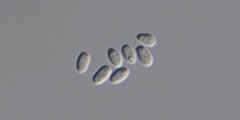 Epicoccum sorghinum
 Glycine max
 Hordeum vulgare
 Zea mays subsp. mays
 Zea mays
 Allium cepa
 Brassica rapa subsp. pekinensis