View: List Claim type Research area Organism Taxon as written Decade Paper Taxon groups are the verbatim names found in the abstracts (case-insensitive), not normalised: maize, corn and Zea mays are separate groups here. The Organism view merges them through NCBI Taxonomy.
Observation observed review summary negative basis n/a Claim · model-written summary
Seeds of high- yield feed cultivars left in the paddy grow as volunteer rice the next season and decrease grain yield and lower the quality of the palatable rice.
grain yield and lowering the quality of the palatable rice e1 Verbatim
e1 “grow as volunteer rice in the next crop season over winter, resulting in decrease in grain yield and lowering the quality of the palatable rice ”
✓ located verbatim in the source · abstract, characters 510–653 Intervention effect observed original result positive measured Claim · model-written summary
Heat reduced yield of W27 by 25.6%.
Not reported Comparator
Verbatim
e0 “the W27 (heat-sensitive line) suffered severe damage to the peduncle and silk, accompanied by reduced ear volume, fresh weight, stigmatic hair density, and vascular bundle integrity, which collectively led to a 25.6% yield decrease ”
✓ located verbatim in the source · abstract, characters 805–1036 Other claims from this paper (9) Intervention effect observed original result measured Claim · model-written summary
Both potassium treatments decrease d juice acidity in Washington Navel orange.
Both treatments e1 Not reported Comparator
Verbatim
e1 “Both treatments decrease juice acidity % ”
✓ located verbatim in the source · abstract, characters 1280–1320 t0 “Washington Navel orange ”
✓ located verbatim in the source · title, characters 39–62 Other claims from this paper (6) Intervention effect observed original result positive measured Claim · model-written summary
Foliar treatments decrease d fruit splitting percentage.
Washington Navel Orange Trees t0 Different foliar applications e1 fruit splitting percentage e0 Verbatim
e0 “The results also showed a marked decrease in fruit splitting percentage. ”
✓ located verbatim in the source · abstract, characters 1423–1495 t0 “Washington Navel Orange Trees ”
✓ located verbatim in the source · title, characters 118–147 e1 “Different foliar applications ”
✓ located verbatim in the source · abstract, characters 1496–1525 e2 “T1: Control (Only Sprayed with tap water) ”
✓ located verbatim in the source · abstract, characters 417–458 Other claims from this paper (6) Mechanism author interpretation review summary positive basis n/a Claim · model-written summary
The increase in transpiration efficiency may result from an increase in photosynthetic rate and a decrease in stomatal conductance.
water-limited crops e0 transpiration efficiency e2 an increase in photosynthetic rate and a decrease in stomatal conductance e2 Verbatim
e0 “Yield of water-limited crops ”
✓ located verbatim in the source · abstract, characters 0–28 e2 “The increase in transpiration efficiency may result both from an increase in photosynthetic rate and a decrease in stomatal conductance ”
✓ located verbatim in the source · abstract, characters 438–573 Other claims from this paper (10) Intervention effect observed original result negative measured Claim · model-written summary
Intercropping caused a 20% yield decrease in water melon.
Not reported Comparator
Verbatim
e2 “Intercropping did not significantly influence bunch yield of plantain but it caused a 2–7 and 20% yield decrease in egusi melon and water melon respectively ”
✓ located verbatim in the source · abstract, characters 472–628 Other claims from this paper (6) Association observed original result negative measured Claim · model-written summary
Watercress yield decline was linearly associated with leaf chloride accumulation.
Verbatim
e0 “In watercress, a linear relationship (R2=0.75) was observed between yield decrease and Cl– accumulation in leaves ”
✓ located verbatim in the source · abstract, characters 439–552 Other claims from this paper (7) Intervention effect observed original result positive significant (as stated) measured Claim · model-written summary
Plants from cuttings showed a significant decrease in days from transplanting to flowering compared with control.
plants from cuttings e2 number of days from transplanting to flowering e1 Verbatim
e0 “Watermelon (Citrullus lanatus ) is an important vegetable crop grown in Egypt ”
✓ located verbatim in the source · abstract, characters 0–76 e1 “The number of days from transplanting to flowering showed significant decrease than the control ”
✓ located verbatim in the source · abstract, characters 2840–2935 e2 “The plants from cuttings reached harvesting 15 days earlier than the control ”
✓ located verbatim in the source · abstract, characters 2937–3013 Other claims from this paper (8) Intervention effect observed original result no effect not significant (as stated) measured Claim · model-written summary
On a leaf-area basis, quantum yield , light compensation point and light saturation point did not change significantly.
increasing DLI e2 α, LCP, and the light saturation point (LSP) e0 did not change e0 Not reported Comparator
Verbatim
e0 “On a leaf area basis, α, LCP, and the light saturation point (LSP) did not change significantly ”
✓ located verbatim in the source · abstract, characters 938–1033 e1 “wax begonia ( Begonia semperflorens-cultorum Hort.) ”
✓ located verbatim in the source · abstract, characters 272–323 e2 “There was a small decrease in leaf chlorophyll concentration (6.3%, measured in SPAD units) with increasing DLI ”
✓ located verbatim in the source · abstract, characters 1115–1226 Other claims from this paper (5) Association observed original result negative measured Claim · model-written summary
Unmanaged disease can significantly decrease Waxy Yam yield and quality.
yield and quality e0 if not managed properly e0 Verbatim
e0 “leading to a significant decrease in the yield and quality of Waxy Yam if not managed properly. ”
✓ located verbatim in the source · abstract, characters 119–214 t0 “Epicoccum sorghinum
✓ located verbatim in the source · title, characters 16–35 Other claims from this paper (2) Lexical search (BM25). All words must match; if nothing does, any word. Organism names also match every spelling of the same organism. No semantic search yet.
 Citrus sinensis
 Citrullus lanatus
 Nasturtium officinale
 Begonia
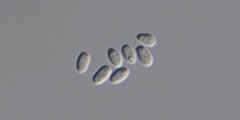 Epicoccum sorghinum