View: List Claim type Research area Organism Taxon as written Decade Paper Taxon groups are the verbatim names found in the abstracts (case-insensitive), not normalised: maize, corn and Zea mays are separate groups here. The Organism view merges them through NCBI Taxonomy.
Intervention effect observed original result negative measured Claim · model-written summary
Night chilling increased minimum fluorescence yield (Fo) and non-photochemical quenching (NPQ) in both coffee species.
two coffee species t0 night chilling e1 minimum fluorescence yield (Fo) and non-photochemical quenching (NPQ) e2 Not reported Comparator
Verbatim
t0 “Effect of night chilling on photosynthesis of two coffee species grown under different irradiances ”
✓ located verbatim in the source · title, characters 0–98 e1 “night chilling induced rapid decrease s of gas exchange rates and decrease of maximum photochemical efficiency of photosystem II (Fv/Fm) ”
✓ located verbatim in the source · abstract, characters 987–1122 e2 “and increases of both minimum fluorescence yield (Fo) and non-photochemical quenching (NPQ) for both species ”
✓ located verbatim in the source · abstract, characters 1124–1232 Other claims from this paper (10) Intervention effect observed original result no effect measured Claim · model-written summary
In-row sowing at 8 viable seeds m-2 of U. ruziziensis did not decrease sorghum grain yield .
8 viable seeds m-2 of U. ruziziensis using in-row seeding e0 sorghum grain yield e0 do not decrease e0 Not reported Comparator
Verbatim
e0 “The seeding density of 8 viable seeds m-2 of U. ruziziensis using in-row seeding, and up to 10 viable seeds m-2 using inter-row, and broadcast seedings do not decrease sorghum grain yield ”
✓ located verbatim in the source · abstract, characters 807–994 Other claims from this paper (6) Association observed original result measured Claim · model-written summary
The magnitude of the nutrient-concentration decrease varied with crop species and nutrients.
magnitude of decrease e1 Not reported Direction
Verbatim
e1 “the magnitude of decrease varied with the crop species and nutrients ”
✓ located verbatim in the source · abstract, characters 1005–1073 t0 “Upland Rice, Common Bean, Corn, and Soybean ”
✓ located verbatim in the source · title, characters 54–97 Other claims from this paper (4) Intervention effect observed original result positive measured Claim · model-written summary
The 50% N (FYM) plus 50% PK schedule had the lowest annual yield decrease of 86.4 kglyear versus 170.9 kglyear for 100% inorganic NPK.
50% N (FYM) + 50% PK of recommended dose e0 100% NPK (inorganic) e0 Verbatim
e0 “Application of 50% N (FYM) + 50% PK of recommended dose proved superior, as evident from lowest yield decrease of 86.4 kglyear compared with a maximum of 170.9 kglyear with application of 100% NPK (inorganic) ”
✓ located verbatim in the source · abstract, characters 481–689 t0 “upland rice (Oryza sativa L.) ”
✓ located verbatim in the source · abstract, characters 129–158 Other claims from this paper (7) Observation observed original result negative simulated Claim · model-written summary
Decrease d climatic factors reduced urd yield by 22 to 98 per cent.
Verbatim
e0 “urd crop performance under decrease in maximum and minimum temperature by -1 to -3 0 C, solar radiation -1 to -3 MJ m -2 day -1 , CO 2 concentrations -120 to -330 ppm from the base values 330 ppm, day length -1 -to -3 hour/day also exposed large decline in yield 22 to 98 per cent ”
✓ located verbatim in the source · abstract, characters 642–922 Other claims from this paper (4) Intervention effect observed original result positive significant (as stated) measured Claim · model-written summary
Improved variety or plant protection reduced defoliation, whiteflies and yellow mosaic infection.
improved variety or application of plant protection measures e0 Per cent defoliation by general defoliators, whiteflies number as well as per cent yellow mosaic infected plants e0 Not reported Comparator
Verbatim
e0 “Per cent defoliation by general defoliators, whiteflies number as well as per cent yellow mosaic infected plants, all showed a significant decrease with improved variety or application of plant protection measures. ”
✓ located verbatim in the source · abstract, characters 826–1040 t0 “Urdbean (Phaseolus mungo ) ”
✓ located verbatim in the source · title, characters 39–64 Other claims from this paper (4) Intervention effect observed original result negative measured Claim · model-written summary
Water deficit decrease d plant height, leaf and tiller numbers, dry matter yield , relative water content, photosystem II, and its efficiency.
water deficit conditions e1 plant height, number of leaves and tillers e0 water sufficient (WS) e1 Verbatim
e0 “There was a significant decrease in plant height, number of leaves and tillers, dry matter yield , relative water content, photosystem II and efficiency of photosystem II with an increase in non-photochemical quenching. ”
✓ located verbatim in the source · abstract, characters 652–870 e1 “under water sufficient (WS) and water deficit conditions ”
✓ located verbatim in the source · abstract, characters 975–1031 t0 “Urochloa grass ecotypes
✓ located verbatim in the source · title, characters 72–95 Other claims from this paper (8) Association Ecotype, water regime, and their interaction significantly influenced the studied morphophysiological and yield traits. Intervention effect Water deficit increased non-photochemical quenching. Observation Urochloa ecotypes performed differently under water sufficient and deficit conditions in principal component analysis.Method / resource Four drought tolerance indicators were most effective at identifying ecotypes with high biomass in both water regimes. Observation K17, K7, Kisii, Busia and Kakamega were classified as most drought tolerant. Observation Basilisk, K6, K10, K19 and Toledo were classified as moderately drought tolerant. Observation CIAT6385, CIAT16449, K13, K5 and K9 were classified as drought sensitive. Recommendation The five drought tolerant Urochloa ecotypes should be field tested and used in breeding. Intervention effect observed original result negative measured Claim · model-written summary
Liming reduced V. faba stomatal conductance by 63%.
stomatal conductance (g(s)) e0 Not reported Comparator
Verbatim
e0 “liming that raised soil pH to 6.3-6.7, reduced stomatal conductance (g(s)) by 63, 26, and 59% in V. faba, bean (Phaseolus vulgaris ), and pea (Pisum sativum ), respectively ”
✓ located verbatim in the source · abstract, characters 482–652 Other claims from this paper (12) Intervention effect observed original result negative measured Claim · model-written summary
The absence of irrigation decrease d yield .
absence of irrigation e7 decrease inferred e7 Not reported Comparator
Verbatim
e0 “The aim of this research was to assess the effect of American V. rootstocks on the reproductive performance of V. vinifera scions ”
✓ located verbatim in the source · abstract, characters 454–583 e7 “The absence of irrigation affected reproductive development through yield losses ”
✓ located verbatim in the source · abstract, characters 1934–2014 Other claims from this paper (13) Intervention effect observed original result negative measured Claim · model-written summary
pH 1.5 acid rain decrease d fluorescence origin by 8% versus control.
pH 1.5 SAR treatment e0 fluorescence origin e0 Verbatim
e0 “there was an 8% decrease in fluorescence origin with the pH 1.5 SAR treatment when compared to the control ”
✓ located verbatim in the source · abstract, characters 180–286 t0 “Vaccinium angustifolium Ait.
✓ located verbatim in the source · title, characters 94–122 Other claims from this paper (3) Lexical search (BM25). All words must match; if nothing does, any word. Organism names also match every spelling of the same organism. No semantic search yet.
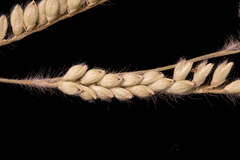 Urochloa ruziziensis
 Glycine max
 Phaseolus vulgaris
 Oryza sativa
 Zea mays subsp. mays
 Vigna mungo
 Urochloa
 Vicia faba
 Vitis vinifera
 Vaccinium angustifolium