View: List Claim type Research area Organism Taxon as written Decade Paper Contrasting Yield Responses of Early- and Late-Season Rice to Root Damage: From Agronomic Traits to Path-Based Mechanisms 1 Show all 1 → Intervention effect observed original result positive measured Claim · model-written summary
Late-season leaf area decline rate decrease d 11%.
rate of leaf area decline e0 Not reported Comparator
Verbatim
e0 “an 11% decrease in the rate of leaf area decline ”
✓ located verbatim in the source · abstract, characters 1088–1136 t0 “Rice ”
✓ located verbatim in the source · title, characters 54–58 e1 “severe root damage (T2, seedling roots pruned to 1 cm) ”
✓ located verbatim in the source · abstract, characters 317–371 Other claims from this paper (10) Continuous cropping of lavender (Lavandula angustifolia Mill.) enhances essential oil yield without compromising quality 1 Show all 1 → Intervention effect observed original result negative significant (as stated) measured Claim · model-written summary
Continuous cropping significantly decrease d soil bacterial alpha diversity in 20–40 cm subsoil.
Continuous cropping t0 20–40 cm subsoil e0 Not reported Comparator
Verbatim
e0 “a significant decrease in 20–40 cm subsoil ( P < 0.05) ”
✓ located verbatim in the source · abstract, characters 1433–1487 t0 “Continuous cropping of lavender ”
✓ located verbatim in the source · title, characters 0–31 Other claims from this paper (9) Fall Armyworm in Maize: A Systematic Review of Smallholder Livelihood and Food Security Impacts in Africa 1 Show all 1 → Observation observed review summary negative basis n/a Claim · model-written summary
Fall armyworm invasion caused maize yield losses of approximately 20% to 50% in the reviewed studies.
maize yield losses e1 decrease inferred e1 approximately 20% to 50% e1 Verbatim
e1 “FAW invasion causes substantial maize yield losses ranging from approximately 20% to 50% ”
✓ located verbatim in the source · abstract, characters 902–990 Other claims from this paper (6) Early-Season Rice Varieties with Low Amylose Content Can Achieve Low Chalkiness and Comparable Yield to High-Amylose Ones in the Middle and Lower Reaches of the Yangtze River 1 Show all 1 → Association observed original result significant (as stated) measured Claim · model-written summary
Amylose content was significantly negatively correlated with panicles per m2 and length-width ratio across the 334 varieties.
panicles per m2 and length–width ratio (LWR) e1 decrease inferred e1 Verbatim
t0 “Rice ”
✓ located verbatim in the source · title, characters 13–17 e0 “AC was significantly ”
✓ located verbatim in the source · abstract, characters 986–1006 e1 “negatively correlated with panicles per m2 and length–width ratio (LWR) ”
✓ located verbatim in the source · abstract, characters 1092–1163 Other claims from this paper (13) Design and industrial validation of an asymmetric elastic bearing for vibration control in cotton gin saw cylinders 1 Show all 1 → Method / resource observed original result positive measured Claim · model-written summary
The asymmetric elastic support decrease d impurities by 8.8 %.
decrease inferred e2 Verbatim
t0 “cotton gin saw cylinders ”
✓ located verbatim in the source · title, characters 91–115 e2 “Mechanical seed damage decrease d by 16 %, impurities by 8.8 %, and fiber yield increased by 1.2 % ”
✓ located verbatim in the source · abstract, characters 695–792 Other claims from this paper (4) Transcriptomic analysis of response to high-temperature stress in cotton 1 Show all 1 → Intervention effect observed original result negative significant (as stated) measured Claim · model-written summary
Heat stress led to significant yield losses in cotton in field assays.
decrease inferred e1 Field-based assays e1 Not reported Comparator
Verbatim
e0 “Cotton (Gossypium hirsutum L.) is particularly susceptible to heat stress ”
✓ located verbatim in the source · abstract, characters 88–161 e1 “Field-based assays revealed that heat stress compromised cotton productivity by impairing pollen viability, reducing chlorophyll biosynthesis and leaf area, and altering biomass partitioning, leading to significant yield losses ”
✓ located verbatim in the source · abstract, characters 381–608 Other claims from this paper (19) Review of the main diseases of Centaurea cyanus and Echinacea purpurea when grown in the organic farming system 1 Show all 1 → Observation observed original result negative basis n/a Claim · model-written summary
Powdery mildew and rust decrease essential oil and flavonoid contents.
Powdery mildew and rust e0 t0 pathogen essential oil and flavonoid contents e0 t0 moderately humid European regions e0 t0 Verbatim
e0 “Powdery mildew and rust dominate moderately humid European regions, causing up to 20% yield reductions and decreasing essential oil and flavonoid contents. ”
✓ located verbatim in the source · abstract, characters 523–678 t0 “Centaurea cyanus and Echinacea purpurea
✓ located verbatim in the source · title, characters 31–70 Other claims from this paper (7) EXPLORING THE IMPACT OF SOWING DATES ON SOYBEAN YIELD, SEED QUALITY AND TRYPSIN INHIBITOR ACTIVITY 1 Show all 1 → Intervention effect observed original result negative measured Claim · model-written summary
Late sowing substantially decrease d soybean oil content.
late sowing dates e0 Not reported Taxon Comparator
Verbatim
e0 “a substantial decrease in oil content was noted with late sowing dates ”
✓ located verbatim in the source · abstract, characters 835–905 Other claims from this paper (5) Impacts of inhibitors on soil N2O emissions and crop yield: A mega-analysis 1 Show all 1 → Intervention effect observed original result positive significant (as stated) measured Claim · model-written summary
Inhibitors decrease d soil N2O emissions by 42.9%
N 2 O emissions from soil e1 Not reported Comparator
Verbatim
e0 “inhibitors had a significant and positive effect on crop yield s (4.6%) ”
✓ located verbatim in the source · abstract, characters 926–996 e1 “inhibitors caused a strong and highly significant decrease in N 2 O emissions from soil by 42.9% ”
✓ located verbatim in the source · abstract, characters 1069–1165 Other claims from this paper (7) Weed Community Response to Halosulfuron‐Methyl in Bottle Gourd ( Lagenaria siceraria ) and Rotational Safety to Mustard ( Brassica juncea ) 1 Show all 1 → Association observed original result measured Claim · model-written summary
Fruit yield declined 38 kg per kg of weed biomass.
decrease inferred e0 −38 kg fruit per kg weed biomass e0 Verbatim
e0 “yield variation (−38 kg fruit per kg weed biomass; R 2 ≥ 0.88) ”
✓ located verbatim in the source · abstract, characters 912–974 t0 “Bottle gourd ”
✓ located after whitespace/quote normalisation · title, characters 50–62 Other claims from this paper (13) Lexical search (BM25). All words must match; if nothing does, any word. Organism names also match every spelling of the same organism. No semantic search yet.
 Oryza sativa
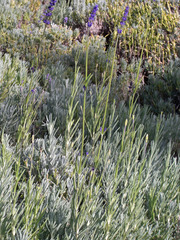 Lavandula angustifolia
 Zea mays
 Gossypium hirsutum
 Centaurea cyanus
 Echinacea purpurea
 Lagenaria siceraria