View: List Claim type Research area Organism Taxon as written Decade Paper Intervention effect observed original result no effect measured Claim · model-written summary
Inter-row sowing up to 10 viable seeds m-2 did not decrease sorghum grain yield .
up to 10 viable seeds m-2 using inter-row e0 sorghum grain yield e0 do not decrease e0 Not reported Comparator
Verbatim
e0 “up to 10 viable seeds m-2 using inter-row, and broadcast seedings do not decrease sorghum grain yield ”
✓ located verbatim in the source · abstract, characters 893–994 t0 “Urochloa ruziziensis
✓ located verbatim in the source · title, characters 38–58 Other claims from this paper (6) Intervention effect observed original result negative significant (as stated) measured Claim · model-written summary
Salt stress significantly reduced maize grain yield .
Not reported Comparator
Verbatim
e0 “Salt stress caused a significant decrease in grain yield which was due to a 50% decrease in kernel number. ”
✓ located verbatim in the source · abstract, characters 412–518 t0 “maize ”
✓ located verbatim in the source · title, characters 41–46 Other claims from this paper (9) Association observed original result negative significant (as stated) measured Claim · model-written summary
Time-series analysis found a statistically very significant long-term decrease in winter wheat yield .
Not reported Setting
Verbatim
e0 “there is statistically very significant long-term tendency of yield decreasing of winter wheat ”
✓ located verbatim in the source · abstract, characters 865–959 Other claims from this paper (5) Intervention effect observed original result negative measured Claim · model-written summary
Halilbey had a 29.6% yield decrease with artificial infection.
artificially i nfected treatment e0 Not reported Comparator
Verbatim
e0 “In the artificially i nfected treatment cv. Halilbey, Edirne, Gala and Tu nca exhibited 29.6%, 14%, 13.5% and 5.1% yield decrease , respectively. ”
✓ located verbatim in the source · abstract, characters 941–1085 t0 “rice cultivars resulting from rice white tip nematode Aphelenchoides besseyi ”
✓ located verbatim in the source · title, characters 28–104 Other claims from this paper (9) Intervention effect observed original result negative measured Claim · model-written summary
Gala had a 13.5% yield decrease with artificial infection.
artificially i nfected treatment e0 Not reported Comparator
Verbatim
e0 “In the artificially i nfected treatment cv. Halilbey, Edirne, Gala and Tu nca exhibited 29.6%, 14%, 13.5% and 5.1% yield decrease , respectively. ”
✓ located verbatim in the source · abstract, characters 941–1085 t0 “rice cultivars resulting from rice white tip nematode Aphelenchoides besseyi ”
✓ located verbatim in the source · title, characters 28–104 Other claims from this paper (9) Intervention effect observed original result positive measured Claim · model-written summary
Reducing chemical nitrogen fertilizer by 20% to 40% after milk vetch incorporation did not decrease rice yield .
chemical nitrogen fertilizer reduced 20%~40% after ploughing the Chinese milk vetch back e0 did not decrease e0 Not reported Comparator
Verbatim
e0 “The yield of rice and straw did not decrease when chemical nitrogen fertilizer reduced 20%~40% after ploughing the Chinese milk vetch back ”
✓ located verbatim in the source · abstract, characters 373–511 Other claims from this paper (14) Intervention effect observed original result negative measured Claim · model-written summary
Waterlogging at the seedling stage caused the greatest wheat yield penalty (10%-15% decrease ).
seedling stage e1 the other stages e1 Verbatim
t0 “Effect of waterlogging on physical traits and yield of wheat in Sichuan,China ”
✓ located verbatim in the source · title, characters 0–77 e1 “The greatest yield penalty occurred when waterlogging happened at the seedling stage( 10%- 15% decrease ),and it was alleviated when waterlogging happened at the other stages ”
✓ located after whitespace/quote normalisation · abstract, characters 317–490 Other claims from this paper (8) Association observed original result measured Claim · model-written summary
Increasing seed mass with delayed emergence produced a maximum protein yield decrease of 2.4 kg ha −1.
Not reported Taxon
Verbatim
e0 “As seed mass increased and emergence delayed, the maximum observed yield loss reached 6.9 kg ha −1 , the maximum oil increase reached 4 g kg −1 , and maximum protein yield decrease reached 2.4 kg ha −1 ”
✓ located verbatim in the source · abstract, characters 1090–1291 Other claims from this paper (6) Association observed original result no effect measured Claim · model-written summary
Yield did not decrease as plant height fell.
plant height e0 Verbatim
e0 “When the plant height was decrease d,the yield was not decrease d ”
✓ located verbatim in the source · abstract, characters 647–710 t0 “Rice ”
✓ located verbatim in the source · title, characters 60–64 Other claims from this paper (7) Intervention effect observed original result negative measured Claim · model-written summary
Decreasing light intensity decrease d shoot fresh yield and dry weight.
light intensity decrease e0 shoot fresh yield and dry weight e0 Not reported Comparator
Verbatim
e0 “salinity increase and in light intensity decrease led to shoot fresh yield and dry weight decrease ”
✓ located verbatim in the source · abstract, characters 719–817 t0 “French Tarragon ”
✓ located verbatim in the source · title, characters 85–100 Other claims from this paper (8) Lexical search (BM25). All words must match; if nothing does, any word. Organism names also match every spelling of the same organism. No semantic search yet.
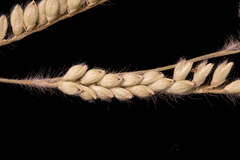 Urochloa ruziziensist0
 Zea mays
 Triticum aestivum
 Oryza sativa
 Artemisia dracunculus