View: List Claim type Research area Organism Taxon as written Decade Paper Association observed original result measured Claim · model-written summary
Yield losses due to rice tungro disease decrease with increasing attainable yield s.
increasing attainable yields e1 rice tungro disease e1 pathogen Verbatim
e1 “yield losses due to sheath blight, weed infestation, and rice tungro disease tend to increase, remain stable, and decrease , respectively, with increasing attainable yield s ”
✓ located verbatim in the source · abstract, characters 1464–1635 Other claims from this paper (10) Method / resource observed original result negative measured Claim · model-written summary
The polynomial model could not calculate a salinity yield decrease value.
vegetables, and ornamentals e1 calculation of the salinity yield decrease (SYD) value is not possible e0 polynomial model e0 Not reported Direction
Verbatim
e0 “The polynomial model has the drawback that calculation of the salinity yield decrease (SYD) value is not possible. ”
✓ located verbatim in the source · abstract, characters 676–790 e1 “various vegetables, and ornamentals were grown in a substrate system ”
✓ located verbatim in the source · abstract, characters 95–163 Other claims from this paper (8) Intervention effect observed original result negative measured Claim · model-written summary
Deficient or excessive N, P and K application or plant density could decrease grain yield .
deficiency or over application of N, P and K, or plant density e0 Not reported Comparator
Verbatim
t0 “Rice ”
✓ located verbatim in the source · title, characters 54–58 e0 “deficiency or over application of N, P and K, or plant density, could decrease the grain yield ”
✓ located verbatim in the source · abstract, characters 581–675 Other claims from this paper (5) Observation observed review summary negative basis n/a Claim · model-written summary
Pathogen-associated internal changes substantially decrease grape yield and quality.
grape yield and quality e0 Verbatim
e0 “numerous qualitative and quantitative changes occur inside it, which greatly decrease s grape yield and quality ”
✓ located verbatim in the source · abstract, characters 530–640 t0 “grapevine ”
✓ located verbatim in the source · title, characters 19–28 Title
Fungal diseases of grapevine
Goran Delibašić; Sanja Gajić; Srđan G. Aćimović AgroSpace (University of Belgrade, Faculty of Agriculture) 2006
Other claims from this paper (8) Association observed original result measured Claim · model-written summary
The extent of the decrease in malt extract yield with increasing protein varied among the regions.
extent of decrease e1 among the regions e1 Verbatim
e1 “although the extent of decrease varied among the regions ”
✓ located verbatim in the source · abstract, characters 636–692 t0 “Barleys ”
✓ located verbatim in the source · title, characters 42–49 Other claims from this paper (5) Association observed original result negative measured Claim · model-written summary
Yield decrease was greater with a larger b-parameter.
Verbatim
e0 “we examined the fertilizer reaction of maize hybrids ”
✓ located verbatim in the source · abstract, characters 362–414 e7 “If the value of the b-parameter is other than, zero then the effect is clearly unfavorable, because with the increase of this value, the yield decrease is also greater ”
✓ located verbatim in the source · abstract, characters 2641–2808 Other claims from this paper (7) Observation observed original result measured Claim · model-written summary
The degree of yield decrease under drought differed among maize varieties.
southern spring maize e0 degree of yield decrease e5 Verbatim
e0 “Agronomic characteristics of the southern spring maize were studied in summer and autumn seasonal drought periods in southern China ”
✓ located verbatim in the source · abstract, characters 0–131 e5 “The degree of yield decrease is different for the different varieties ”
✓ located verbatim in the source · abstract, characters 557–626 Other claims from this paper (8) Observation observed review summary negative basis n/a Claim · model-written summary
Farmers typically report a 5–10% bushel yield decrease during the first 5–7 years after converting to no-till.
first 5–7 years e0 conventional tilled e0 Not reported Taxon
Verbatim
e0 “Farmers typically see a 5–10% bushel yield decrease for the first 5–7 years after they convert from conventional tilled to no-till. ”
✓ located verbatim in the source · abstract, characters 939–1070 Other claims from this paper (4) Association observed original result negative measured Claim · model-written summary
For Wells rice, head rice yield fell 11.3 pp per 1.0 pp decrease in surface lipid content.
1.0 pp decrease in SLC e0 Verbatim
e0 “Millability curves of Wells had greater slopes, 11.3 pp decrease in HRY for every 1.0 pp decrease in SLC ”
✓ located verbatim in the source · abstract, characters 696–800 e1 “rice cultivars ”
✓ located verbatim in the source · abstract, characters 494–508 Other claims from this paper (3) Intervention effect observed original result no effect measured Claim · model-written summary
Seed cotton yield did not decrease under deficient irrigation.
deficient irrigation e1 seed cotton yield e0 Not reported Comparator
Verbatim
e0 “neither seed cotton yield nor lint quality were decrease d. ”
✓ located verbatim in the source · abstract, characters 272–330 e1 “cotton to deficient irrigation ”
✓ located verbatim in the source · abstract, characters 52–82 Other claims from this paper (3) Lexical search (BM25). All words must match; if nothing does, any word. Organism names also match every spelling of the same organism. No semantic search yet.
 Oryza sativa
 Vitis
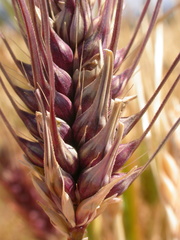 Hordeum
 Gossypium hirsutum