View: List Claim type Research area Organism Taxon as written Decade Paper Intervention effect observed original result negative measured Claim · model-written summary
Oat line Qingyongjiu 425 showed the least decrease in hay yield under cutting, 23.64%.
Qingyongjiu 425 e2 Not reported Treatment Comparator
Verbatim
t0 “oat(Avena sativa ) ”
✓ located verbatim in the source · title, characters 71–88 e1 “Bayan No.3 showed the greatest reduction in hay and crude protein yield ,67.65% and 57.57%,respectively ”
✓ located verbatim in the source · abstract, characters 404–506 e2 “The least decrease was found in Qingyongjiu 425,with 23.64% and(21.28%) reduction,respectively ”
✓ located verbatim in the source · abstract, characters 507–601 Other claims from this paper (12) Intervention effect observed original result positive measured Claim · model-written summary
Cold resistant agent II lessened the decrease of rice yield under the late autumn cold model.
cold resistant agent Ⅱ e1 decrease of yield e1 Not reported Comparator
Verbatim
e1 “Spray of cold resistant agent Ⅱ to heading stage rice in a mimic late autumn coldness model also resulted in significant cold resistant capability,enhanced the rate of fertilization and seed set ratio,as well as lessened the decrease of yield ”
✓ located verbatim in the source · abstract, characters 175–417 Other claims from this paper (3) Association observed original result negative measured Claim · model-written summary
Rice grain yield tended to decrease as nitrogen application rose from 50% to 150% of recommended rates, except in ill-drained soil.
increasing N application from 50% to 150% of recommended levels e0 except ill-drained soil e0 Verbatim
e0 “The grain yield tended to decrease with increasing N application from 50% to 150% of recommended levels, except ill-drained soil. ”
✓ located verbatim in the source · abstract, characters 596–725 t0 “Rice ”
✓ located verbatim in the source · title, characters 57–61 Other claims from this paper (5) Association observed original result negative measured Claim · model-written summary
Each 2 °C decrease corresponded to a 3.1 cm decrease in canopy height.
Not reported Taxon
Verbatim
e0 “for every 2 °C decrease there was a 3.1 centimeter decrease in canopy height ”
✓ located verbatim in the source · abstract, characters 876–952 Other claims from this paper (5) Intervention effect observed original result negative measured Claim · model-written summary
Dry matter weight tended to decrease with increasing salinity.
increasing salinity e0 dry matter weight e0 Not reported Comparator
Verbatim
e0 “dry matter weight also tended to decrease with increasing salinity ”
✓ located verbatim in the source · abstract, characters 626–692 t0 “Effects of salinity on germination, growth and yield of five groundnut genotypes ”
✓ located verbatim in the source · title, characters 0–80 Other claims from this paper (9) Intervention effect observed original result negative measured Claim · model-written summary
High irradiance caused a greater decrease in photosystem 2 quantum yield in transgenic rice, especially P14, than wild type.
quantum yield of photosystem 2 e0 greater decrease e0 Verbatim
t0 “rice ”
✓ located verbatim in the source · title, characters 67–71 e0 “HI resulted in a greater decrease in the quantum yield of photosystem 2 and a greater increase in non-photochemical quenching (NPQ) in the transgenic lines, particularly in P14, compared to WT. ”
✓ located verbatim in the source · abstract, characters 601–794 Other claims from this paper (11) Intervention effect author interpretation original result negative measured Claim · model-written summary
Ear length and small panicles per ear might decrease under high density and low fertilizer.
high-density with low-fertilizer e0 Yield and Its Related Traits t0 Not reported Comparator
Verbatim
e0 “decrease in high-density with low-fertilizer. ”
✓ located verbatim in the source · abstract, characters 1005–1050 t0 “Yield and Its Related Traits in Nude Barley ”
✓ located verbatim in the source · title, characters 49–92 Other claims from this paper (13) Intervention effect observed original result positive measured Claim · model-written summary
Potassium dressing partly compensated the peach yield decrease associated with soil lime.
potassium dressing e0 to some extent e0 Not reported Comparator
Verbatim
e0 “In peach, the lime content of soil decrease d the yield but it could be compensated by potassium dressing to some extent ”
✓ located verbatim in the source · abstract, characters 635–754 Other claims from this paper (8) Association observed original result negative measured Claim · model-written summary
Fruit weight declined more than seed yield in later fruits.
later fruits e0 Not reported Taxon
Verbatim
e0 “The decrease in fruit weight in later fruits was always larger than the decrease in seed yield ”
✓ located verbatim in the source · abstract, characters 592–686 Other claims from this paper (9) Association observed original result negative measured Claim · model-written summary
In the North and Central regions, the decrease in malt extract yield grew progressively with increases in barley protein content.
grew progressively e2 the North and Central regions e1 Verbatim
e1 “the North and Central regions ”
✓ located verbatim in the source · abstract, characters 883–912 e2 “the decrease in EXT grew progressively with increases in BPROT ”
✓ located verbatim in the source · abstract, characters 1055–1117 t0 “Barleys ”
✓ located verbatim in the source · title, characters 42–49 Other claims from this paper (5) Lexical search (BM25). All words must match; if nothing does, any word. Organism names also match every spelling of the same organism. No semantic search yet.
 Avena sativa
 Oryza sativa
 Arachis hypogaea
 Prunus persica
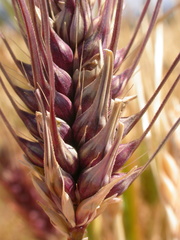 Hordeum