View: List Claim type Research area Organism Taxon as written Decade Paper Intervention effect observed original result negative measured Claim · model-written summary
Further raising CO2 from 2600 to 10000 micromoles mol-1 produced a smaller further decrease in those yield traits.
10000 micromoles mol-1 e0 Verbatim
e0 “Further elevation of [CO2] from 2600 to 10000 micromoles mol-1 caused a further but smaller decrease ”
✓ located verbatim in the source · abstract, characters 1079–1179 t0 “Wheat ”
✓ located verbatim in the source · title, characters 67–72 Other claims from this paper (16) Observation observed original result negative measured Claim · model-written summary
A 50% grain yield decrease occurred at about 72 mM NaCl with 0.2 x HS.
grain yield decrease e0 Verbatim
e0 “The salinity level associated with a 50% grain yield decrease was about 84, 72, and 31 mM NaCl for 1,0.2, and 0.04 × HS, respectively. ”
✓ located verbatim in the source · abstract, characters 1065–1199 t0 “wheat ”
✓ located verbatim in the source · title, characters 59–64 Other claims from this paper (16) Intervention effect observed original result no effect simulated Claim · model-written summary
Different simulated yield - decrease patterns with the same average yield produced little change in profitability.
Different simulated patterns of yield decrease between crops e1 same average yield e1 Verbatim
e0 “Sugarcane ( Saccharum sp. hyb.) ”
✓ located verbatim in the source · abstract, characters 0–31 e1 “Different simulated patterns of yield decrease between crops with the same average yield effected little change in profitability ”
✓ located verbatim in the source · abstract, characters 5266–5394 Other claims from this paper (10) Association observed original result negative measured Claim · model-written summary
Exotic cytoplasms in upland cotton backgrounds tended to decrease lint yield .
upland cotton backgrounds e1 exotic cytoplasms e1 Verbatim
t0 “UPLAND COTTON ”
✓ located verbatim in the source · title, characters 71–84 e1 “When transferred into upland cotton backgrounds, the exotic cytoplasms in general tended to decrease lint yield ”
✓ located verbatim in the source · abstract, characters 379–490 Other claims from this paper (5) Intervention effect observed original result no effect measured Claim · model-written summary
Decreasing spacing did not decrease yield per plant in 1989.
A decrease of in-row plant spacing e0 Not reported Comparator
Verbatim
e0 “A decrease of in-row plant spacing decrease d yield per plant in 1990, but not in 1989 ”
✓ located verbatim in the source · abstract, characters 561–646 t0 “Basil ”
✓ located verbatim in the source · title, characters 48–53 Other claims from this paper (3) Intervention effect observed original result negative measured Claim · model-written summary
Later spring seeding tended to decrease alfalfa dry matter yield .
Seeding alfalfa later e0 alfalfa dry matter (DM) yield e0 Verbatim
e0 “Seeding alfalfa later, compared with earlier, in the spring tended to increase weed and decrease alfalfa dry matter (DM) yield ”
✓ located verbatim in the source · abstract, characters 1037–1163 Other claims from this paper (14) Intervention effect observed original result negative measured Claim · model-written summary
Intercropping caused a 2–7% yield decrease in egusi melon.
Not reported Comparator
Verbatim
e2 “Intercropping did not significantly influence bunch yield of plantain but it caused a 2–7 and 20% yield decrease in egusi melon and water melon respectively ”
✓ located verbatim in the source · abstract, characters 472–628 Other claims from this paper (6) Intervention effect author interpretation original result negative measured Claim · model-written summary
Reducing plant density to save water may decrease rather than increase wheat yield under water-limited conditions.
reducing the density e1 Not reported Comparator
Verbatim
e1 “reducing the density of palnts to reduce water use may decrease rather than increase wheat yield under water limited conditions ”
✓ located verbatim in the source · abstract, characters 1397–1524 Other claims from this paper (8) Association observed original result positive measured Claim · model-written summary
Fruit yield of acid lime was closely associated with the decrease in chlorosis (r = 0.939).
decrease in chlorosis e3 Not reported Direction
Verbatim
t0 “Acid Lime ”
✓ located verbatim in the source · title, characters 71–80 e3 “Fruit yield was closely associated with the decrease in chlorosis (r = 0.939**) ”
✓ located verbatim in the source · abstract, characters 369–448 Other claims from this paper (4) Observation observed original result negative measured Claim · model-written summary
A 50% grain yield decrease occurred at about 31 mM NaCl with 0.04 x HS.
grain yield decrease e0 Verbatim
e0 “The salinity level associated with a 50% grain yield decrease was about 84, 72, and 31 mM NaCl for 1,0.2, and 0.04 × HS, respectively. ”
✓ located verbatim in the source · abstract, characters 1065–1199 t0 “wheat ”
✓ located verbatim in the source · title, characters 59–64 Other claims from this paper (16) Lexical search (BM25). All words must match; if nothing does, any word. Organism names also match every spelling of the same organism. No semantic search yet.
 Triticum aestivum
 Ocimum basilicum
 Medicago sativa
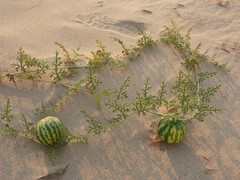 Citrullus mucosospermus