View: List Claim type Research area Organism Taxon as written Decade Paper Mechanism author interpretation original result negative measured Claim · model-written summary
The decrease in spikelet numbers per panicle is caused by fewer differentiated secondary rachis-branches.
spikelet numbers per panicle e2 fewer differentiated secondary rachis-branch numbers e2 Verbatim
e2 “The decrease of spikelet numbers per panicle was caused because of fewer differentiated secondary rachis-branch numbers ”
✓ located verbatim in the source · abstract, characters 456–575 t0 “rice [Oryza sativa ] yield in warmer regions of Japan ”
✓ located verbatim in the source · title, characters 74–126 Other claims from this paper (4) Association observed original result mixed measured Claim · model-written summary
Reduced adjusted solute potential was not consistently associated with grain yield response.
decrease in adjusted solute potential e0 grain yield response e0 not consistently associated e0 Not reported Direction
Verbatim
e0 “The decrease in adjusted solute potential was not consistently associated with a grain yield response. ”
✓ located verbatim in the source · abstract, characters 1236–1338 t0 “Oat ”
✓ located verbatim in the source · title, characters 0–3 Other claims from this paper (7) Intervention effect observed original result negative measured Claim · model-written summary
Soybean grain yield decrease d by 36–53% under intercropping versus sole cropping.
intercropping systems e0 sole cropping e0 Verbatim
e0 “drastic decrease (36–53%) in grain yield of soybean was noticed in intercropping systems compared with its sole cropping ”
✓ located verbatim in the source · abstract, characters 474–594 Other claims from this paper (7) Association observed original result negative measured Claim · model-written summary
Quantum yield of PSII electron transport declined as PPFD increased.
quantum yield of photosystem II (PSII) electron transport e0 Verbatim
e0 “decrease in the quantum yield of photosystem II (PSII) electron transport with increasing PPFD ”
✓ located verbatim in the source · abstract, characters 654–748 t0 “potato (Solanum tuberosum ) ”
✓ located verbatim in the source · title, characters 52–78 Other claims from this paper (6) Association observed original result no effect measured Claim · model-written summary
Grain weight did not decrease as common root rot severity increased.
Verbatim
t0 “wheat ”
✓ located verbatim in the source · title, characters 54–59 e1 “Grain yield , tiller and grain number, but not grain weight decrease d as disease severity increased ”
✓ located verbatim in the source · abstract, characters 543–641 e3 “common root rot (CRR) caused by Bipolaris sorokiniana ”
✓ located verbatim in the source · abstract, characters 15–68 Other claims from this paper (9) Observation observed original result measured Claim · model-written summary
Efficient genotype yield remained stable as phosphorus rates increased, while inefficient genotype yield continued increasing.
efficient genotype e0 efficient genotype e0 inefficient one showed continuously increase with remuneration decrease progressively e0 Not reported Taxon Direction
Verbatim
e0 “efficient genotype maintained stable while inefficient one showed continuously increase with remuneration decrease progressively ”
✓ located verbatim in the source · abstract, characters 798–926 Other claims from this paper (9) Association observed original result positive measured Claim · model-written summary
A 2 g kg ‐I ADL reduction was associated with a 10 g kg −1 NDF decrease .
2 g kg ‐I decrease in ADL e0 Verbatim
e0 “a 2 g kg ‐I decrease in ADL caused a 14 g kg −1 increase in IVDMD and a decrease of 10 g kg −1 NDF and 9 g kg −1 ADF ”
✓ located verbatim in the source · abstract, characters 1583–1699 t0 “Smooth Bromegrass ”
✓ located verbatim in the source · title, characters 43–60 Other claims from this paper (8) Association observed original result positive measured Claim · model-written summary
A 2 g kg ‐I ADL reduction was associated with a 9 g kg −1 ADF decrease .
2 g kg ‐I decrease in ADL e0 Verbatim
e0 “a 2 g kg ‐I decrease in ADL caused a 14 g kg −1 increase in IVDMD and a decrease of 10 g kg −1 NDF and 9 g kg −1 ADF ”
✓ located verbatim in the source · abstract, characters 1583–1699 t0 “Smooth Bromegrass ”
✓ located verbatim in the source · title, characters 43–60 Other claims from this paper (8) Mechanism observed original result negative measured Claim · model-written summary
Reduced lupin seed yield per plant resulted from fewer pods per plant.
seed yield per plant e0 decrease in pod number per plant e0 Verbatim
e0 “The decrease in lupin seed yield per plant was due to a decrease in pod number per plant, not to a change in the number of seeds per pod or single seed weight. ”
✓ located verbatim in the source · abstract, characters 1598–1757 Other claims from this paper (9) Intervention effect observed original result negative measured Claim · model-written summary
Ber trunk diameter did not decrease until soil ECe exceeded 5 dSm-1.
above 5 dSm-1 soil ECe e1 did not decrease until above e1 Not reported Comparator
Verbatim
e0 “ber (Zizyphus mauritiana Lamk.) ”
✓ located verbatim in the source · abstract, characters 45–76 e1 “trunk diameter did not decrease until above 5 dSm-1 soil ECe ”
✓ located verbatim in the source · abstract, characters 326–386 Other claims from this paper (7) Lexical search (BM25). All words must match; if nothing does, any word. Organism names also match every spelling of the same organism. No semantic search yet.
 Oryza sativat0
 Avena sativa
 Glycine max
 Solanum tuberosum
 Triticum aestivum
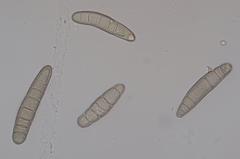 Bipolaris sorokiniana
 Bromus inermis
 Lupinus
 Ziziphus mauritiana