View: List Claim type Research area Organism Taxon as written Decade Paper Intervention effect observed original result no effect measured Claim · model-written summary
Rotation grazing at a conventional stocking rate did not decrease crested wheatgrass tillering or yield .
short duration rotation grazing at a conventional stocking rate e0 tillering nor yield e0 decreased neither e0 Not reported Comparator
Verbatim
e0 “short duration rotation grazing at a conventional stocking rate decrease d neither tillering nor yield of crested wheatgrass ”
✓ located verbatim in the source · abstract, characters 1287–1410 Other claims from this paper (10) Mechanism observed original result measured Claim · model-written summary
The yield decrease reflected reduced pod set and harvest index.
decreases in pod set and harvest index e0 because of decreases in pod set and harvest index e0 Verbatim
e0 “because of decrease s in pod set and harvest index ”
✓ located verbatim in the source · abstract, characters 722–771 t0 “Cowpea ”
✓ located verbatim in the source · title, characters 67–73 Other claims from this paper (9) Intervention effect observed original result no effect not significant (as stated) measured Claim · model-written summary
Infection of six soyabean cultivars with PStV caused no significant decrease in plant height, seed or seed yield for any cultivar.
6 soyabean cultivars e5 peanut stripe potyvirus e0 pathogen plant height, seed or seed yield e5 no significant decrease e5 for any cultivar e5 field tests at Byron, Georgia, USA e0 Not reported Comparator
Verbatim
e0 “Spread of peanut stripe potyvirus (PStV) from groundnut to soyabean and the yield effects on soyabean were determined in field tests at Byron, Georgia, USA ”
✓ located verbatim in the source · abstract, characters 0–155 e5 “Infection of 6 soyabean cultivars caused no significant decrease in plant height, seed or seed yield for any cultivar ”
✓ located verbatim in the source · abstract, characters 613–730 Other claims from this paper (4) Intervention effect observed original result no effect not significant (as stated) measured Claim · model-written summary
At 70% G, yield did not decrease significantly relative to G.
winter wheat-summer maize e1 Verbatim
e0 “70%G-level annual N2O emissions, when compared with the G level, had been reduced by 40% to 48%, while the yield has not decrease d significantly ”
✓ located verbatim in the source · abstract, characters 1194–1338 e1 “winter wheat-summer maize ”
✓ located verbatim in the source · abstract, characters 174–199 Other claims from this paper (10) Association observed original result negative measured Claim · model-written summary
Grain N concentration decrease d alongside the yield increase.
grain N concentration e0 Verbatim
e0 “A decrease in grain N concentration accompanied the yield increase ”
✓ located verbatim in the source · abstract, characters 375–441 t0 “Wheat ”
✓ located verbatim in the source · title, characters 60–65 t1 “Thidiazuron ”
✓ located verbatim in the source · title, characters 14–25 Other claims from this paper (5) Mechanism author interpretation original result negative basis n/a Claim · model-written summary
Excess fertilizer use under overly high yield goals may decrease profitability.
decreased profitability or return on fertilizer investment e0 Verbatim
t0 “Corn ”
✓ located verbatim in the source · title, characters 10–14 e0 “This scenario will result in reduced nutrient recovery, decrease d profitability or return on fertilizer investment, and an increased potential for N loss to groundwater resources. ”
✓ located verbatim in the source · abstract, characters 422–601 Other claims from this paper (5) Association observed original result negative significant (as stated) measured Claim · model-written summary
In Rhizobium -treated cluster bean, 10,000 Meloidogyne javanica juveniles per kg soil were associated with a significant decrease in yield .
10,000 second stage juveniles/kg soil e1 Verbatim
e1 “In cluster bean, a significant decrease in yield was associated with 10,000 second stage juveniles/kg soil in Rhizobium -treated plants, whereas 1,000 juveniles decrease d the yield , fresh shoot weight and length significantly in untreated plants over the check ”
✓ located verbatim in the source · abstract, characters 189–448 t0 “PATHOGENICITY OF MELOIDOGYNE JAVANICA IN MUNG AND CLUSTER BEANS AS AFFECTED BY RHIZOBIUM ”
✓ located verbatim in the source · title, characters 0–88 Other claims from this paper (2) Intervention effect observed original result negative measured Claim · model-written summary
Intercrop competition decrease d carrot yield .
Not reported Comparator
Verbatim
e0 “The yield decrease due to competition from the intercrop ”
✓ located verbatim in the source · abstract, characters 235–291 t0 “Carrots ”
✓ located verbatim in the source · title, characters 51–58 Other claims from this paper (5) Association observed original result negative measured Claim · model-written summary
Extended fallow nitrogen losses decrease d rice grain yield .
fallow was extended e0 Verbatim
t0 “rice ”
✓ located verbatim in the source · title, characters 46–50 e0 “When the fallow was extended, N losses led to a decrease in grain yield . ”
✓ located verbatim in the source · abstract, characters 685–757 Other claims from this paper (8) Intervention effect observed original result no effect measured Claim · model-written summary
A small proportion of small seed did not decrease grain yield .
small proportion of small seeds e0 in no case decreased e0 Not reported Comparator
Verbatim
e0 “A small proportion of small seeds in a seedlot decrease d shoot DM in two of six cases, but in no case decrease d percent emergence or grain yield . ”
✓ located verbatim in the source · abstract, characters 1140–1285 t0 “‘Roblin’ Wheat ”
✓ located verbatim in the source · title, characters 34–48 Other claims from this paper (8) Lexical search (BM25). All words must match; if nothing does, any word. Organism names also match every spelling of the same organism. No semantic search yet.
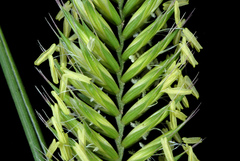 Agropyron cristatume0
 Vigna unguiculata
 Triticum aestivum
 Zea mays subsp. mays
 Cyamopsis tetragonoloba
 Rhizobium
 Daucus carota
 Oryza sativa