View: List Claim type Research area Organism Taxon as written Decade Paper Observation observed original result negative measured Claim · model-written summary
Changing the soil-specific recommended nitrogen rate is usually unprofitable across the tested price ratios.
Economic returns from N use e0 not profitable e0 16.7 to 10.0 lb N/bu e0 Verbatim
e0 “Economic returns from N use calculated for a typical range of corn/N price ratios (16.7 to 10.0 lb N/bu) show that it is usually not profitable to increase or decrease the soil‐specific N rate recommendation. ”
✓ located verbatim in the source · abstract, characters 1781–1989 t0 “Corn ”
✓ located verbatim in the source · title, characters 0–4 Other claims from this paper (9) Intervention effect observed original result negative measured Claim · model-written summary
Without added P, grain yield under Cl-dominated salinity was 58, 17 and 7% of the nonsaline soil at ECe 4, 6 and 8 dS m-1.
Cl‐‐dominated salinity e0 decrease inferred e0 nonsaline soil e2 greenhouse study e1 Verbatim
e0 “In P control (Olsen's P 3.5 mg kg‐1), grain yield s at ECe 4, 6, and 8 dS m‐1 were 58, 17, and 7% in Cl‐‐dominated salinity and 91, 48, and 37%, respectively, in SO2‐ 4‐dominated salinity ”
✓ located verbatim in the source · abstract, characters 408–594 e1 “In a greenhouse study, table pea (Pisum sativum L.) was grown ”
✓ located verbatim in the source · abstract, characters 9–70 e2 “relative to the nonsaline soil ”
✓ located verbatim in the source · abstract, characters 946–976 Other claims from this paper (14) Intervention effect Without added P, grain yield under SO4-dominated salinity was 91, 48 and 37% of the nonsaline soil at ECe 4, 6 and 8 dS m-1. Intervention effect At 20 mg P per kg, grain yield under Cl-dominated salinity was 108, 49 and 13% of the nonsaline soil. Intervention effect At 20 mg P per kg, grain yield under SO4-dominated salinity was 138, 106 and 75% of the nonsaline soil. Intervention effect At 80 mg P per kg, grain yield under Cl-dominated salinity was 140, 80 and 17% of the nonsaline soil. Intervention effect At 80 mg P per kg, grain yield under SO4-dominated salinity was 100, 108 and 128% of the nonsaline soil. Intervention effect Under Cl-dominated salinity at ECe 6 dS m-1, the P requirement of table pea was twice that of the nonsaline soil. Intervention effect Under SO4-dominated salinity at ECe 6 dS m-1, the P requirement of table pea was equal to that of the nonsaline soil. Intervention effect Under Cl-dominated salinity at ECe 8 dS m-1, table pea did not respond to P level. Intervention effect Under SO4-dominated salinity at ECe 8 dS m-1, the P requirement of table pea was twice that of the nonsaline soil. Mechanism P enhancement of salinity tolerance in table pea appears to depend on a threshold of about 50 mmol L-1 Cl content in the root zone. Observation Cl-dominated salinity at ECe 8 dS m-1 was associated with excessive accumulation of Cl in table pea (over 6%). Observation Cl-dominated salinity at ECe 8 dS m-1 gave a sharp reduction (54–78%) in the S content of table pea straw. Intervention effect Table pea straw grown under Cl-dominated salinity had less K, Mg and Na than under SO4-dominated salinity. Intervention effect Table pea straw grown under Cl-dominated salinity had more Ca and N than under SO4-dominated salinity. Intervention effect observed original result positive measured Claim · model-written summary
Proximal pod removal lowered abscission at raceme Position 3 (7% without proximal pods versus 30% with them).
Position 3 e1 proximal pods removed e1 abscission percentages e1 decrease inferred e1 30% with proximal pods present e1 proximal pods present e1 Verbatim
e0 “Many soybean [ Glycine max (L.) Merr.] flowers abscise and do not contribute to yield ”
✓ located verbatim in the source · abstract, characters 9–94 e1 “Average abscission percentages (all day intervals and both years) for Position 3 were 30% with proximal pods present and 7% with proximal pods removed ”
✓ located verbatim in the source · abstract, characters 982–1132 Other claims from this paper (7) Intervention effect observed original result negative measured Claim · model-written summary
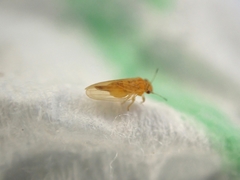
Experimental infestation with C. thysanura caused a 41.7% loss of boronia flowers.
decrease inferred e5 Not reported Comparator
Verbatim
e1 “Ctenarytaina thysanura is a phloem feeder and feeding by nymphs was restricted to the young, actively growing boronia shoots
✓ located verbatim in the source · abstract, characters 9–133 e5 “Experimentally C. thysanura causes a 41.7% loss of flowers and suppresses oil yield ”
✓ located verbatim in the source · abstract, characters 485–568 Other claims from this paper (9) Intervention effect observed original result negative measured Claim · model-written summary
Continuous high temperature (33/28 °C) had a detrimental effect on germination in standard and accelerated aging tests.
Continuous high temperature (33/28 °C) e2 decrease inferred e2 as measured by a standard germination test and an accelerated aging test e2 Not reported Comparator
Verbatim
e0 “The effect of temperature on seedstalk development, seed yield and quality in carrot ( Daucus carota L.) was investigated in growth chambers ”
✓ located verbatim in the source · abstract, characters 0–140 e2 “Continuous high temperature (33/28 °C) had a detrimental effect on germination as measured by a standard germination test and an accelerated aging test ”
✓ located verbatim in the source · abstract, characters 369–520 Other claims from this paper (12) Intervention effect observed original result negative measured Claim · model-written summary
Without added P, grain yield under SO4-dominated salinity was 91, 48 and 37% of the nonsaline soil at ECe 4, 6 and 8 dS m-1.
SO2‐ 4‐dominated salinity e0 decrease inferred e0 nonsaline soil e2 greenhouse study e1 Verbatim
e0 “In P control (Olsen's P 3.5 mg kg‐1), grain yield s at ECe 4, 6, and 8 dS m‐1 were 58, 17, and 7% in Cl‐‐dominated salinity and 91, 48, and 37%, respectively, in SO2‐ 4‐dominated salinity ”
✓ located verbatim in the source · abstract, characters 408–594 e1 “In a greenhouse study, table pea (Pisum sativum L.) was grown ”
✓ located verbatim in the source · abstract, characters 9–70 e2 “relative to the nonsaline soil ”
✓ located verbatim in the source · abstract, characters 946–976 Other claims from this paper (14) Intervention effect Without added P, grain yield under Cl-dominated salinity was 58, 17 and 7% of the nonsaline soil at ECe 4, 6 and 8 dS m-1. Intervention effect At 20 mg P per kg, grain yield under Cl-dominated salinity was 108, 49 and 13% of the nonsaline soil. Intervention effect At 20 mg P per kg, grain yield under SO4-dominated salinity was 138, 106 and 75% of the nonsaline soil. Intervention effect At 80 mg P per kg, grain yield under Cl-dominated salinity was 140, 80 and 17% of the nonsaline soil. Intervention effect At 80 mg P per kg, grain yield under SO4-dominated salinity was 100, 108 and 128% of the nonsaline soil. Intervention effect Under Cl-dominated salinity at ECe 6 dS m-1, the P requirement of table pea was twice that of the nonsaline soil. Intervention effect Under SO4-dominated salinity at ECe 6 dS m-1, the P requirement of table pea was equal to that of the nonsaline soil. Intervention effect Under Cl-dominated salinity at ECe 8 dS m-1, table pea did not respond to P level. Intervention effect Under SO4-dominated salinity at ECe 8 dS m-1, the P requirement of table pea was twice that of the nonsaline soil. Mechanism P enhancement of salinity tolerance in table pea appears to depend on a threshold of about 50 mmol L-1 Cl content in the root zone. Observation Cl-dominated salinity at ECe 8 dS m-1 was associated with excessive accumulation of Cl in table pea (over 6%). Observation Cl-dominated salinity at ECe 8 dS m-1 gave a sharp reduction (54–78%) in the S content of table pea straw. Intervention effect Table pea straw grown under Cl-dominated salinity had less K, Mg and Na than under SO4-dominated salinity. Intervention effect Table pea straw grown under Cl-dominated salinity had more Ca and N than under SO4-dominated salinity. Intervention effect observed original result positive measured Claim · model-written summary
Deficit-irrigated tomato fruit had higher concentrations of sucrose, glucose and fructose than well-watered control fruit.
Deficit-irrigated e1 concentration of sucrose, glucose, and fructose e1 well-watered (control) e1 Verbatim
e0 “In glasshouse-grown tomatoes ( Lycopersicon esculentum Mill. `Virosa'), deficit irrigation (DI), in which plant water potential was allowed to decrease from –0.5 to –1.2 MPa, reduced plant growth and fruit yield , size and count, and caused blossom-end rot ”
✓ located verbatim in the source · abstract, characters 0–255 e1 “Deficit-irrigated fruit had higher color intensity, lower water content, and higher concentration of sucrose, glucose, and fructose than well-watered (control) fruit ”
✓ located verbatim in the source · abstract, characters 257–422 Other claims from this paper (11) Observation observed original result no effect measured Claim · model-written summary
Gel chromatography showed no change in the molecular size of chelator- and alkali-soluble pectins in carnation petals.
Verbatim
e0 “Senescence of carnation (Dianthus caryophyllus L. ev. White Sim) petals coincided with a decrease on a per flower basis in the yield of cell wall and ethanol‐insoluble solids ”
✓ located verbatim in the source · abstract, characters 0–174 e4 “Gel chromatography of chelator‐ and alkali‐soluble pectins revealed no change in molecular size ”
✓ located verbatim in the source · abstract, characters 575–670 Other claims from this paper (11) Intervention effect observed original result positive measured Claim · model-written summary
Spring weed cover on polyethylene mulch and kenaf beds was about 17% of that on bare and adhesive-only-mulched beds.
polyethylene mulch and kenaf beds e3 decrease inferred e3 bare and adhesive- only-mulched beds e3 Verbatim
t0 “Autumn and Spring Planted Vegetables ”
✓ located verbatim in the source · title, characters 57–93 e3 “Spring weed cover on polyethylene mulch and kenaf beds, with or without adhesive, was ≅17% of bare and adhesive- only-mulched beds ”
✓ located verbatim in the source · abstract, characters 937–1067 Other claims from this paper (5) Association observed original result positive measured Claim · model-written summary
Harvesting rate increased by 40.8 kg/h with an approximate 50 g fruit weight increase.
harvesting rate per picker e0 Verbatim
e0 “harvesting rate per picker increased 40.8 kg/h (equivalent to one field box of Florida oranges per hour) for an approximate increase of either 20 t/ha in yield or 50 g in fruit weight, or a 2 m decrease in tree height ”
✓ located verbatim in the source · abstract, characters 401–618 t0 “Orange Grove ”
✓ located verbatim in the source · title, characters 0–12 Other claims from this paper (3) Lexical search (BM25). All words must match; if nothing does, any word. Organism names also match every spelling of the same organism. No semantic search yet.
 Zea mays subsp. mayst0
 Glycine max
 Boronia
 Ctenarytaina thysanura
 Daucus carota
 Solanum lycopersicum
 Dianthus caryophyllus