View: List Claim type Research area Organism Taxon as written Decade Paper Intervention effect observed original result negative measured Claim · model-written summary
Virus infection lowered cotton yield through decrease d boll weight.
virus infection e1 virus e1 pathogen Not reported Comparator
Verbatim
e0 “The effects of cotton leaf crumple disease on components of yield and on symptom expression were examined for cotton inoculated at five growth stages ”
✓ located verbatim in the source · abstract, characters 0–149 e1 “As a result of virus infection, the total leaf area was reduced and significant reductions in yield were observed, regardless of plant age at time of inoculation ”
✓ located verbatim in the source · abstract, characters 151–312 e2 “Yield reductions resulted from a smaller number of bolls set and/or a decrease in boll weight ”
✓ located verbatim in the source · abstract, characters 314–407 Other claims from this paper (6) Observation observed original result measured Claim · model-written summary
Total nitrogen extractability decrease d linearly with age.
total and protein nitrogen extractability e0 Verbatim
e0 “A linear decrease with age was noted for the total and protein nitrogen extractability of this crop whereas the nitrogen percentage in dry matter of leaves and the extractable leaf protein yield gave a quadratic response. ”
✓ located verbatim in the source · abstract, characters 308–529 t0 “winged bean ”
✓ located verbatim in the source · title, characters 70–81 Other claims from this paper (10) Intervention effect observed original result negative significant (as stated) measured Claim · model-written summary
Complete husk leaf removal significantly reduced grain yield in four of the six maize genotypes, by 2.6% on average.
complete husk leaf removal e4 four of the six genotypes e4 left intact (check) e5 Verbatim
e0 “in hybrid seed production of maize ( Zea mays L.) ”
✓ located verbatim in the source · abstract, characters 45–94 e4 “The decrease in yield due to complete husk leaf removal was significant for four of the six genotypes, and the average reduction was 2.6% (1.2 q/ha) ”
✓ located verbatim in the source · abstract, characters 1038–1186 e5 “the husk leaves were either left intact (check) or removed when they are fully extended ”
✓ located verbatim in the source · abstract, characters 744–831 Other claims from this paper (4) Intervention effect observed original result negative measured Claim · model-written summary
Smaller pots reduced vegetative growth.
growing the plants in small pots e0 vegetative growth e0 Not reported Comparator
Verbatim
e0 “Reduction of root growth resulting from growing the plants in small pots was accompanied by a considerable decrease in vegetative growth ”
✓ located verbatim in the source · abstract, characters 188–324 t0 “Root Effects on Cotton Growth and Yield 1 ”
✓ located verbatim in the source · title, characters 0–40 Other claims from this paper (8) Observation observed original result negative measured Claim · model-written summary
Reduced radiation decrease d differentiated secondary rachis branches and spikelets.
number of differentiated secondary rachis branches and spikelets e0 Verbatim
e0 “due to the decrease of the number of differentiated secondary rachis branches and spikelets ”
✓ located verbatim in the source · abstract, characters 578–669 t0 “Lowlam Rice ”
✓ located verbatim in the source · title, characters 58–69 Other claims from this paper (17) Observation observed original result negative measured Claim · model-written summary
Protein and chlorophyll content decrease d in Esquilache.
protein and chlorophyll content e0 Verbatim
e0 “A decrease in protein and chlorophyll content was also observed in the cv. Esquilache and in L. rigidum . ”
✓ located verbatim in the source · abstract, characters 783–887 t0 “wheat ”
✓ located verbatim in the source · title, characters 98–103 Other claims from this paper (8) Observation observed original result negative measured Claim · model-written summary
Protein and chlorophyll content decrease d in Lolium rigidum .
protein and chlorophyll content e0 Verbatim
e0 “A decrease in protein and chlorophyll content was also observed in the cv. Esquilache and in L. rigidum . ”
✓ located verbatim in the source · abstract, characters 783–887 Other claims from this paper (8) Intervention effect observed original result mixed measured Claim · model-written summary
Delayed N application had no effect or slightly decrease d dry matter.
Delayed N application e0 a slight decrease e0 Not reported Taxon
Verbatim
e0 “Delayed N application (8L or SP vs. PL) resulted in either no effect or a slight decrease in DM ”
✓ located verbatim in the source · abstract, characters 1147–1242 Other claims from this paper (5) Intervention effect observed original result no effect measured Claim · model-written summary
Shading did not reduce maximum spikelet number in Klein Toledo.
maximum spikelet number e0 did not decrease e0 Not reported Comparator
Verbatim
e0 “Shading did not decrease maximum spikelet number in the tall standard cultivar Klein Toledo ”
✓ located verbatim in the source · abstract, characters 569–660 t0 “wheat ”
✓ located verbatim in the source · title, characters 106–111 Other claims from this paper (5) Intervention effect observed original result negative simulated Claim · model-written summary
Increasing root reduction depth or percentage and reducing permeability lowered root growth throughout the season.
root reduction e0 throughout the season e0 Not reported Comparator
Verbatim
e0 “With increase in the depth of root reduction or increase in the percentage of root reduction and with permeability reduction there was a decrease in the root growth throughout the season. ”
✓ located verbatim in the source · abstract, characters 1144–1331 t0 “Yield Decline in Cotton. ”
✓ located verbatim in the source · title, characters 25–49 Other claims from this paper (6) Lexical search (BM25). All words must match; if nothing does, any word. Organism names also match every spelling of the same organism. No semantic search yet.
 Gossypium hirsutume0
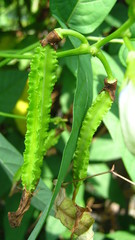 Psophocarpus tetragonolobus
 Zea mays
 Oryza sativa
 Triticum aestivum
 Lolium rigidum