View: List Claim type Research area Organism Taxon as written Decade Paper Association observed original result negative measured Claim · model-written summary
Valencia on sour orange yield decrease d 3.25 ton/ha (5.5%) per corresponding salinity increase.
Valencia orange on sour orange e1 3.25 ton/ha (5.5%) e0 Verbatim
e0 “For V×SO, the corresponding yield decrease was 3.25 ton/ha (5.5%) ”
✓ located verbatim in the source · abstract, characters 1697–1762 e1 “Valencia orange on sour orange (V × SO) ”
✓ located verbatim in the source · abstract, characters 336–375 e2 “orange trees (Citrus sinensis ) ”
✓ located verbatim in the source · abstract, characters 108–138 Other claims from this paper (8) Intervention effect observed original result positive measured Claim · model-written summary
Doubling the potassium fertilizer rate in spring tended to increase yield .
Doubling the potassium fertilizer rate in the spring time e1 tended to increase e1 Not reported Comparator
Verbatim
e1 “Doubling the potassium fertilizer rate in the spring time, tended to increase yield , decrease average fruit size, and decrease sheepnosing ”
✓ located verbatim in the source · abstract, characters 851–989 t0 “Growth conditions, crop load and fruit size affect sheepnosing in grapefruit ”
✓ located verbatim in the source · title, characters 0–76 Other claims from this paper (9) Mechanism author interpretation original result negative measured Claim · model-written summary
The authors attributed reduced yield under disking or mowing to water competition.
disked or mowed resident weed treatments e0 decrease in yield e0 competition for water e0 clean culture treatment e0 Verbatim
e0 “The decrease in yield in the disked or mowed resident weed treatments compared to the clean culture treatment in both locations was attributed to competition for water. ”
✓ located verbatim in the source · abstract, characters 2136–2304 e1 “orange ( Citrus sinensis ) ”
✓ located verbatim in the source · abstract, characters 190–216 Other claims from this paper (10) Intervention effect observed original result mixed measured Claim · model-written summary
The tailored nutrition program showed an increasing yield trend overall but decrease d in 2022.
tailored nutrition program e0 a decrease in 2022 e0 Not reported Comparator
Verbatim
e0 “the tailored nutrition program showed increasing trends in yield , with the latter showing a decrease in 2022 ”
✓ located verbatim in the source · abstract, characters 1496–1604 t0 “apple (malus pumila) ”
✓ located verbatim in the source · title, characters 70–90 Other claims from this paper (8) Association observed review summary negative basis n/a Claim · model-written summary
Helopeltis theivora and Oligonychus coffeae feeding on tea tender parts is reported to decrease tea yield and quality.
yield and quality e3 Verbatim
e0 “Tea (Camellia sinensis ) ”
✓ located verbatim in the source · abstract, characters 0–23 e2 “Two of the most problematic pests for tea are the Tea Mosquito Bug (Helopeltis theivora ) and the Red Spider Mite (Oligonychus coffeae ) ”
✓ located verbatim in the source · abstract, characters 260–394 e3 “These pests feed on the tender parts of the tea plant, such as leaves, buds, and young shoots, resulting in decrease d yield and quality ”
✓ located verbatim in the source · abstract, characters 396–531 Other claims from this paper (1) Association observed original result measured Claim · model-written summary
Cowberry yield decrease d 1.1% per day of offset from expected ripeness.
berries were expected to be ripe e0 time difference between the inventory day and the Julian day when berries were expected to be ripe e0 Verbatim
e0 “The time difference between the inventory day and the Julian day when berries were expected to be ripe showed a 1.5% decrease for bilberry and a 1.1% decrease for cowberry yield per day during the season. ”
✓ located after whitespace/quote normalisation · abstract, characters 1581–1785 Other claims from this paper (11) Intervention effect observed original result negative measured Claim · model-written summary
Retaining 11 bunches decrease d palm yield in the second season.
leaving 11 bunch / palm e0 other thinning treatments e0 Verbatim
e0 “leaving 11 bunch / palm led to a decrease in palm yield in the second season compared to other thinning treatments ”
✓ located verbatim in the source · abstract, characters 1253–1367 t0 “Hayany Date Palm ”
✓ located verbatim in the source · title, characters 122–138 Other claims from this paper (9) Intervention effect observed original result negative measured Claim · model-written summary
Cultivated thyme had slightly lower essential oil yield than wild thyme.
cultivated thymes e0 Not reported Comparator
Verbatim
t0 “Thymus pallidus and Thymus satureioides
✓ located verbatim in the source · title, characters 99–138 e0 “A slight decrease of EOs yield was obtained by steam distillation from cultivated thymes ”
✓ located verbatim in the source · abstract, characters 485–573 Other claims from this paper (14) Observation observed original result negative measured Claim · model-written summary
GRSPaV moderately reduced yield performance.
yield performance e0 Verbatim
e0 “this virus caused a moderate decrease in physiological efficiency, yield performance, and sugar content in berries ”
✓ located verbatim in the source · abstract, characters 587–701 t0 “Grapevine rupestris stem pitting-associated virus and Vitis vinifera ”
✓ located verbatim in the source · title, characters 21–89 Other claims from this paper (7) Intervention effect observed original result negative not significant (as stated) measured Claim · model-written summary
Chemical manure did not significantly increase outcomes relative to control and showed a decrease .
chemical manure e0 Verbatim
e0 “application of chemical manure not only had not significant increasing in comparison of control but also had decreasing. ”
✓ located verbatim in the source · abstract, characters 1486–1606 t0 “Lippia citriodora ”
✓ located verbatim in the source · title, characters 59–76 Other claims from this paper (4) Lexical search (BM25). All words must match; if nothing does, any word. Organism names also match every spelling of the same organism. No semantic search yet.
 Citrus
 Malus domestica
 Camellia sinensis
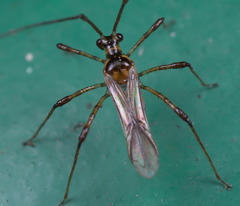 Helopeltis theivora
 Vaccinium vitis-idaea
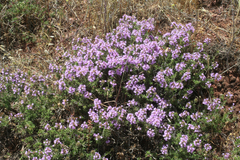 Thymus saturejoides
 Vitis vinifera