View: List Claim type Research area Organism Taxon as written Decade Paper Mechanism author interpretation original result negative measured Claim · model-written summary
Barley yield reductions under quackgrass were mainly attributed to a decrease of spike density (author interpretation).
yield reductions e1 a decrease of spike density e1 Verbatim
e1 “These yield reductions were mainly attributed to a decrease of spike density ”
✓ located verbatim in the source · abstract, characters 657–733 e2 “and barley (Hordeum vulgare L. 'Cadette') ”
✓ located verbatim in the source · abstract, characters 237–278 Other claims from this paper (7) Mechanism author interpretation review summary negative basis n/a Claim · model-written summary
Leaf rust defoliation can decrease the next season’s fruit yield .
southern highbush blueberries e1 the next season’s fruit yield e0 Verbatim
e0 “Severe leaf rust causes defoliation in the fall or early winter, which can decrease floral bud differentiation, photosynthesis, and the next season’s fruit yield ”
✓ located verbatim in the source · abstract, characters 151–312 e1 “southern highbush blueberries ”
✓ located verbatim in the source · abstract, characters 37–66 Other claims from this paper (4) Mechanism author interpretation original result negative measured Claim · model-written summary
In wide rows, yield decrease under spurred anoda interference was attributed to reduced boll retention or fruiting sites.
spurred anoda interference e0 spurred anoda e0 weed reduction in boll retention or fruiting sites e0 Verbatim
e0 “The yield decrease as a result of spurred anoda interference in WR was due to reduction in boll retention or fruiting sites (predicated on a decrease in branch weight). ”
✓ located verbatim in the source · abstract, characters 1070–1238 t0 “cotton ”
✓ located verbatim in the source · title, characters 77–83 Other claims from this paper (15) Association observed original result negative measured Claim · model-written summary
The decrease in P resorption in infected C. reticulata may account for a marked decrease in average fruit yield .
'Ca. L. asiaticus ' infection e2 average fruit yield e1 Verbatim
e1 “P resorption efficiency substantially decrease d in infected C. reticulata plants relative to the healthy plants in summer, which may account for the marked decrease in the average fruit yield ”
✓ located verbatim in the source · abstract, characters 734–925 e2 “We investigated the effects of 'Ca. L. asiaticus ' infection on nitrogen (N) and phosphorus (P) concentrations and resorption in different citrus species ”
✓ located verbatim in the source · abstract, characters 431–583 Other claims from this paper (4) Mechanism author interpretation original result negative measured Claim · model-written summary
In ultra narrow rows, yield decrease under spurred anoda interference was attributed to plant mortality.
spurred anoda e0 weed plant mortality e0 Verbatim
e0 “However, in UNR, the yield decrease was due to plant mortality; the plant density of both cotton cultivars decrease d by one plant for each additional spurred anoda, but the yield per plant for surviving plants remained constant. ”
✓ located verbatim in the source · abstract, characters 1239–1467 Other claims from this paper (15) Association observed original result negative measured Claim · model-written summary
P christiei populations were associated with 16% yield decrease in Bragg.
P christiei e1 pest Verbatim
e0 “were associated with 16%, 10% and 6% yield decrease of 'Bragg', 'Santa Rosa' and 'Hernon 147', respectively. ”
✓ located verbatim in the source · abstract, characters 874–982 t0 “Plant-Parasitic Nematodes and Neocosmospora vasinfectca Var. Africana Associated with Soybeans ”
✓ located verbatim in the source · title, characters 0–94 e1 “P christiei were recovered from fumigated plots ”
✓ located verbatim in the source · abstract, characters 822–869 Other claims from this paper (5) Association observed original result negative measured Claim · model-written summary
Unmanaged disease can significantly decrease Waxy Yam yield and quality.
yield and quality e0 if not managed properly e0 Verbatim
e0 “leading to a significant decrease in the yield and quality of Waxy Yam if not managed properly. ”
✓ located verbatim in the source · abstract, characters 119–214 t0 “Epicoccum sorghinum
✓ located verbatim in the source · title, characters 16–35 Other claims from this paper (2) Intervention effect observed original result negative measured Claim · model-written summary
The yield decrease from insect infestation was greater in Centennial than in the other genotype.
Insect infestation e1 decrease in Centennial yield e1 Not reported Comparator
Verbatim
t0 “Susceptibility of Selected Soybean Genotypes to Soybean Looper ”
✓ located verbatim in the source · title, characters 27–89 e1 “Insect infestation significantly reduced yield of both genotypes, but the decrease in Centennial yield was greater ”
✓ located verbatim in the source · abstract, characters 1283–1397 e0 “Pseudoplusia includens
✓ located verbatim in the source · abstract, characters 410–432 Other claims from this paper (12) Intervention effect observed original result negative measured Claim · model-written summary
Verticillium disease led to a 7.86% decrease in seed cotton yield .
Verticilli um dahliae t0 pathogen seedcotton yield e1 Not reported Comparator
Verbatim
t0 “Verticilli um dahliaeKleb. on cotton ”
✓ located verbatim in the source · title, characters 8–44 e0 “Main plotconsisted ofinfected and non-infected area ”
✓ located verbatim in the source · abstract, characters 457–508 e1 “Diseaseledtoadecrease(7.86%)inseedcotton yield ”
✓ located verbatim in the source · abstract, characters 1394–1440 Other claims from this paper (18) Observation There were significant differences among the cotton varieties for all investigated characteristics. Observation Infected versus non-infected area differences were significant for all investigated traits except ginning percentage. Intervention effect In the non-infected area, foliar disease index, vascular disease index and vascular disease rate decreased. Intervention effect In the non-infected area, first picking percentage, fiber fineness and micronaire decreased. Intervention effect In the non-infected area, yellowness decreased. Intervention effect In the non-infected area, seed cotton yield and fiber yield increased. Intervention effect In the non-infected area, fiber length, strength and elongation increased. Intervention effect In the non-infected area, uniformity, reflectance and spinning consistency index increased. Intervention effect Ginning percentage was unaffected by infected versus non-infected area differences. Intervention effect Growing cotton varieties in the non-infected area gave a 323.60 kg ha-1 increase in seed cotton yield. Intervention effect Growing cotton varieties in the non-infected area gave a 114.50 kg ha-1 increase in lint yield. Intervention effect Verticillium disease led to a 6.73% decrease in fiber yield. Observation Cotton variety GW-Teks was tolerant in terms of FDI, VDI and VDR. Observation Cotton variety GW-Golda was tolerant in terms of FDI, VDI and VDR. Observation Cotton variety Carmen was tolerant in terms of FDI, VDI and VDR. Observation Cotton variety Sayar314 was sensitive in terms of FDI, VDI and VDR. Observation Cotton variety Stoneville453 was sensitive in terms of FDI, VDI and VDR. Recommendation Tolerant cotton varieties can be used as parents in Verticillium breeding programs. Association observed original result no effect not significant (as stated) measured Claim · model-written summary
Aster Yellows did not significantly decrease root yield or phytochemical content in Echinacea .
Aster Yellows e0 pathogen root yield phenolic or phytochemical content e0 did not significantly decrease e0 Verbatim
e0 “While Aster Yellows were prevalent in Echinacea in Saskatchewan, this disease did not significantly decrease root yield phenolic or phytochemical content. ”
✓ located verbatim in the source · abstract, characters 1239–1393 Other claims from this paper (7) Lexical search (BM25). All words must match; if nothing does, any word. Organism names also match every spelling of the same organism. No semantic search yet.
 Hordeum vulgaree2
 Gossypium hirsutum
 Citrus reticulata
 Glycine max
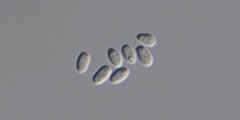 Epicoccum sorghinum
 Chrysodeixis includens
 Echinacea