“Ri‐plant exhibited the highest increases in yield (54%), fresh weight (65%), longitudinal (20%) and equatorial (33%) perimeters, Brix degree (20.6%), polyphenols (315.4%), carotenoids (353%), proteins (209.1%), flavonoids (114.38%), ascorbic acid (31.3%), reducing power (77.04%), DPPH radical inhibition (16.43%), and the highest decrease in titrable acidity (62.5%).”
t0
“melon”
e1
“Results showed that production and fruit quality were significantly improved in mycorrhizal plants (M‐plants) compared to non‐mycorrhizal (NM‐plants) ones, regardless of AMF treatments.”
e2
“This scientific research was carried out to assess the effectiveness of two arbuscular mycorrhizal fungi (AMF), Rhizophagus irregularis (Ri), R. fasciculatus (Rf), and their complex, in improving yield and quality attributes in melon variety ‘Ananas’ grown in greenhouse.”
Abderrazak Benkebboura; Btissam Zoubi; Oumaima Akachoud; et al. New Zealand Journal of Crop and Horticultural Science2024. doi:10.1080/01140671.2024.2388889
“Tomato wilt disease caused by Fusarium oxysporum f. sp. lycopersici (Fol) results in a decrease in tomato yield and quality”
e1
“Furthermore, we generated five resistant mutants through chemical taming and identified four mutants with high-level resistance due to the Cytb-G143S mutation and one mutant with medium-level resistance due to the Cytb-G137R mutation”
“in association within the root or the stem nodules of legume plants”
e0
“several environmental conditions such as salinity, temperature, acidity/alkalinity, drought, heavy metals, etc., are critical factors which can have detrimental effects on the steps involved in Rhizobium-legume symbiosis as infection process, nodule’s development and function, resulting in low nitrogen fixation and crop yield”
“With respect to the infestation, decrease in the test weight, kernel weight and flour yield, and increases in the moisture and ash contents were more severe in the SW than in the HW, and in those infested with R. dominica compared to those infested with T. confusum”
“In the second year, nitrogen fertilization led to a significant increase in the share of Italian ryegrass in the hay, with a proportional decrease of red clover and weeds, in both cuts”
e4
“This may be due to the pronounced competitiveness and faster growth of Italian ryegrass in relation to red clover, especially in drought conditions”
Dalibor Tomić; Vladeta Stevović; D. Djurović; et al. Book of proceedings: Fifth International Scientific Agricultural Symposium "Agrosym 2014", Jahorina, Bosnia and Herzegovina, October 23-26, 20142014
“A decrease in the percent of annual dicotyledonous weeds is evident, from 85.9% in the variant with plough, to 71.5-78.9% in the variants with minimum tillage systems, with an increase in perennial dicotyledonous (from 7.9% to 8.4-13.8%) and monocotyledonous weeds (from 6.2 to 11.6-20%).”
Lexical search (BM25). All words must match; if nothing does, any word. Organism names also match every spelling of the same organism. No semantic search yet.
 Cucumis melot0
 Rhizophagus irregularise2symbiont
 Solanum lycopersicum
 Triticum aestivum
 Rhyzopertha dominica
 Hordeum vulgare
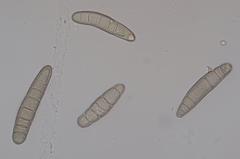 Bipolaris sorokiniana
 Solanum tuberosum
 Lolium multiflorum