View: List Claim type Research area Organism Taxon as written Decade Paper Intervention effect observed original result positive measured Claim · model-written summary
Flubendiamide suppressed the Eublemma amabilis population by 70.93–96.30%.
suppression of Eublemma amabilis population e1 decrease inferred e1 Not reported Comparator
Verbatim
e0 “yield of broodlac from kusmi winter crop raised on Ziziphus mauritiana (ber) ”
✓ located verbatim in the source · abstract, characters 136–212 e1 “Application of fipronil, spinosad and flubendiamide resulted in 61.24–92.59, 87.08–92.59 and 70.93–96.30% suppression of Eublemma amabilis population, respectively ”
✓ located verbatim in the source · abstract, characters 360–523 Other claims from this paper (15) Intervention effect observed original result positive measured Claim · model-written summary
Fipronil suppressed the Pseudohypatopa pulverea population by 89.29–96.30%.
Pseudohypatopa pulverea e3 pest suppression in population of Pseudohypatopa pulverea e3 decrease inferred e3 Not reported Comparator
Verbatim
e0 “yield of broodlac from kusmi winter crop raised on Ziziphus mauritiana (ber) ”
✓ located verbatim in the source · abstract, characters 136–212 e3 “Similarly, 89.29–96.30, 96.43–100 and 74.99–100% suppression in population of Pseudohypatopa pulverea was recorded with fipronil, spinosad and flubendiamide, respectively ”
✓ located verbatim in the source · abstract, characters 613–783 Other claims from this paper (15) Intervention effect observed original result negative measured Claim · model-written summary
Orobanche foetida parasitism decrease d photosynthetic capacity of the sensitive Bachaar faba bean by 24.57%
photosynthetic capacity e6 Not reported Comparator
Verbatim
e0 “severe yield losses in faba bean ( Vicia faba L.) ”
✓ located verbatim in the source · abstract, characters 52–101 e4 “This decrease was highly pronounced in the sensitive Bachaar variety with 24.57% and 63.43% decrease s, respectively ”
✓ located verbatim in the source · abstract, characters 797–912 e6 “This reduction was correlated with photosynthetic capacity (A max ) decrease s in response to both O. foetida and O. crenata parasitism ”
✓ located verbatim in the source · abstract, characters 661–795 Other claims from this paper (18) Intervention effect observed original result negative measured Claim · model-written summary
Orobanche crenata parasitism decrease d photosynthetic capacity of the sensitive Bachaar faba bean by 63.43%
photosynthetic capacity e6 Not reported Comparator
Verbatim
e0 “severe yield losses in faba bean ( Vicia faba L.) ”
✓ located verbatim in the source · abstract, characters 52–101 e4 “This decrease was highly pronounced in the sensitive Bachaar variety with 24.57% and 63.43% decrease s, respectively ”
✓ located verbatim in the source · abstract, characters 797–912 e6 “This reduction was correlated with photosynthetic capacity (A max ) decrease s in response to both O. foetida and O. crenata parasitism ”
✓ located verbatim in the source · abstract, characters 661–795 Other claims from this paper (18) Intervention effect observed original result positive measured Claim · model-written summary
Season-long aphid population reduction was obtained with aldicarb at 2.80 to 11.50 kg AI/ha.
aldicarb at rates from 2.80 to 11.50 kg of AI/ha e1 season-long population reduction e1 decrease inferred e1 Not reported Comparator
Verbatim
t0 “Western Irrigated Pecan Orchards ”
✓ located verbatim in the source · title, characters 50–82 e1 “season-long population reduction was obtained with aldicarb at rates from 2.80 to 11.50 kg of AI/ha ”
✓ located verbatim in the source · abstract, characters 208–307 e2 “for control of Monellia caryella (Fitch) ”
✓ located verbatim in the source · abstract, characters 167–207 Other claims from this paper (7) Intervention effect observed original result positive significant (as stated) measured Claim · model-written summary
All treatments significantly controlled pest population and damage on cowpea in the late season.
all treatments e4 pest population/damage e4 decrease inferred e4 In the late season e4 Not reported Comparator
Verbatim
e0 “The management of major field insect pests of cowpea under calendar and monitored sprays of cypermethrin was studied ”
✓ located verbatim in the source · abstract, characters 0–116 e4 “In the late season, all treatments significantly (P<0.05) controlled pest population/damage on cowpea ”
✓ located verbatim in the source · abstract, characters 1223–1324 Other claims from this paper (6) Association observed original result significant (as stated) measured Claim · model-written summary
Serratia predominance in the rhizosphere was significantly associated with soil Pb.
rhizosphere e0 Serratia e0 other soil Pb concentration e0 predominance of the genus Serratia e0 Not reported Direction
Verbatim
e0 “The predominance of the genus Serratia in the rhizosphere of Helianthus petiolaris plants cultivated in the polluted sites and the decrease in the essential oil yield were some effects significantly associated with soil Pb concentration. ”
✓ located verbatim in the source · abstract, characters 716–953 Other claims from this paper (5) Association observed original result negative measured Claim · model-written summary
Each additional larva per plant increased green pod damage by 2.61%.
Verbatim
e0 “With an increase of one larva/plant there was a decrease of 4.95 green pods, 7.05 dry pods, 18.01 grains, 3.79 g pod and 2.05 g grain weight/plant, whereas pod damage increased 2.61 and 4.93% at green and dry stage respectively ”
✓ located verbatim in the source · abstract, characters 357–584 t0 “pigeonpea ”
✓ located verbatim in the source · title, characters 80–89 Other claims from this paper (10) Observation observed original result negative measured Claim · model-written summary
Off-season longan farms without managed or wild bees generated lower net profit.
managed bees e0 pollinator wild bees e0 pollinator in the absence of managed bees and wild bees e0 Verbatim
e0 “Consequently, longan production from off‐season longan farms generates lower net profit in the absence of managed bees and wild bees, and wild bees produced higher seed‐sets than either honeybees or dipterans. ”
✓ located verbatim in the source · abstract, characters 1108–1317 Other claims from this paper (11) Intervention effect observed original result positive measured Claim · model-written summary
Mancozeb (0.2%) reduced the percent disease index on marigold leaves to 34.53 compared with control.
Mancozeb (0.2%) e3 decrease inferred e3 Verbatim
t0 “leaf spot and flower blight of marigold caused by Alternaria tagetica ”
✓ located verbatim in the source · title, characters 14–83 t1 “under field condition ”
✓ located verbatim in the source · title, characters 105–126 e3 “Mancozeb (0.2%) with PDI of (34.53) on leaves and (35.45) on flower with yield of (6.81 t/ha) ”
✓ located verbatim in the source · abstract, characters 502–595 e2 “as compared to control with (85.02 and 86.11 PDI) on leaves and flower respectively with yield of (4.26 t/ha) ”
✓ located verbatim in the source · abstract, characters 596–705 Other claims from this paper (11) Lexical search (BM25). All words must match; if nothing does, any word. Organism names also match every spelling of the same organism. No semantic search yet.
 Ziziphus mauritianae0
 Vicia faba
 Orobanche foetida
 Orobanche crenata
 Carya illinoinensis
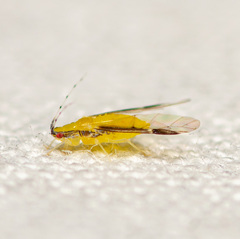 Monellia caryella
 Vigna unguiculata
 Helianthus petiolaris
 Cajanus cajan
 Dimocarpus longan