View: List Claim type Research area Organism Taxon as written Decade Paper Association observed original result negative significant (as stated) measured Claim · model-written summary
In Rhizobium -treated cluster bean, 10,000 Meloidogyne javanica juveniles per kg soil were associated with a significant decrease in yield .
10,000 second stage juveniles/kg soil e1 Verbatim
e1 “In cluster bean, a significant decrease in yield was associated with 10,000 second stage juveniles/kg soil in Rhizobium -treated plants, whereas 1,000 juveniles decrease d the yield , fresh shoot weight and length significantly in untreated plants over the check ”
✓ located verbatim in the source · abstract, characters 189–448 t0 “PATHOGENICITY OF MELOIDOGYNE JAVANICA IN MUNG AND CLUSTER BEANS AS AFFECTED BY RHIZOBIUM ”
✓ located verbatim in the source · title, characters 0–88 Other claims from this paper (2) Observation observed original result negative measured Claim · model-written summary
The decrease in lentil growth and yield traits was greater in susceptible than resistant varieties.
susceptible group e0 resistant group e0 Verbatim
t0 “LENTIL ”
✓ located verbatim in the source · title, characters 110–116 e0 “this response was noticed higher in susceptible group as compared to resistant group ”
✓ located verbatim in the source · abstract, characters 634–718 Other claims from this paper (3) Association observed original result measured Claim · model-written summary
Levels of economic damage from arrowleaf sida decrease with increasing soybean grain yield and soybean price.
arrowleaf sida e6 weed levels of economic damage e6 with the increase in grain yield, in the soybean price e6 Verbatim
e0 “This study aimed to assess the interference and threshold level (TL) of Sida rhombifolia , the arrowleaf sida, competing with different soybean cultivars ”
✓ located verbatim in the source · abstract, characters 0–152 e6 “The levels of economic damage decrease with the increase in grain yield , in the soybean price, with the reduction in the cost of controlling arrowleaf sida and the herbicide efficiency ”
✓ located verbatim in the source · abstract, characters 1379–1563 Other claims from this paper (5) Association observed original result negative significant (as stated) measured Claim · model-written summary
Loss rate of inflorescence was associated with a significant decrease in seed yield .
Elymus sibiricus L.,Phalaris arundinacea L.,Kengyilla rigidula(Keng)J.L.and Avena sativa L.Elymus sibiricus e0 loss rate of inflorescence e3 Mythimna separate Walker e1 pest Verbatim
e0 “Elymus sibiricus L.,Phalaris arundinacea L.,Kengyilla rigidula(Keng)J.L.and Avena sativa L.
✓ located verbatim in the source · abstract, characters 0–91 e1 “the damage of Mythimna separate Walker ”
✓ located verbatim in the source · abstract, characters 206–244 e3 “The difference for the loss rate of inflorescence also lead to a significant decrease of seed yield (P0.01) ”
✓ located verbatim in the source · abstract, characters 1021–1127 Other claims from this paper (8) Association observed original result no effect not significant (as stated) measured Claim · model-written summary
Weed infestation caused no significant decrease in soybean grain yield in floodplain soils.
weed species e3 weed no significant decreases e3 floodplain soils e3 Verbatim
e3 “The poor control of these weed species does not result in significant interference, causing no significant decrease s in grain yield of soybean crops grown in floodplain soils ”
✓ located verbatim in the source · abstract, characters 1137–1311 Other claims from this paper (6) Association observed original result negative measured Claim · model-written summary
Each unit increase in weed dry weight was associated with a decrease in rice grain yield of 2.85 q ha-1.
weed dry weight e6 rice grain yield e6 Verbatim
t0 “aromatic rice (Oryza Sativa L.) Cv. Pusa Basmati 1 ”
✓ located verbatim in the source · title, characters 64–114 e6 “The unit increase in intensity of monocots, dicots and weed dry weight causes decrease in rice grain yield by 2.18, 1.64 and 2.85 q ha-1 respectively ”
✓ located verbatim in the source · abstract, characters 920–1069 Other claims from this paper (7) Intervention effect observed original result no effect not significant (as stated) measured Claim · model-written summary
Increasing virus infection did not significantly decrease ryegrass yield s.
increasing virus infection e4 virus e4 pathogen did not decrease e4 Not reported Comparator
Verbatim
t0 “ryegrass mosaic virus ”
✓ located verbatim in the source · title, characters 40–61 e4 “increasing virus infection did not decrease yield s significantly ”
✓ located verbatim in the source · abstract, characters 432–496 Other claims from this paper (5) Association author interpretation review summary positive basis n/a Claim · model-written summary
PCN multiplication rates decrease as population density increases.
Potato Cyst Nematode t0 pest Multiplication rates e0 population density increases e0 Verbatim
t0 “Potato Cyst Nematode ”
✓ located verbatim in the source · title, characters 73–93 e0 “Multiplication rates decrease as the population density increases ”
✓ located verbatim in the source · abstract, characters 592–657 Other claims from this paper (7) Association observed original result negative measured Claim · model-written summary
Sheath blight reduced rice yield and grain quality.
Sheath Blight t0 pathogen rice yield and grain quality e0 Verbatim
e0 “which results in decrease of rice yield and grain quality ”
✓ located verbatim in the source · abstract, characters 323–380 t0 “Sheath Blight on Rice ”
✓ located verbatim in the source · title, characters 11–32 Other claims from this paper (4) Observation observed original result negative measured Claim · model-written summary
Alfalfa hay yield decrease d substantially in 2013.
Not reported Setting
Verbatim
e0 “In 2013, a substantial decrease in the hay yield and raw protein ratio of alfalfa was found. ”
✓ located verbatim in the source · abstract, characters 707–799 Other claims from this paper (4) Lexical search (BM25). All words must match; if nothing does, any word. Organism names also match every spelling of the same organism. No semantic search yet.
 Cyamopsis tetragonolobae1
 Rhizobium
 Lens culinaris
 Glycine max
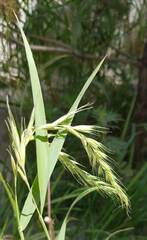 Elymus sibiricus
 Lolium
 Solanum tuberosum
 Oryza sativa
 Medicago sativa