View: List Claim type Research area Organism Taxon as written Decade Paper Association observed review summary no effect basis n/a Claim · model-written summary
Increased IVDMD generally does not decrease forage yield .
increased IVDMD e6 no_change inferred e6 Verbatim
e6 “Because increased IVDMD generally does not decrease forage yield per se ”
✓ located verbatim in the source · abstract, characters 1207–1278 t0 “Breeding for Increased Forage Nutritional Value ”
✓ located verbatim in the source · title, characters 32–79 Other claims from this paper (8) Intervention effect observed original result negative simulated Claim · model-written summary
Decrease d solar radiation decrease d simulated maize yield .
decrease in solar radiation e0 Not reported Comparator
Verbatim
e0 “decrease in solar radiation and decrease carbondioxide concentration ”
✓ located verbatim in the source · abstract, characters 1596–1664 t0 “yield of rainfed maize ”
✓ located verbatim in the source · title, characters 25–47 Other claims from this paper (18) Observation observed original result no effect not significant (as stated) measured Claim · model-written summary
I. tinctoria showed no significant relative yield decrease despite the highest shoot Pb concentration.
relative yield decrease e0 no significant e0 Verbatim
e0 “The highest shoot Pb concentration was in I. tinctoria having no significant relative yield decrease ”
✓ located verbatim in the source · abstract, characters 948–1048 Other claims from this paper (14) Association observed original result negative measured Claim · model-written summary
The decrease in sugarcane yield was much greater in some varieties than in others.
decrease in yield e5 Verbatim
t0 “Residual effect of glyphosate as a ripener on sugarcane ”
✓ located verbatim in the source · title, characters 0–55 e5 “The decrease in yield in some varieties was much greater than in others ”
✓ located verbatim in the source · abstract, characters 753–824 Other claims from this paper (5) Observation observed original result positive measured Claim · model-written summary
All PSII associated chlorophyll pools experienced the decrease in triplet yield .
all the Chl pools associated with PSII e0 Verbatim
e0 “The decrease in ³Chl* yield is equally experienced by all the Chl pools associated with PSII ”
✓ located verbatim in the source · abstract, characters 875–967 t0 “Physcomitrella patens
✓ located verbatim in the source · title, characters 71–92 Other claims from this paper (5) Intervention effect observed original result negative measured Claim · model-written summary
An unventilated, unenriched tomato house suffered a 13% yield decrease
Not reported Comparator
Verbatim
e1 “The yield of 2 crops of tomatoes ( Lycopersicon esculentum Mill. cv. Tropic) was determined in CO 2 enriched, unventilated and conventionally ventilated greenhouses ”
✓ located verbatim in the source · abstract, characters 9–173 e3 “An unventilated, unenriched house suffered a 13% yield decrease ”
✓ located verbatim in the source · abstract, characters 749–812 Other claims from this paper (11) Association observed original result negative projected Claim · model-written summary
Warming predicted a cotton yield decrease of 1.4% per decade.
temperature increase e0 Not reported Taxon
Verbatim
e0 “predicted yield decrease of 1.4% decade -1 in Xinjiang due to a significant temperature increase of 0.37°C decade -1 ”
✓ located verbatim in the source · abstract, characters 1280–1396 Other claims from this paper (13) Association observed original result negative measured Claim · model-written summary
A one percent increase in March deviation corresponded to a 5.6 unit decrease in maize yield .
March deviation e0 1 per cent increase e0 Verbatim
e0 “1 per cent increase in March deviation leads to 5.6 unit decrease in yield of maize ”
✓ located verbatim in the source · abstract, characters 991–1074 Other claims from this paper (4) Mechanism author interpretation original result negative simulated Claim · model-written summary
Sunshine decrease and warming were identified as main causes of maize yield decline.
sunshine duration decrease and the temperature rise e0 maize yield declining e0 Verbatim
e0 “indicating that the sunshine duration decrease and the temperature rise are the main causes of the maize yield declining. ”
✓ located verbatim in the source · abstract, characters 1538–1659 Other claims from this paper (12) Intervention effect observed original result positive measured Claim · model-written summary
Salt resistant hybrids showed no grain yield decrease under salinity.
Not reported Comparator
Verbatim
e0 “Yield of Pioneer‐3906 was significantly reduced under salinity because of inhibited kernel setting, whereas the SR hybrids showed no decrease in grain yield . ”
✓ located verbatim in the source · abstract, characters 824–981 t0 “Enhancing maize grain yield ”
✓ located verbatim in the source · title, characters 0–27 Other claims from this paper (6) Lexical search (BM25). All words must match; if nothing does, any word. Organism names also match every spelling of the same organism. No semantic search yet.
 Zea mays
 Isatis tinctoria
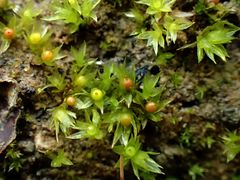 Physcomitrium patens
 Solanum lycopersicum