Abstract
BACKGROUND: Grapevine trunk diseases (GTD) lead to progressive vine decline and are a major threat to viticulture sustainability worldwide. GTD can involve multiple fungal species, with Phaeomoniella chlamydospora being one of the most prevalent pathogens. Pruning wounds are the primary entry point for wood-inhabiting fungi. This study assesses the effectiveness of the biological control agent (BCA) Trichoderma atroviride strain SC1 in preventing natural GTD pathogen infections across three vineyard training systems. RESULTS: Trichoderma recovery was significantly lowest (48.1%) in the double-cordon training system (V3) and consistently higher (71.9%) in the head/spur system (V1). The treatment reduced GTD infection by 3.75%, and disease control declined markedly 1 year after application (61.1%) compared with ≤90 days post-treatment (92.6%). The controlled assay including culture-dependent and culture-independent approaches (high-throughput sequencing and quantitative polymerase chain reaction) revealed distinct detection patterns: culture methods favoured fast-growing fungi such as Trichoderma, whereas molecular tools enabled the detection of slower-growing taxa like P. chlamydospora. T. atroviride colonised wood up to 1-2 cm from the application point, whereas P. chlamydospora spread up to 5 cm. Overall, the pathogen had a stronger impact on wood mycobiome than the BCA, supporting the compatibility of Trichoderma with the resident grapevine microbiome. CONCLUSION: These findings provide new insights into the integration of BCAs within vineyard GTD management strategies and contribute to the broader transition towards sustainable viticulture and integrated pest management. © 2026 Society of Chemical Industry.
Abstract from the paper’s OpenAlex record, shown for indexing and research. Copyright remains with the authors or the publisher. Read at the source ↗
The text the model read, with the source record’s inline markup (italics, sub- and superscripts) rendered and its character entities decoded; quote offsets refer to the raw text.
Claims 9
Claim · model-written summary
Trichoderma recovery was lowest at 48.1% in double cordon training.
- Interactor
- Trichoderma
 Trichodermae0biocontrol_agent
- Outcome
- Trichoderma recoverye0
- Direction
- loweste0
- Value
- 48.1%e0
- Setting
- double-cordon training systeme0
 Vitis
Organisms pictured · Representative pictures of the matched species, not figures from the paper.


Verbatim
e0“Trichoderma recovery was significantly lowest (48.1%) in the double-cordon training system (V3)”
t0“grapevine”
Claim · model-written summary
Trichoderma recovery was 71.9% in head spur training.
- Interactor
- TrichodermaTrichodermae1biocontrol_agent
- Outcome
- Trichoderma recoverye1
- Direction
- highere0
- Value
- 71.9%e0
- Setting
- head/spur systeme0
Organisms pictured · Representative pictures of the matched species, not figures from the paper.
Verbatim
e0“consistently higher (71.9%) in the head/spur system (V1)”
e1“Trichoderma recovery”
t0“grapevine”
Claim · model-written summary
Biocontrol treatment reduced grapevine trunk disease infection by 3.75%.
- Treatment
- Trichoderma atroviride strain SC1e1
- Interactor
- Trichoderma atroviride strain SC1
 Trichoderma atroviridee1biocontrol_agent
- Outcome
- GTD infectione0
- Direction
- reducede0
- Value
- 3.75%e0
Not reportedComparator
Organisms pictured · Representative pictures of the matched species, not figures from the paper.
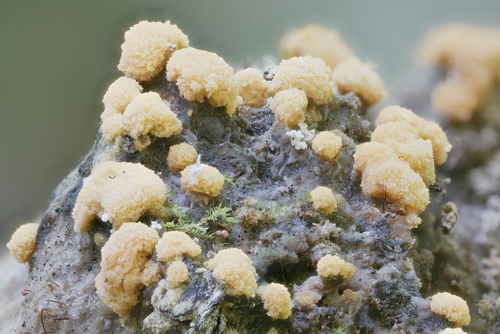
Verbatim
e0“The treatment reduced GTD infection by 3.75%”
e1“biological control agent (BCA) Trichoderma atroviride strain SC1”
t0“grapevine”
Claim · model-written summary
Disease control declined to 61.1% one year after application versus 92.6% within 90 days.
- Outcome
- disease controle0
- Direction
- declinede0
- Value
- 61.1%e0
- Qualifier
- 92.6%e0
- Comparator
- ≤90 days post-treatmente0
Organisms pictured · Representative pictures of the matched species, not figures from the paper.
Verbatim
e0“disease control declined markedly 1 year after application (61.1%) compared with ≤90 days post-treatment (92.6%)”
t0“grapevine”
Claim · model-written summary
Culture methods favored detection of fast growing fungi such as Trichoderma.
- Interactor
- TrichodermaTrichodermae0biocontrol_agent
- Outcome
- fast-growing fungi such as Trichodermae0
- Comparator
- molecular toolse0
Organisms pictured · Representative pictures of the matched species, not figures from the paper.
Verbatim
e0“culture methods favoured fast-growing fungi such as Trichoderma, whereas molecular tools enabled the detection of slower-growing taxa like P. chlamydospora”
t0“grapevine”
Claim · model-written summary
Molecular tools detected slow growing P. chlamydospora.
- Interactor
- P. chlamydosporaPhaeomoniella chlamydosporae0pathogen
- Outcome
- detection of slower-growing taxa like P. chlamydosporae0
- Comparator
- culture methodse1
Organisms pictured · Representative pictures of the matched species, not figures from the paper.
Verbatim
e0“molecular tools enabled the detection of slower-growing taxa like P. chlamydospora”
e1“culture methods favoured fast-growing fungi”
t0“grapevine”
Claim · model-written summary
T. atroviride colonized wood up to 1 to 2 cm from application.
- Interactor
- T. atrovirideTrichoderma atroviridee0biocontrol_agent
- Outcome
- T. atroviride colonised woode0
- Value
- 1-2 cme0
Organisms pictured · Representative pictures of the matched species, not figures from the paper.
Verbatim
e0“T. atroviride colonised wood up to 1-2 cm from the application point”
t0“grapevine”
Claim · model-written summary
P. chlamydospora spread up to 5 cm in grapevine wood.
- Interactor
- P. chlamydosporaPhaeomoniella chlamydosporae0pathogen
- Outcome
- P. chlamydospora spreade0
- Value
- 5 cme0
Organisms pictured · Representative pictures of the matched species, not figures from the paper.
Verbatim
e0“P. chlamydospora spread up to 5 cm”
t0“grapevine”
Claim · model-written summary
The pathogen affected wood mycobiome more strongly than the biocontrol agent.
- Interactor
- Phaeomoniella chlamydosporaPhaeomoniella chlamydosporae1pathogen
- Outcome
- wood mycobiomee0
- Direction
- strongere0
- Comparator
- BCAe0
Organisms pictured · Representative pictures of the matched species, not figures from the paper.
Verbatim
e0“the pathogen had a stronger impact on wood mycobiome than the BCA”
e1“Phaeomoniella chlamydospora being one of the most prevalent pathogens”
t0“grapevine”