Abstract
Iron plaque, a phenomenon widely found in wetland plants, is an accumulation of metal (hydr)oxides precipitated on root surfaces primarily driven by rhizosphere oxidation. However, the potential function of iron plaque on plant hypoxia tolerance is largely ignored. Thus, the effects of iron plaque on root O2 dynamics and respiratory metabolism were investigated using the seedlings of Aegiceras corniculatum. O2 microelectrodes were applied to determine partial pressure of oxygen (pO2) within roots, while respiratory metabolism was analyzed using enzyme activity assay kits, transcriptomics and real-time quantitative PCR (qRT-PCR). Visible reddish plaques were observed on the roots of field-collected A. corniculatum seedlings, forming a coating that appeared to penetrate the intercellular spaces of the outer one to two cell layers. The data further revealed a significant role of iron plaque in elevating pO2 within roots, which can mitigate hypoxic inhibition and benefit plant performance under hypoxic stresses. Compared with non-plaque roots, roots with iron plaque exhibited significantly higher adenosine triphosphate (ATP), elevated tricarboxylic acid (TCA) respiration rates, and upregulated TCA cycle-associated enzymes and genes. Besides, suppressed anaerobic fermentation-associated byproducts (e.g., ethanol) and enzymes/genes (e.g., alcohol dehydrogenase and its encoding gene AcADH1) were simultaneously observed in the roots with iron plaque due to enhanced root internal pO2. Suppressed glycolysis pathway was also observed in the roots with iron plaque, indicating less consumption of carbon resources under hypoxic stresses. In conclusion, this study provided evidence for an interesting link between iron plaque and increased O2 retention within roots, which improved the efficiency of ATP yield through respiratory metabolism.
Abstract from the paper’s OpenAlex record; open copy licensed cc-by-nc. Read at the source ↗
The text the model read, with the source record’s inline markup (italics, sub- and superscripts) rendered and its character entities decoded; quote offsets refer to the raw text.
Claims 9
Claim · model-written summary
Visible reddish plaques were observed on the roots of field-collected A. corniculatum seedlings.
- Taxon
- A. corniculatum
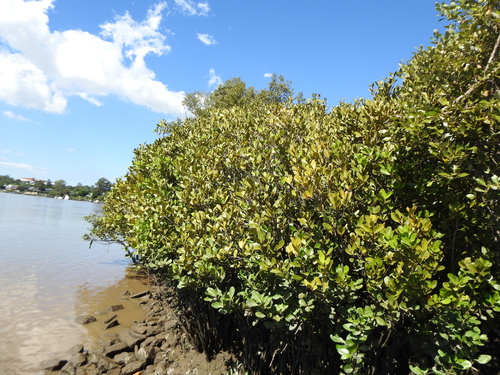
 Aegiceras corniculatume0
- Organ / stage
- rootse0
- Outcome
- Visible reddish plaquese0
- Setting
- field-collectede0
Organisms pictured · Representative pictures of the matched species, not figures from the paper.
Verbatim
e0“Visible reddish plaques were observed on the roots of field-collected A. corniculatum seedlings”
Claim · model-written summary
Iron plaque significantly elevated oxygen partial pressure (pO2) within A. corniculatum roots.
- Taxon
- Aegiceras corniculatumAegiceras corniculatume0
- Treatment
- iron plaquee1
- Outcome
- pO2 within rootse1
- Direction
- elevatinge1
Not reportedComparator
Organisms pictured · Representative pictures of the matched species, not figures from the paper.
Verbatim
e0“using the seedlings of Aegiceras corniculatum”
e1“a significant role of iron plaque in elevating pO2 within roots”
Claim · model-written summary
Roots with iron plaque had significantly higher ATP than non-plaque roots.
- Taxon
- Aegiceras corniculatumAegiceras corniculatume0
- Treatment
- iron plaquee1
- Outcome
- adenosine triphosphate (ATP)e1
- Direction
- highere1
- Comparator
- non-plaque rootse1
Organisms pictured · Representative pictures of the matched species, not figures from the paper.
Verbatim
e0“using the seedlings of Aegiceras corniculatum”
e1“Compared with non-plaque roots, roots with iron plaque exhibited significantly higher adenosine triphosphate (ATP), elevated tricarboxylic acid (TCA) respiration rates, and upregulated TCA cycle-associated enzymes and genes”
Claim · model-written summary
Roots with iron plaque had elevated TCA respiration rates compared with non-plaque roots.
- Taxon
- Aegiceras corniculatumAegiceras corniculatume0
- Treatment
- iron plaquee1
- Outcome
- tricarboxylic acid (TCA) respiration ratese1
- Direction
- elevatede1
- Comparator
- non-plaque rootse1
Organisms pictured · Representative pictures of the matched species, not figures from the paper.
Verbatim
e0“using the seedlings of Aegiceras corniculatum”
e1“Compared with non-plaque roots, roots with iron plaque exhibited significantly higher adenosine triphosphate (ATP), elevated tricarboxylic acid (TCA) respiration rates, and upregulated TCA cycle-associated enzymes and genes”
Claim · model-written summary
TCA cycle-associated enzymes and genes were upregulated in roots with iron plaque compared with non-plaque roots.
- Taxon
- Aegiceras corniculatumAegiceras corniculatume0
- Treatment
- iron plaquee1
- Outcome
- TCA cycle-associated enzymes and genese1
- Direction
- upregulatede1
- Comparator
- non-plaque rootse1
Organisms pictured · Representative pictures of the matched species, not figures from the paper.
Verbatim
e0“using the seedlings of Aegiceras corniculatum”
e1“Compared with non-plaque roots, roots with iron plaque exhibited significantly higher adenosine triphosphate (ATP), elevated tricarboxylic acid (TCA) respiration rates, and upregulated TCA cycle-associated enzymes and genes”
Claim · model-written summary
Anaerobic fermentation-associated byproducts such as ethanol were suppressed in roots with iron plaque.
- Taxon
- Aegiceras corniculatumAegiceras corniculatume0
- Treatment
- iron plaquee1
- Outcome
- anaerobic fermentation-associated byproducts (e.g., ethanol)e1
- Direction
- suppressede1
Not reportedComparator
Organisms pictured · Representative pictures of the matched species, not figures from the paper.
Verbatim
e0“using the seedlings of Aegiceras corniculatum”
e1“suppressed anaerobic fermentation-associated byproducts (e.g., ethanol) and enzymes/genes (e.g., alcohol dehydrogenase and its encoding gene AcADH1) were simultaneously observed in the roots with iron plaque”
Claim · model-written summary
Fermentation-associated enzymes and genes, such as alcohol dehydrogenase and AcADH1, were suppressed in roots with iron plaque.
- Taxon
- Aegiceras corniculatumAegiceras corniculatume0
- Treatment
- iron plaquee1
- Gene
- AcADH1e1
- Outcome
- enzymes/genes (e.g., alcohol dehydrogenase and its encoding gene AcADH1)e1
- Direction
- suppressede1
Not reportedComparator
Organisms pictured · Representative pictures of the matched species, not figures from the paper.
Verbatim
e0“using the seedlings of Aegiceras corniculatum”
e1“suppressed anaerobic fermentation-associated byproducts (e.g., ethanol) and enzymes/genes (e.g., alcohol dehydrogenase and its encoding gene AcADH1) were simultaneously observed in the roots with iron plaque”
Claim · model-written summary
The glycolysis pathway was suppressed in roots with iron plaque.
- Taxon
- Aegiceras corniculatumAegiceras corniculatume0
- Treatment
- iron plaquee1
- Outcome
- glycolysis pathwaye1
- Direction
- Suppressede1
Not reportedComparator
Organisms pictured · Representative pictures of the matched species, not figures from the paper.
Verbatim
e0“using the seedlings of Aegiceras corniculatum”
e1“Suppressed glycolysis pathway was also observed in the roots with iron plaque”
Claim · model-written summary
Iron plaque is linked to increased O2 retention within roots, which improved the efficiency of ATP yield through respiratory metabolism.
- Taxon
- Aegiceras corniculatumAegiceras corniculatume0
- Treatment
- iron plaquee1
- Outcome
- efficiency of ATP yielde1
- Qualifier
- increased O2 retention within rootse1
Organisms pictured · Representative pictures of the matched species, not figures from the paper.
Verbatim
e0“using the seedlings of Aegiceras corniculatum”
e1“this study provided evidence for an interesting link between iron plaque and increased O2 retention within roots, which improved the efficiency of ATP yield through respiratory metabolism”