Abstract
Rhus is a genus of shrubs that produces strong aromatic essential oils. These oils have numerous applications, including treating urinary infections, flavoring food, and alleviating gastrointestinal ailments. We conducted an experiment to track the essential oil yield and composition of two Rhus species, Rhus aromatica Aiton and Rhus trilobata Nutt., over the course of the growing season. The essential oil yield and composition were examined over four weeks from May to June 2023. We found that higher ambient temperature lowered the total yield of essential oils. Yield decreased in both species over the course of the experiment, with a yield of 0.21% in week 1 and 0.07% in week 4. The composition of oils changed as the outside temperature increased. Some of the lighter hydrocarbons, such as limonene, decreased, while other heavier hydrocarbons, including β-caryophyllene and germacrene D, increased as the outside temperature rose. Limonene was also shown to be the main component of R. aromatica essential oil at an average of 86.2% area, with >98% of that being the enantiomer D-limonene. Additionally, the effect of different drying methods on the yield and composition of the essential oils was investigated. The results show that when drying the plant material in the oven, a greater yield of 0.31% is obtained, whereas the shade- and sun-dry methods yield 0.09% and 0.02%, respectively. The main component of R. trilobata was α-pinene compared to the D-limonene in R. aromatica. This study helps to understand more of the correlation between outside temperature and essential yield/composition in the species R. aromatica, particularly during the May–June sampling period. To compare two Rhus species that get commonly grouped together as the same species, SPME Headspace was used to determine that the main component of R. trilobata was α-pinene compared to D-limonene being the main component in R. aromatica.
Abstract from the paper’s OpenAlex record; open copy licensed cc-by. Read at the source ↗
The text the model read, with the source record’s inline markup (italics, sub- and superscripts) rendered and its character entities decoded; quote offsets refer to the raw text.
Claims 11
Claim · model-written summary
Higher ambient temperature lowered the total essential oil yield of Rhus.
 Rhus
Organisms pictured · Representative pictures of the matched species, not figures from the paper.

Verbatim
e1“higher ambient temperature lowered the total yield of essential oils”
t0“Rhus aromatica Aiton”
Claim · model-written summary
Essential oil yield of Rhus decreased over the four-week experiment, from 0.21% in week 1 to 0.07% in week 4.
Organisms pictured · Representative pictures of the matched species, not figures from the paper.
Verbatim
e2“Yield decreased in both species over the course of the experiment, with a yield of 0.21% in week 1 and 0.07% in week 4”
t0“Rhus aromatica Aiton”
Claim · model-written summary
The composition of Rhus essential oils changed as the outside temperature increased.
Organisms pictured · Representative pictures of the matched species, not figures from the paper.
Verbatim
e3“The composition of oils changed as the outside temperature increased”
t0“Rhus aromatica Aiton”
Claim · model-written summary
Lighter hydrocarbons, such as limonene, decreased in Rhus essential oil as the outside temperature rose.
Organisms pictured · Representative pictures of the matched species, not figures from the paper.
Verbatim
e4“Some of the lighter hydrocarbons, such as limonene, decreased, while other heavier hydrocarbons, including β-caryophyllene and germacrene D, increased as the outside temperature rose”
t0“Rhus aromatica Aiton”
Claim · model-written summary
Heavier hydrocarbons, including β-caryophyllene and germacrene D, increased in Rhus essential oil as the outside temperature rose.
- Treatment
- outside temperaturee4
- Outcome
- other heavier hydrocarbons, including β-caryophyllene and germacrene De4
- Direction
- increasede4
Organisms pictured · Representative pictures of the matched species, not figures from the paper.
Verbatim
e4“Some of the lighter hydrocarbons, such as limonene, decreased, while other heavier hydrocarbons, including β-caryophyllene and germacrene D, increased as the outside temperature rose”
t0“Rhus aromatica Aiton”
Claim · model-written summary
Limonene was the main component of R. aromatica essential oil at an average of 86.2% area.
- Taxon
- R. aromatica
 Rhus aromaticae5
- Outcome
- Limonenee5
- Value
- 86.2% areae5
- Qualifier
- main component of R. aromatica essential oile5
Organisms pictured · Representative pictures of the matched species, not figures from the paper.
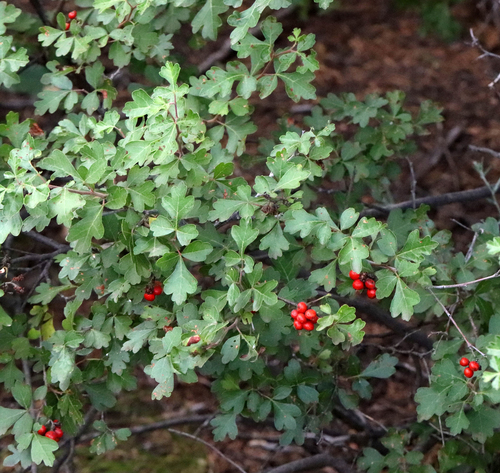
Verbatim
e5“Limonene was also shown to be the main component of R. aromatica essential oil at an average of 86.2% area, with >98% of that being the enantiomer D-limonene”
Claim · model-written summary
Over 98% of the limonene in R. aromatica essential oil was the enantiomer D-limonene.
- Taxon
- R. aromaticaRhus aromaticae5
- Outcome
- enantiomer D-limonenee5
- Value
- >98%e5
Organisms pictured · Representative pictures of the matched species, not figures from the paper.
Verbatim
e5“Limonene was also shown to be the main component of R. aromatica essential oil at an average of 86.2% area, with >98% of that being the enantiomer D-limonene”
Claim · model-written summary
Oven drying of the plant material gave a greater essential oil yield of 0.31% than shade- and sun-drying.
- Treatment
- drying the plant material in the ovene6
- Outcome
- yielde6
- Direction
- greatere6
- Value
- 0.31%e6
- Comparator
- shade- and sun-dry methodse6
Organisms pictured · Representative pictures of the matched species, not figures from the paper.
Verbatim
e6“when drying the plant material in the oven, a greater yield of 0.31% is obtained, whereas the shade- and sun-dry methods yield 0.09% and 0.02%, respectively”
t0“Rhus aromatica Aiton”
Claim · model-written summary
Shade drying gave a lower essential oil yield of 0.09% than oven drying.
- Treatment
- shade- and sun-dry methodse6
- Outcome
- yielde6
- Direction
- lowerinferrede6
- Value
- 0.09%e6
- Comparator
- drying the plant material in the ovene6
Organisms pictured · Representative pictures of the matched species, not figures from the paper.
Verbatim
e6“when drying the plant material in the oven, a greater yield of 0.31% is obtained, whereas the shade- and sun-dry methods yield 0.09% and 0.02%, respectively”
t0“Rhus aromatica Aiton”
Claim · model-written summary
Sun drying gave a lower essential oil yield of 0.02% than oven drying.
- Treatment
- shade- and sun-dry methodse6
- Outcome
- yielde6
- Direction
- lowerinferrede6
- Value
- 0.02%e6
- Comparator
- drying the plant material in the ovene6
Organisms pictured · Representative pictures of the matched species, not figures from the paper.
Verbatim
e6“when drying the plant material in the oven, a greater yield of 0.31% is obtained, whereas the shade- and sun-dry methods yield 0.09% and 0.02%, respectively”
t0“Rhus aromatica Aiton”
Claim · model-written summary
The main component of R. trilobata essential oil was α-pinene, compared with D-limonene in R. aromatica.
- Taxon
- Rhus trilobata
 Rhus trilobatat1
- Outcome
- α-pinenee7
- Qualifier
- main component of R. trilobatae7
- Comparator
- D-limonene in R. aromaticae7
Organisms pictured · Representative pictures of the matched species, not figures from the paper.

Verbatim
e7“The main component of R. trilobata was α-pinene compared to the D-limonene in R. aromatica”
t1“Rhus trilobata”