Abstract
Rubber tree (Hevea brasiliensis) is a crucial economic crop in tropical regions worldwide; however, low temperature in some areas have become a major source of abiotic stress that constrains the sustainable development of the natural rubber industry. Superoxide dismutase (SOD) is an enzyme that catalyzes the dismutation of the superoxide anion radical (O2•−) into oxygen (O2) and hydrogen peroxide (H2O2). Thus, SOD is an important antioxidant defense under plant stress defense, and also may help to improve rubber tree protection from the cold. In this study, a Cu/Zn superoxide dismutase gene, HbCSD2, was successfully cloned from the rubber tree via PCR amplification. Subcellular localization analysis revealed that HbCSD2 is localized in the cytoplasm and nucleus. Under low-temperature stress, the seed germination rate, fresh weight, and survival rate of HbCSD2-overexpressing transgenic Arabidopsis were significantly higher than those of the wild-type (WT) plants. Conversely, the malformed seedling rate was considerably lower. Compared to WT plants, the transgenic Arabidopsis showed marked increases in SOD, catalase (CAT), and peroxidase (POD) activity, as well as the soluble sugar content. Meanwhile, the levels of malondialdehyde (MDA), H2O2, and O2•− were significantly lower. This study confirms that HbCSD2 enhances cold tolerance by boosting antioxidant enzyme activity and ROS scavenging capabilities, while reducing membrane lipid peroxidation. These findings offer valuable insights into the regulatory role of HbCSD2 and the mechanisms behind stress responses in the rubber tree.
Abstract from the paper’s OpenAlex record; open copy licensed cc-by. Read at the source ↗
The text the model read, with the source record’s inline markup (italics, sub- and superscripts) rendered and its character entities decoded; quote offsets refer to the raw text.
Claims 8
Claim · model-written summary
Under low-temperature stress, HbCSD2 transgenic Arabidopsis had higher seed germination rate, fresh weight and survival rate than wild type.
- Taxon
- Arabidopsis
 Arabidopsise3
- Material
- HbCSD2-overexpressing transgenic Arabidopsise3
- Treatment
- Under low-temperature stresse3
- Gene
- HbCSD2e3
- Outcome
- seed germination rate, fresh weight, and survival ratee3
- Direction
- significantly highere3
- Comparator
- wild-type (WT) plantse3
Organisms pictured · Representative pictures of the matched species, not figures from the paper.

Verbatim
e3“Under low-temperature stress, the seed germination rate, fresh weight, and survival rate of HbCSD2-overexpressing transgenic Arabidopsis were significantly higher than those of the wild-type (WT) plants. Conversely, the malformed seedling rate was considerably lower”
Claim · model-written summary
Under low-temperature stress, HbCSD2 transgenic Arabidopsis had considerably lower malformed seedling rate than wild type.
- Taxon
- ArabidopsisArabidopsise3
- Material
- HbCSD2-overexpressing transgenic Arabidopsise3
- Treatment
- Under low-temperature stresse3
- Gene
- HbCSD2e3
- Outcome
- malformed seedling ratee3
- Direction
- considerably lowere3
- Comparator
- wild-type (WT) plantse3
Organisms pictured · Representative pictures of the matched species, not figures from the paper.
Verbatim
e3“Under low-temperature stress, the seed germination rate, fresh weight, and survival rate of HbCSD2-overexpressing transgenic Arabidopsis were significantly higher than those of the wild-type (WT) plants. Conversely, the malformed seedling rate was considerably lower”
Claim · model-written summary
Transgenic Arabidopsis showed marked increases in SOD, CAT and POD activity relative to WT plants.
- Taxon
- ArabidopsisArabidopsise4
- Treatment
- transgenic Arabidopsise4
- Outcome
- SOD, catalase (CAT), and peroxidase (POD) activitye4
- Direction
- marked increasese4
- Comparator
- WT plantse4
Organisms pictured · Representative pictures of the matched species, not figures from the paper.
Verbatim
e4“Compared to WT plants, the transgenic Arabidopsis showed marked increases in SOD, catalase (CAT), and peroxidase (POD) activity, as well as the soluble sugar content”
Claim · model-written summary
Transgenic Arabidopsis showed a marked increase in soluble sugar content relative to WT plants.
- Taxon
- ArabidopsisArabidopsise4
- Treatment
- transgenic Arabidopsise4
- Outcome
- soluble sugar contente4
- Direction
- marked increasese4
- Comparator
- WT plantse4
Organisms pictured · Representative pictures of the matched species, not figures from the paper.
Verbatim
e4“Compared to WT plants, the transgenic Arabidopsis showed marked increases in SOD, catalase (CAT), and peroxidase (POD) activity, as well as the soluble sugar content”
Claim · model-written summary
Transgenic Arabidopsis had significantly lower malondialdehyde, H2O2 and superoxide levels than WT plants.
- Taxon
- ArabidopsisArabidopsise4
- Treatment
- transgenic Arabidopsise4
- Outcome
- the levels of malondialdehyde (MDA), H2O2, and O2•−e5
- Direction
- significantly lowere5
- Comparator
- WT plantse4
Organisms pictured · Representative pictures of the matched species, not figures from the paper.
Verbatim
e4“Compared to WT plants, the transgenic Arabidopsis showed marked increases in SOD, catalase (CAT), and peroxidase (POD) activity, as well as the soluble sugar content”
e5“the levels of malondialdehyde (MDA), H2O2, and O2•− were significantly lower”
Claim · model-written summary
HbCSD2 enhances cold tolerance by boosting antioxidant enzyme activity and ROS scavenging, while reducing membrane lipid peroxidation.
- Taxon
- ArabidopsisArabidopsise3
- Gene
- HbCSD2e6
- Outcome
- cold tolerancee6
- Qualifier
- boosting antioxidant enzyme activity and ROS scavenging capabilitiese6
Organisms pictured · Representative pictures of the matched species, not figures from the paper.
Verbatim
e3“Under low-temperature stress, the seed germination rate, fresh weight, and survival rate of HbCSD2-overexpressing transgenic Arabidopsis were significantly higher than those of the wild-type (WT) plants. Conversely, the malformed seedling rate was considerably lower”
e6“This study confirms that HbCSD2 enhances cold tolerance by boosting antioxidant enzyme activity and ROS scavenging capabilities, while reducing membrane lipid peroxidation”
Claim · model-written summary
HbCSD2 is localized in the cytoplasm and nucleus.
- Taxon
- Hevea brasiliensis
 Hevea brasiliensist0
- Gene
- HbCSD2e2
- Outcome
- Subcellular localizatione2
- Qualifier
- cytoplasm and nucleuse2
Organisms pictured · Representative pictures of the matched species, not figures from the paper.
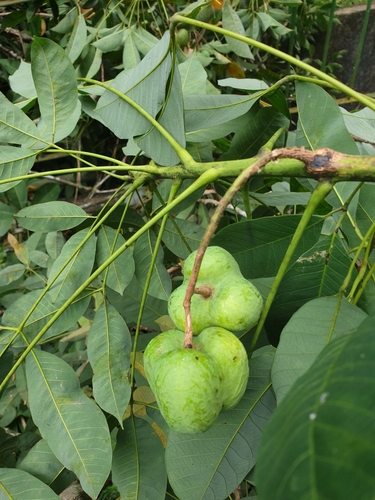
Verbatim
t0“Hevea brasiliensis”
e2“Subcellular localization analysis revealed that HbCSD2 is localized in the cytoplasm and nucleus”
Claim · model-written summary
HbCSD2, a Cu/Zn superoxide dismutase gene, was successfully cloned from the rubber tree.
- Taxon
- rubber treeHevea brasiliensise1
- Gene
- HbCSD2e1
- Outcome
- successfully clonede1
Organisms pictured · Representative pictures of the matched species, not figures from the paper.
Verbatim
e1“a Cu/Zn superoxide dismutase gene, HbCSD2, was successfully cloned from the rubber tree via PCR amplification”