Abstract
This study aimed to evaluate the effectiveness of different cover crops in suppressing weed emergence and their influence on maize productivity under field conditions in Concepción, Paraguay (23°25'40.3"S, 57°20'00.2"W) from October 2021 to June 2022. A completely randomized design was employed with four treatments and seven replications. The treatments consisted of using cover crop species, which were planted in the research area subsequently used to cultivate maize. The cover crops used were Urochloa ruziziensis cv. ruziziensis, Stizolobium pruriens , a mixture ( Urochloa ruziziensis cv. ruziziensis + Stizolobium pruriens ) and a conventional system. The experiment consisted of two stages: first, the installation of the cover crop species, followed by the planting of the maize. Ninety days after planting the cover crop species, the cover crop plants were cut down. Thirty days later, Triple pro DKB360 hybrid maize was sown. The parameters evaluated in the first stage were green weed mass, dry weed mass, green crop mass, and dry crop mass at 90 days after sowing (DAS). In the second stage, the parameters evaluated were green mass of weeds at 20, 35, 50 and 65 DAS; weed suppression at 20, 35, 50 and 65 DAS; cover persistence at 0, 20, 35, 50 and 65 DAS; plant height at 35 and 110 DAS; number of grain rows per ear; number of grains per row; and yield. Variance analysis was carried out on the data using the F-test at 5%, and Tukey’s test at 5% was used to compare the means of the treatments. The mixture of U. ruziziensis and S. pruriens significantly reduced weed biomass by 43.2% compared to the conventional system and showed the highest weed suppression and cover persistence up to 65 days after sowing. Moreover, this mixture produced the highest maize yield (8.42 Mg ha -1 ), representing a 39.4% increase over the conventional system. Treatments with U. ruziziensis alone also outperformed the control, while S. pruriens alone had limited effectiveness. These results highlight the potential of using mixed cover species as a sustainable weed management strategy that enhances maize productivity in smallholder systems.
Abstract from the paper’s OpenAlex record; open copy licensed cc-by. Read at the source ↗
The text the model read, with the source record’s inline markup (italics, sub- and superscripts) rendered and its character entities decoded; quote offsets refer to the raw text.
Claims 7
Claim · model-written summary
The mixture of U. ruziziensis and S. pruriens reduced weed biomass by 43.2% compared with the conventional system.
- Treatment
- mixture of U. ruziziensis and S. pruriense2
- Interactor
- weede2weed
- Second interactor
- U. ruziziensis
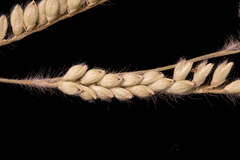 Urochloa ruziziensise2other
- Outcome
- weed biomasse2
- Direction
- reducede2
- Value
- 43.2%e2
- Comparator
- conventional systeme2
- Setting
- field conditions in Concepción, Paraguaye1
 Zea mays
Organisms pictured · Representative pictures of the matched species, not figures from the paper.


Verbatim
e1“maize productivity under field conditions in Concepción, Paraguay”
e2“The mixture of U. ruziziensis and S. pruriens significantly reduced weed biomass by 43.2% compared to the conventional system and showed the highest weed suppression and cover persistence up to 65 days after sowing”
Claim · model-written summary
The mixture produced the highest maize yield, 8.42 Mg ha -1.
- Treatment
- mixturee3
- Outcome
- maize yielde3
- Direction
- higheste3
- Value
- 8.42 Mg ha -1e3
- Comparator
- conventional systeme3
Organisms pictured · Representative pictures of the matched species, not figures from the paper.
Verbatim
e1“maize productivity under field conditions in Concepción, Paraguay”
e3“this mixture produced the highest maize yield (8.42 Mg ha -1 ), representing a 39.4% increase over the conventional system”
Claim · model-written summary
The mixture increased maize yield by 39.4% over the conventional system.
- Treatment
- mixturee3
- Outcome
- maize yielde3
- Direction
- increasee3
- Value
- 39.4%e3
- Comparator
- conventional systeme3
Organisms pictured · Representative pictures of the matched species, not figures from the paper.
Verbatim
e1“maize productivity under field conditions in Concepción, Paraguay”
e3“this mixture produced the highest maize yield (8.42 Mg ha -1 ), representing a 39.4% increase over the conventional system”
Claim · model-written summary
The mixture showed the highest weed suppression and cover persistence up to 65 days after sowing.
- Treatment
- mixture of U. ruziziensis and S. pruriense2
- Interactor
- weede2weed
- Outcome
- weed suppression and cover persistencee2
- Direction
- higheste2
- Qualifier
- up to 65 days after sowinge2
Not reportedComparator
Organisms pictured · Representative pictures of the matched species, not figures from the paper.
Verbatim
e1“maize productivity under field conditions in Concepción, Paraguay”
e2“The mixture of U. ruziziensis and S. pruriens significantly reduced weed biomass by 43.2% compared to the conventional system and showed the highest weed suppression and cover persistence up to 65 days after sowing”
Claim · model-written summary
Treatments with U. ruziziensis alone outperformed the control.
- Treatment
- U. ruziziensis alonee4
- Outcome
- outperformed the controle4
- Direction
- outperformede4
- Comparator
- controle4
Organisms pictured · Representative pictures of the matched species, not figures from the paper.
Verbatim
e1“maize productivity under field conditions in Concepción, Paraguay”
e4“Treatments with U. ruziziensis alone also outperformed the control, while S. pruriens alone had limited effectiveness”
Claim · model-written summary
S. pruriens alone had limited effectiveness.
Not reportedComparator
Organisms pictured · Representative pictures of the matched species, not figures from the paper.
Verbatim
e1“maize productivity under field conditions in Concepción, Paraguay”
e4“Treatments with U. ruziziensis alone also outperformed the control, while S. pruriens alone had limited effectiveness”
Claim · model-written summary
Mixed cover species are a potential sustainable weed management strategy that enhances maize productivity in smallholder systems.
- Outcome
- using mixed cover species as a sustainable weed management strategye5
Organisms pictured · Representative pictures of the matched species, not figures from the paper.
Verbatim
e1“maize productivity under field conditions in Concepción, Paraguay”
e5“These results highlight the potential of using mixed cover species as a sustainable weed management strategy that enhances maize productivity”
The same questions in other papers
Urochloa ruziziensis · weed · Zea mays (maize)Results agree
1 paper in the same direction as this paper
- positive
Mucuna pruriens · weed · Zea mays (maize)Results agree
1 paper in the same direction as this paper
- positive
Claims are grouped by organism, treatment and what was measured or targeted. A paper counts as positive when any of its claims in the group is positive.