Abstract
The present investigation aimed to evaluate the influence of seed biopriming with Bacillus thuringiensis (Bt) isolates on germination and early seedling growth of chickpea (Cicer arietinum L., variety Jaki-9218). Twenty-one indigenous Bt isolates, along with a standard Bt-HD-1 strain, were tested under laboratory conditions using the paper towel method. Results revealed that several Bt strains significantly enhanced seed performance compared to the untreated control. Notably, PDKV-Bt-SBn-2, PDKV-Bt-SAk-12, PDKV-Bt-SDA-1, and PDKV-Bt-SA-22 recorded faster emergence, higher germination rates, longer root and shoot lengths, and superior vigour indices. Improvements included a reduction of nearly one day in emergence, 13-14% higher germination, and up to 9-11 cm greater seedling length compared to control. These findings demonstrate that indigenous Bt strains not only promote early establishment but also enhance vigour and resilience. Hence, Bt-based biopriming represents a promising, cost-effective, and eco-friendly strategy for sustainable chickpea production under diverse agro-climatic conditions.
Abstract from the paper’s OpenAlex record, shown for indexing and research. Copyright remains with the authors or the publisher. Read at the source ↗
The text the model read, with the source record’s inline markup (italics, sub- and superscripts) rendered and its character entities decoded; quote offsets refer to the raw text.
Claims 5
Claim · model-written summary
Several Bt strains significantly improved seed performance over the untreated control.
- Taxon
- chickpea
 Cicer arietinume1
- Material
- Jaki-9218e1
- Treatment
- Bt strainse0
- Interactor
- Bacillus thuringiensis
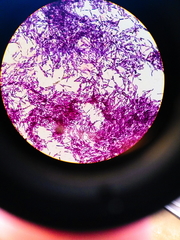 Bacillus thuringiensise2symbiont
- Outcome
- seed performancee0
- Direction
- enhancede0
- Comparator
- untreated controle0
Organisms pictured · Representative pictures of the matched species, not figures from the paper.

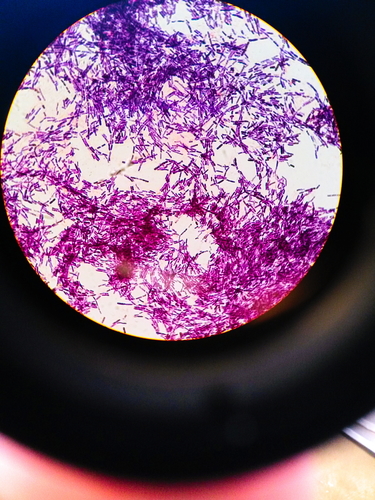
Verbatim
e0“several Bt strains significantly enhanced seed performance compared to the untreated control”
e1“chickpea (Cicer arietinum L., variety Jaki-9218)”
e2“Bacillus thuringiensis (Bt) isolates”
Claim · model-written summary
Four named Bt isolates produced faster emergence, higher germination, longer roots and shoots, and higher vigour indices.
- Taxon
- chickpeaCicer arietinume1
- Treatment
- PDKV-Bt-SBn-2, PDKV-Bt-SAk-12, PDKV-Bt-SDA-1, and PDKV-Bt-SA-22e0
- Interactor
- Bacillus thuringiensisBacillus thuringiensise2symbiont
- Outcome
- faster emergence, higher germination rates, longer root and shoot lengths, and superior vigour indicese0
- Direction
- highere0
Not reportedComparator
Organisms pictured · Representative pictures of the matched species, not figures from the paper.
Verbatim
e0“PDKV-Bt-SBn-2, PDKV-Bt-SAk-12, PDKV-Bt-SDA-1, and PDKV-Bt-SA-22 recorded faster emergence, higher germination rates, longer root and shoot lengths, and superior vigour indices”
e1“chickpea (Cicer arietinum L., variety Jaki-9218)”
e2“Bacillus thuringiensis (Bt) isolates”
Claim · model-written summary
Biopriming reduced emergence time by nearly one day relative to control.
- Taxon
- chickpeaCicer arietinume1
- Treatment
- seed biopriming with Bacillus thuringiensis (Bt) isolatese2
- Interactor
- Bacillus thuringiensisBacillus thuringiensise2symbiont
- Outcome
- emergencee0
- Direction
- reductione0
- Value
- nearly one daye0
- Comparator
- controle0
Organisms pictured · Representative pictures of the matched species, not figures from the paper.
Verbatim
e0“a reduction of nearly one day in emergence, 13-14% higher germination, and up to 9-11 cm greater seedling length compared to control”
e1“chickpea (Cicer arietinum L., variety Jaki-9218)”
e2“seed biopriming with Bacillus thuringiensis (Bt) isolates”
Claim · model-written summary
Biopriming increased germination by 13-14% relative to control.
- Taxon
- chickpeaCicer arietinume1
- Treatment
- seed biopriming with Bacillus thuringiensis (Bt) isolatese2
- Interactor
- Bacillus thuringiensisBacillus thuringiensise2symbiont
- Outcome
- germinatione0
- Direction
- highere0
- Value
- 13-14%e0
- Comparator
- controle0
Organisms pictured · Representative pictures of the matched species, not figures from the paper.
Verbatim
e0“13-14% higher germination, and up to 9-11 cm greater seedling length compared to control”
e1“chickpea (Cicer arietinum L., variety Jaki-9218)”
e2“seed biopriming with Bacillus thuringiensis (Bt) isolates”
Claim · model-written summary
Biopriming increased seedling length by up to 9-11 cm relative to control.
- Taxon
- chickpeaCicer arietinume1
- Treatment
- seed biopriming with Bacillus thuringiensis (Bt) isolatese2
- Interactor
- Bacillus thuringiensisBacillus thuringiensise2symbiont
- Outcome
- seedling lengthe0
- Direction
- greatere0
- Value
- up to 9-11 cme0
- Comparator
- controle0
Organisms pictured · Representative pictures of the matched species, not figures from the paper.
Verbatim
e0“up to 9-11 cm greater seedling length compared to control”
e1“chickpea (Cicer arietinum L., variety Jaki-9218)”
e2“seed biopriming with Bacillus thuringiensis (Bt) isolates”
The same questions in other papers
Bacillus thuringiensis · growth · Cicer arietinum (chickpea)Results agree
1 paper in the same direction as this paper
- positive
transgenic · growth · Cicer arietinum (chickpea)Results agree
4 papers in the same direction as this paper
- positive
- positive
- positive
1 paper more in this group
See all 5 papers →Claims are grouped by organism, treatment and what was measured or targeted. A paper counts as positive when any of its claims in the group is positive.