Abstract
The Violaceae family is rich in metal-tolerant species and species producing cyclic peptides (cyclotides) that are linked to the resistance to biotic factors. Plants that inhabit areas polluted with heavy metals have developed various mechanisms of tolerance. To test the role of cyclotides in protection against abiotic factors, including heavy metals, cell suspension cultures of Viola species/genotypes (V. lutea ssp. westfalica, V. tricolor, V. arvensis, and V. uliginosa), representing different levels of tolerance to heavy metals (from the most tolerant-MET to the least tolerant populations/species-NMET), were used. The relative abundances of the cyclotides in the control, untreated cell suspensions of all the selected species/genotypes, and cells treated with Zn or Pb (200 µM or 2000 µM) for 24 h or 72 h were determined via MALDI-MS. Transmission electron microscopy with X-ray microanalysis was used to detect putative co-localization of the cyclotides with Zn or Pb in the cells of V. tricolor treated with the highest concentration of heavy metals for 72 h. Cyclotide biosynthesis was dependent on the type of heavy metal and its concentration, time of treatment, plant species, and population type (MET vs. NMET). It was positively correlated with the level of tolerance of particular Viola species. The increased production of cyclotides was observed in the cells of metallophyte species, mostly in Zn-treated cells. The nonmetallophyte-V. uliginosa presented a decrease in the production of cyclotides independent of the dose and duration of the metal treatment. Cyclotides co-localized with Pb more evidently than with Zn, suggesting that cyclotides have heavy metal affinity. V. lutea ssp. westfalica transcriptome mining yielded 100 cyclotide sequences, 16 known and 84 novel named viwe 1-84. These findings support the hypothesis that cyclotides are involved in certain mechanisms of plant tolerance to heavy metals.
Abstract from the paper’s OpenAlex record; open copy licensed cc-by. Read at the source ↗
The text the model read, with the source record’s inline markup (italics, sub- and superscripts) rendered and its character entities decoded; quote offsets refer to the raw text.
Claims 7
Claim · model-written summary
Cyclotide biosynthesis depended on metal type, concentration, exposure time, species, and population type.
- Treatment
- heavy metale0
- Outcome
- Cyclotide biosynthesise0
- Qualifier
- concentration, time of treatment, plant species, and population type (MET vs. NMET)e0
 Viola
Not reportedDirection
Organisms pictured · Representative pictures of the matched species, not figures from the paper.

Verbatim
e0“Cyclotide biosynthesis was dependent on the type of heavy metal and its concentration, time of treatment, plant species, and population type (MET vs. NMET)”
t0“Viola spp.”
Claim · model-written summary
Cyclotide biosynthesis correlated positively with Viola metal tolerance.
Organisms pictured · Representative pictures of the matched species, not figures from the paper.
Verbatim
e0“It was positively correlated with the level of tolerance of particular Viola species”
t0“cyclotides”
Claim · model-written summary
Metallophyte cells produced more cyclotides, especially under zinc treatment.
- Material
- metallophyte speciese0
- Treatment
- Zn-treatede0
- Outcome
- production of cyclotidese0
- Direction
- increasede0
Not reportedComparator
Organisms pictured · Representative pictures of the matched species, not figures from the paper.
Verbatim
e0“The increased production of cyclotides was observed in the cells of metallophyte species, mostly in Zn-treated cells”
t0“Viola spp.”
Claim · model-written summary
V. uliginosa cells showed reduced cyclotide production regardless of dose or duration.
- Taxon
- V. uliginosa
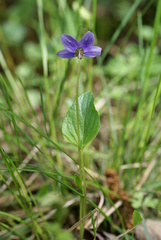 Viola uliginosae0
- Treatment
- metal treatmente0
- Outcome
- production of cyclotidese0
- Direction
- decreasee0
- Qualifier
- independent of the dose and duratione0
Not reportedComparator
Organisms pictured · Representative pictures of the matched species, not figures from the paper.
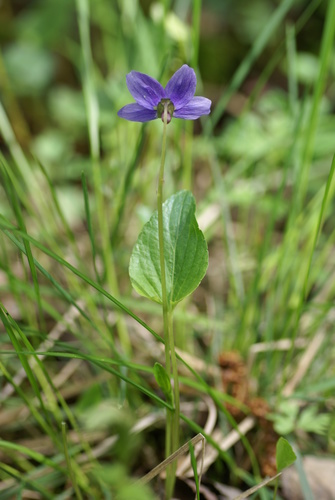
Verbatim
e0“The nonmetallophyte-V. uliginosa presented a decrease in the production of cyclotides independent of the dose and duration of the metal treatment”
Claim · model-written summary
Cyclotides colocalized more evidently with lead than zinc.
Organisms pictured · Representative pictures of the matched species, not figures from the paper.
Verbatim
e0“Cyclotides co-localized with Pb more evidently than with Zn”
t0“Viola spp.”
Claim · model-written summary
Viola lutea transcriptome mining yielded 100 cyclotide sequences.
- Taxon
- V. lutea ssp. westfalica
 Viola luteae0
- Outcome
- cyclotide sequencese0
- Value
- 100e0
- Qualifier
- 16 known and 84 novel named viwe 1-84e0
Organisms pictured · Representative pictures of the matched species, not figures from the paper.

Verbatim
e0“V. lutea ssp. westfalica transcriptome mining yielded 100 cyclotide sequences, 16 known and 84 novel named viwe 1-84”
Claim · model-written summary
The findings support a role of cyclotides in heavy-metal tolerance mechanisms.
Not reportedDirection
Organisms pictured · Representative pictures of the matched species, not figures from the paper.
Verbatim
e0“cyclotides are involved in certain mechanisms of plant tolerance to heavy metals”
t0“Viola spp.”