Abstract
In Sierra Juárez, Oaxaca, fruit fly damage has increased in guava, mango, orange, and mamey, fruits that contribute to the economy and nutrition of families in the rural areas. From May to September 2022, different types of traps and attractants were installed in the municipality of Tanetze de Zaragoza to capture and to determine the best alternatives for monitoring and management. Eight treatments were established (two traps, three attractants, and water as the control) at three different altitudes (high: 1255-443 m, middle: 900-1180 m and low: 747-969 m). Anastrepha ludens, A. obliqua, A. striata and A. serpentina were the major species, accounting for 80% of the captures. Anastrepha fraterculus, A. distincta, A. bahiensis, A. zuelaniae, A. robusta and A. curvicauda made up the other 20%. The largest number of flies per trap per day (FTD=0.42) was achieved with the attractant Cera Trap, followed by Torula (MTD=0.12). In the high and low altitudinal strata, Cera Trap® in PET bottles obtained the largest number of fruit flies captured (70.3 and 60.3). At the middle altitude, Multilure + Cera Trap was the best treatment (115.6). These results suggest that the use of the homemade PET bottle trap baited with Cera Trap is a cheap option for monitoring and controlling fruit flies.
Abstract from the paper’s OpenAlex record, shown for indexing and research. Copyright remains with the authors or the publisher. Read at the source ↗
The text the model read, with the source record’s inline markup (italics, sub- and superscripts) rendered and its character entities decoded; quote offsets refer to the raw text.
Claims 20
Claim · model-written summary
Fruit fly damage increased in guava.
- Taxon
- guava
 Psidium guajavae0
- Interactor
- fruit flye0pest
- Outcome
- fruit fly damagee0
- Direction
- increasede0
Organisms pictured · Representative pictures of the matched species, not figures from the paper.

Verbatim
e0“fruit fly damage has increased in guava, mango, orange, and mamey”
Claim · model-written summary
Fruit fly damage increased in mango.
- Taxon
- mango
 Mangifera indicae0
- Interactor
- fruit flye0pest
- Outcome
- fruit fly damagee0
- Direction
- increasede0
Organisms pictured · Representative pictures of the matched species, not figures from the paper.

Verbatim
e0“fruit fly damage has increased in guava, mango, orange, and mamey”
Claim · model-written summary
Fruit fly damage increased in orange.
Verbatim
e0“fruit fly damage has increased in guava, mango, orange, and mamey”
Claim · model-written summary
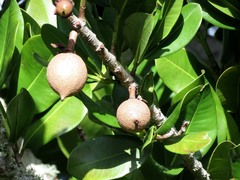
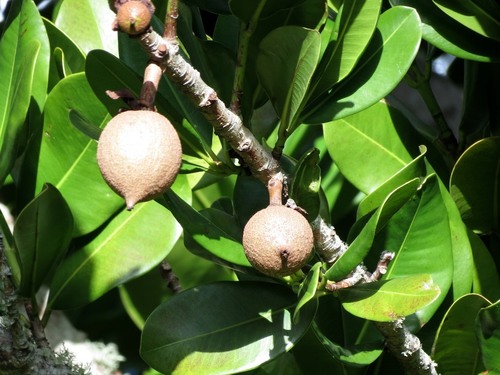
Fruit fly damage increased in mamey.
- Taxon
- mamey
 Mammea americanae0
- Interactor
- fruit flye0pest
- Outcome
- fruit fly damagee0
- Direction
- increasede0
Organisms pictured · Representative pictures of the matched species, not figures from the paper.
Verbatim
e0“fruit fly damage has increased in guava, mango, orange, and mamey”
Claim · model-written summary
Anastrepha ludens was among the major fruit flies captured.
- Taxon
- guavaPsidium guajavat0
- Interactor
- Anastrepha ludens
 Anastrepha ludense0pest
- Outcome
- major speciese0
- Value
- 80%e0
Organisms pictured · Representative pictures of the matched species, not figures from the paper.

Verbatim
e0“Anastrepha ludens, A. obliqua, A. striata and A. serpentina were the major species, accounting for 80% of the captures”
t0“fruit fly damage has increased in guava, mango, orange, and mamey”
Claim · model-written summary
A. obliqua was among the major fruit flies captured.
- Taxon
- guavaPsidium guajavat0
- Interactor
- A. obliqua
 Anastrepha obliquae0pest
- Outcome
- major speciese0
- Value
- 80%e0
Organisms pictured · Representative pictures of the matched species, not figures from the paper.

Verbatim
e0“Anastrepha ludens, A. obliqua, A. striata and A. serpentina were the major species, accounting for 80% of the captures”
t0“fruit fly damage has increased in guava, mango, orange, and mamey”
Claim · model-written summary
A. striata was among the major fruit flies captured.
- Taxon
- guavaPsidium guajavat0
- Interactor
- A. striata
 Anastrepha striatae0pest
- Outcome
- major speciese0
- Value
- 80%e0
Organisms pictured · Representative pictures of the matched species, not figures from the paper.

Verbatim
e0“Anastrepha ludens, A. obliqua, A. striata and A. serpentina were the major species, accounting for 80% of the captures”
t0“fruit fly damage has increased in guava, mango, orange, and mamey”
Claim · model-written summary
A. serpentina was among the major fruit flies captured.
- Taxon
- guavaPsidium guajavat0
- Interactor
- A. serpentina
 Anastrepha serpentinae0pest
- Outcome
- major speciese0
- Value
- 80%e0
Organisms pictured · Representative pictures of the matched species, not figures from the paper.

Verbatim
e0“Anastrepha ludens, A. obliqua, A. striata and A. serpentina were the major species, accounting for 80% of the captures”
t0“fruit fly damage has increased in guava, mango, orange, and mamey”
Claim · model-written summary
Anastrepha fraterculus was among the less common captured fruit flies.
- Taxon
- guavaPsidium guajavat0
- Interactor
- Anastrepha fraterculus
 Anastrepha fraterculuse0pest
- Outcome
- other 20%e0
Organisms pictured · Representative pictures of the matched species, not figures from the paper.

Verbatim
e0“Anastrepha fraterculus, A. distincta, A. bahiensis, A. zuelaniae, A. robusta and A. curvicauda made up the other 20%”
t0“fruit fly damage has increased in guava, mango, orange, and mamey”
Claim · model-written summary
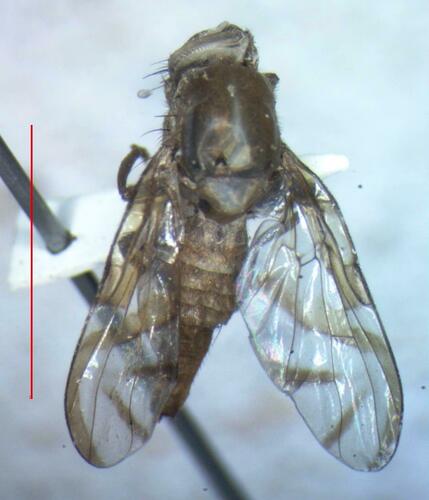
A. distincta was among the less common captured fruit flies.
- Taxon
- guavaPsidium guajavat0
- Interactor
- A. distincta
 Anastrepha distinctae0pest
- Outcome
- other 20%e0
Organisms pictured · Representative pictures of the matched species, not figures from the paper.
Verbatim
e0“Anastrepha fraterculus, A. distincta, A. bahiensis, A. zuelaniae, A. robusta and A. curvicauda made up the other 20%”
t0“fruit fly damage has increased in guava, mango, orange, and mamey”
Claim · model-written summary
A. bahiensis was among the less common captured fruit flies.
- Taxon
- guavaPsidium guajavat0
- Interactor
- A. bahiensisAnastrepha bahiensise0pest
- Outcome
- other 20%e0
Organisms pictured · Representative pictures of the matched species, not figures from the paper.
Verbatim
e0“Anastrepha fraterculus, A. distincta, A. bahiensis, A. zuelaniae, A. robusta and A. curvicauda made up the other 20%”
t0“fruit fly damage has increased in guava, mango, orange, and mamey”
Claim · model-written summary
A. zuelaniae was among the less common captured fruit flies.
- Taxon
- guavaPsidium guajavat0
- Interactor
- A. zuelaniaeAnastrepha zuelaniaee0pest
- Outcome
- other 20%e0
Organisms pictured · Representative pictures of the matched species, not figures from the paper.
Verbatim
e0“Anastrepha fraterculus, A. distincta, A. bahiensis, A. zuelaniae, A. robusta and A. curvicauda made up the other 20%”
t0“fruit fly damage has increased in guava, mango, orange, and mamey”
Claim · model-written summary
A. robusta was among the less common captured fruit flies.
- Taxon
- guavaPsidium guajavat0
- Interactor
- A. robustaAnastrepha robustae0pest
- Outcome
- other 20%e0
Organisms pictured · Representative pictures of the matched species, not figures from the paper.
Verbatim
e0“Anastrepha fraterculus, A. distincta, A. bahiensis, A. zuelaniae, A. robusta and A. curvicauda made up the other 20%”
t0“fruit fly damage has increased in guava, mango, orange, and mamey”
Claim · model-written summary
A. curvicauda was among the less common captured fruit flies.
- Taxon
- guavaPsidium guajavat0
- Interactor
- A. curvicaudaAnastrepha curvicaudae0pest
- Outcome
- other 20%e0
Organisms pictured · Representative pictures of the matched species, not figures from the paper.
Verbatim
e0“Anastrepha fraterculus, A. distincta, A. bahiensis, A. zuelaniae, A. robusta and A. curvicauda made up the other 20%”
t0“fruit fly damage has increased in guava, mango, orange, and mamey”
Claim · model-written summary
Cera Trap captured fruit flies at FTD=0.42 per trap per day.
- Taxon
- guavaPsidium guajavat0
- Treatment
- Cera Trape0
- Outcome
- flies per trap per daye0
- Value
- FTD=0.42e0
Organisms pictured · Representative pictures of the matched species, not figures from the paper.
Verbatim
e0“The largest number of flies per trap per day (FTD=0.42) was achieved with the attractant Cera Trap, followed by Torula (MTD=0.12)”
t0“fruit fly damage has increased in guava, mango, orange, and mamey”
Claim · model-written summary
Torula captured fruit flies at MTD=0.12 per trap per day.
- Taxon
- guavaPsidium guajavat0
- Treatment
- Torulae0
- Outcome
- flies per trap per daye0
- Value
- MTD=0.12e0
Organisms pictured · Representative pictures of the matched species, not figures from the paper.
Verbatim
e0“The largest number of flies per trap per day (FTD=0.42) was achieved with the attractant Cera Trap, followed by Torula (MTD=0.12)”
t0“fruit fly damage has increased in guava, mango, orange, and mamey”
Claim · model-written summary
Cera Trap in PET bottles captured the most fruit flies at high altitude, 70.3.
- Taxon
- guavaPsidium guajavat0
- Treatment
- Cera Trap® in PET bottlese0
- Interactor
- fruit fliese0pest
- Outcome
- fruit flies capturede0
- Direction
- largeste0
- Value
- 70.3e0
- Qualifier
- highe0
Organisms pictured · Representative pictures of the matched species, not figures from the paper.
Verbatim
e0“In the high and low altitudinal strata, Cera Trap® in PET bottles obtained the largest number of fruit flies captured (70.3 and 60.3)”
t0“fruit fly damage has increased in guava, mango, orange, and mamey”
Claim · model-written summary
Cera Trap in PET bottles captured the most fruit flies at low altitude, 60.3.
- Taxon
- guavaPsidium guajavat0
- Treatment
- Cera Trap® in PET bottlese0
- Interactor
- fruit fliese0pest
- Outcome
- fruit flies capturede0
- Direction
- largeste0
- Value
- 60.3e0
- Qualifier
- lowe0
Organisms pictured · Representative pictures of the matched species, not figures from the paper.
Verbatim
e0“In the high and low altitudinal strata, Cera Trap® in PET bottles obtained the largest number of fruit flies captured (70.3 and 60.3)”
t0“fruit fly damage has increased in guava, mango, orange, and mamey”
Claim · model-written summary
Multilure plus Cera Trap performed best at middle altitude, at 115.6.
- Taxon
- guavaPsidium guajavat0
- Treatment
- Multilure + Cera Trape0
- Outcome
- best treatmente0
- Value
- 115.6e0
- Qualifier
- middle altitudee0
Organisms pictured · Representative pictures of the matched species, not figures from the paper.
Verbatim
e0“At the middle altitude, Multilure + Cera Trap was the best treatment (115.6)”
t0“fruit fly damage has increased in guava, mango, orange, and mamey”
Claim · model-written summary
The authors recommend the homemade PET bottle trap with Cera Trap for inexpensive fruit fly monitoring and control.
- Taxon
- guavaPsidium guajavat0
- Interactor
- fruit fliese0pest
- Outcome
- homemade PET bottle trap baited with Cera Trap is a cheap option for monitoring and controlling fruit fliese0
Organisms pictured · Representative pictures of the matched species, not figures from the paper.
Verbatim
e0“These results suggest that the use of the homemade PET bottle trap baited with Cera Trap is a cheap option for monitoring and controlling fruit flies”
t0“fruit fly damage has increased in guava, mango, orange, and mamey”