Abstract
Abstract Climate change has been felt over the last few decades in Indonesia, especially in Aceh. Uncertain climatic conditions can affect crop production and food distribution. Insect pests and plant pathogens respond differently to various causes of climate change. An increase in temperature causes changes in the behavior of pests and diseases in terms of their ability to attack. This review discusses the impact of rising temperatures and CO 2 levels in the atmosphere on the ability to attack insect pests and pathogens on crops. Global climate warming is expected to trigger an expansion of pests and disease geographic distribution from lowland to highland, increase their survival, and increase the number of new host plants. The survey carried out in Central Aceh on an Arabica coffee plantation showed that leaf spots caused by Hemiliea vastatrix can attack a coffee plantation at an altitude of 1.400 meters, while the same case is also found at the same altitude where coffee berry borer pest ( Hyphothenemus hampei ) and coffee leaf miner ( Leucoptera coffeella ) can attack arabica coffee plantation. A comprehensive assessment of the impact of climate change on pests and plant diseases needs to be carried out to get an integrated pest management strategy.
Abstract from the paper’s OpenAlex record; open copy licensed cc-by. Read at the source ↗
The text the model read, with the source record’s inline markup (italics, sub- and superscripts) rendered and its character entities decoded; quote offsets refer to the raw text.
Claims 6
Claim · model-written summary
The review expects warming to expand pest and disease ranges from lowland to highland.
Not reportedTaxon
Verbatim
e0“Global climate warming is expected to trigger an expansion of pests and disease geographic distribution from lowland to highland”
Claim · model-written summary
The review expects warming to increase pest and pathogen survival.
Not reportedTaxon
Verbatim
e0“increase their survival”
e1“pests and disease geographic distribution”
Claim · model-written summary
The review expects warming to increase the number of new host plants.
Verbatim
e0“increase the number of new host plants”
Claim · model-written summary
Coffee leaf spots caused by Hemiliea vastatrix were observed at 1.400 meters in Central Aceh.
- Material
- Arabicae0
- Interactor
- Hemiliea vastatrixe0pathogen
- Outcome
- leaf spots caused by Hemiliea vastatrixe0
- Value
- 1.400 meterse0
- Setting
- Central Acehe0
Not reportedDirection
Organisms pictured · Representative pictures of the matched species, not figures from the paper.

Verbatim
e0“The survey carried out in Central Aceh on an Arabica coffee plantation showed that leaf spots caused by Hemiliea vastatrix can attack a coffee plantation at an altitude of 1.400 meters”
Claim · model-written summary
Coffee berry borer attacked arabica coffee at the same altitude.
- Taxon
- arabica coffee
 Coffea arabicae0
- Interactor
- Hyphothenemus hampeie0pest
- Outcome
- coffee berry borer pest ( Hyphothenemus hampei )e0
- Qualifier
- at the same altitudee1
Not reportedDirection
Organisms pictured · Representative pictures of the matched species, not figures from the paper.
Verbatim
e0“coffee berry borer pest ( Hyphothenemus hampei ) and coffee leaf miner ( Leucoptera coffeella ) can attack arabica coffee plantation”
e1“at the same altitude”
Claim · model-written summary
Coffee leaf miner attacked arabica coffee at the same altitude.
- Taxon
- arabica coffeeCoffea arabicae0
- Interactor
- Leucoptera coffeella
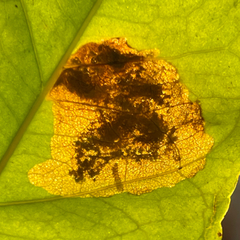 Leucoptera coffeellae0pest
- Outcome
- coffee leaf miner ( Leucoptera coffeella ) can attacke0
- Qualifier
- at the same altitudee1
Not reportedDirection
Organisms pictured · Representative pictures of the matched species, not figures from the paper.
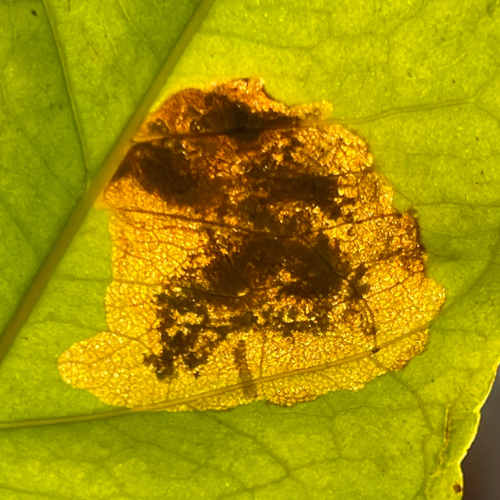
Verbatim
e0“coffee leaf miner ( Leucoptera coffeella ) can attack arabica coffee plantation”
e1“at the same altitude”