Abstract
Current work was conducted to evaluate 4 biotic and 8 abiotic agents, as seed soaking, against maize late wilt disease caused by Magnaporthiopsis maydis. It was performed in vitro and in vivo to achieve satisfied degree of disease control. Obtained results revealed that all tested fungicides in all doses were in vitro effective and completely inhibited M. maydis growth. Used fungicides herein ranked the first for antifungal activity followed by Pseudomonas fluorescens, sodium and potassium silicate. Greenhouse and field experiments showed that, Strong-X fungicide exhibited stability in its activity against the disease incidence with significant differences compared with the control. However, yield parameters obtained following the tested fungicides, even with the high application dose, were insignificantly different from the control. Meanwhile, potassium and sodium silicate as well as P. fluorescens were equivalent or superior the tested fungicides in protecting maize plants from wilt. Furthermore, sodium silicate significantly enhanced the 100-kernel weight (100KW) and net grains weight of ear (NGWE) per plant, whereas potassium silicate increased NGWE/plant only. On the other hand, soaked seeds in the suspension of Enteromorpha flexuosa and Ulva fasciate exhibited high performance for disease reduction with both application doses in the field and significantly reflected only on NGWE/plant. It could be concluded that the ecofriendly agents; potassium silicate, sodium silicate, P. fluorescens, E. flexuosa and U. fasciate are promising for control the disease. Further studies are needed to test other application methods of these promising materials against maize late wilt disease to maximize the obtained benefit.
Abstract from the paper’s OpenAlex record; open copy licensed cc-by. Read at the source ↗
The text the model read, with the source record’s inline markup (italics, sub- and superscripts) rendered and its character entities decoded; quote offsets refer to the raw text.
Claims 14
Claim · model-written summary
All tested fungicides completely inhibited M. maydis growth in vitro.
- Treatment
- all tested fungicides in all dosese0
- Interactor
- M. maydisMagnaporthiopsis maydise0pathogen
- Outcome
- M. maydis growthe0
- Direction
- inhibitede0
 Zea mays
Not reportedComparator
Organisms pictured · Representative pictures of the matched species, not figures from the paper.

Verbatim
e0“all tested fungicides in all doses were in vitro effective and completely inhibited M. maydis growth”
t0“Maize”
Claim · model-written summary
Fungicides ranked first in antifungal activity, followed by Pseudomonas fluorescens and silicates.
- Interactor
- Pseudomonas fluorescens
 Pseudomonas fluorescense0biocontrol_agent
- Outcome
- antifungal activitye0
- Direction
- ranked the firste0
Organisms pictured · Representative pictures of the matched species, not figures from the paper.

Verbatim
e0“Used fungicides herein ranked the first for antifungal activity followed by Pseudomonas fluorescens, sodium and potassium silicate”
t0“Maize”
Claim · model-written summary
Strong-X fungicide reduced disease incidence relative to control in greenhouse and field experiments.
- Treatment
- Strong-X fungicidee0
- Interactor
- Magnaporthiopsis maydisMagnaporthiopsis maydist1pathogen
- Outcome
- disease incidencee0
- Comparator
- the controle0
- Setting
- Greenhouse and fielde0
Not reportedDirection
Organisms pictured · Representative pictures of the matched species, not figures from the paper.
Verbatim
e0“Greenhouse and field experiments showed that, Strong-X fungicide exhibited stability in its activity against the disease incidence with significant differences compared with the control”
t0“Maize”
t1“Magnaporthiopsis maydis”
Claim · model-written summary
Tested fungicides did not significantly change yield parameters relative to control.
- Treatment
- the tested fungicidese0
- Outcome
- yield parameterse0
- Direction
- insignificantly differente0
- Qualifier
- even with the high application dosee0
- Comparator
- the controle0
Organisms pictured · Representative pictures of the matched species, not figures from the paper.
Verbatim
e0“yield parameters obtained following the tested fungicides, even with the high application dose, were insignificantly different from the control”
t0“Maize”
Claim · model-written summary
Potassium silicate protected maize from wilt at least as well as tested fungicides.
- Treatment
- potassiume0
- Outcome
- protecting maize plants from wilte0
- Direction
- equivalent or superiore0
- Comparator
- the tested fungicidese0
Organisms pictured · Representative pictures of the matched species, not figures from the paper.
Verbatim
e0“potassium and sodium silicate as well as P. fluorescens were equivalent or superior the tested fungicides in protecting maize plants from wilt”
t0“Maize”
Claim · model-written summary
Sodium silicate protected maize from wilt at least as well as tested fungicides.
- Treatment
- sodium silicatee0
- Outcome
- protecting maize plants from wilte0
- Direction
- equivalent or superiore0
- Comparator
- the tested fungicidese0
Organisms pictured · Representative pictures of the matched species, not figures from the paper.
Verbatim
e0“potassium and sodium silicate as well as P. fluorescens were equivalent or superior the tested fungicides in protecting maize plants from wilt”
t0“Maize”
Claim · model-written summary
P. fluorescens protected maize from wilt at least as well as tested fungicides.
- Treatment
- P. fluorescense0
- Interactor
- P. fluorescensPseudomonas fluorescense0biocontrol_agent
- Outcome
- protecting maize plants from wilte0
- Direction
- equivalent or superiore0
- Comparator
- the tested fungicidese0
Organisms pictured · Representative pictures of the matched species, not figures from the paper.
Verbatim
e0“potassium and sodium silicate as well as P. fluorescens were equivalent or superior the tested fungicides in protecting maize plants from wilt”
t0“Maize”
Claim · model-written summary
Sodium silicate significantly increased 100-kernel weight.
Not reportedComparator
Organisms pictured · Representative pictures of the matched species, not figures from the paper.
Verbatim
e0“sodium silicate significantly enhanced the 100-kernel weight (100KW) and net grains weight of ear (NGWE) per plant”
t0“Maize”
Claim · model-written summary
Sodium silicate significantly increased net grains weight of ear per plant.
Not reportedComparator
Organisms pictured · Representative pictures of the matched species, not figures from the paper.
Verbatim
e0“sodium silicate significantly enhanced the 100-kernel weight (100KW) and net grains weight of ear (NGWE) per plant”
t0“Maize”
Claim · model-written summary
Potassium silicate increased net grains weight per plant.
Not reportedComparator
Organisms pictured · Representative pictures of the matched species, not figures from the paper.
Verbatim
e0“potassium silicate increased NGWE/plant only”
t0“Maize”
Claim · model-written summary
Enteromorpha flexuosa seed soaking reduced disease in the field.
- Treatment
- soaked seeds in the suspension of Enteromorpha flexuosae0
- Interactor
- Enteromorpha flexuosa
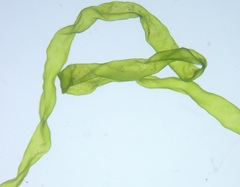 Ulva flexuosae0other
- Outcome
- diseasee0
- Direction
- reductione0
- Setting
- in the fielde0
Not reportedComparator
Organisms pictured · Representative pictures of the matched species, not figures from the paper.
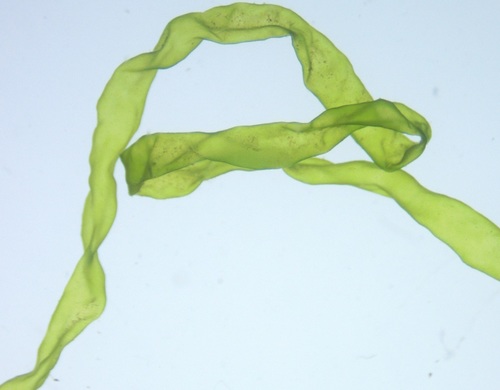
Verbatim
e0“soaked seeds in the suspension of Enteromorpha flexuosa and Ulva fasciate exhibited high performance for disease reduction with both application doses in the field”
t0“Maize”
Claim · model-written summary
Ulva fasciate seed soaking reduced disease in the field.
- Treatment
- Ulva fasciatee0
- Interactor
- Ulva fasciatee0other
- Outcome
- diseasee0
- Direction
- reductione0
- Setting
- in the fielde0
Not reportedComparator
Organisms pictured · Representative pictures of the matched species, not figures from the paper.
Verbatim
e0“soaked seeds in the suspension of Enteromorpha flexuosa and Ulva fasciate exhibited high performance for disease reduction with both application doses in the field”
t0“Maize”
Claim · model-written summary
Enteromorpha flexuosa seed soaking significantly affected NGWE per plant.
- Treatment
- Enteromorpha flexuosae0
- Interactor
- Enteromorpha flexuosaUlva flexuosae0other
- Outcome
- NGWE/plante0
Not reportedComparatorDirection
Organisms pictured · Representative pictures of the matched species, not figures from the paper.
Verbatim
e0“soaked seeds in the suspension of Enteromorpha flexuosa and Ulva fasciate exhibited high performance for disease reduction with both application doses in the field and significantly reflected only on NGWE/plant”
t0“Maize”
Claim · model-written summary
Ulva fasciate seed soaking significantly affected NGWE per plant.
Not reportedComparatorDirection
Organisms pictured · Representative pictures of the matched species, not figures from the paper.
Verbatim
e0“soaked seeds in the suspension of Enteromorpha flexuosa and Ulva fasciate exhibited high performance for disease reduction with both application doses in the field and significantly reflected only on NGWE/plant”
t0“Maize”
The same questions in other papers
silicate(4-) · yield · Zea mays (maize)Positive and negative results
7 papers in the same direction as this paper · 3 in the opposite direction
- no effect
- no effect
- no effect
7 papers more in this group
See all 11 papers →sodium silicate · disease · Zea mays (maize)Results agree
1 paper in the same direction as this paper
- positive
sodium silicate · yield · Zea mays (maize)Results agree
2 papers in the same direction as this paper
- positive
- positive
Pseudomonas fluorescens · disease · Zea mays (maize)Results agree
3 papers in the same direction as this paper
- positive
- positive
- positive
fungicide · yield · Zea mays (maize)Results differ
17 papers in the same direction as this paper · 47 in the opposite direction
- positive
- positive
- positive
61 papers more in this group
See all 65 papers →potassium · disease · Zea mays (maize)Positive and negative results
13 papers in the same direction as this paper · 2 in the opposite direction
- no effect
- negative
- positive
12 papers more in this group
See all 16 papers →application · disease · Zea mays (maize)Positive and negative results
59 papers in the same direction as this paper · 12 in the opposite direction · 1 reporting no difference from an alternative
- negative
- negative
- negative
69 papers more in this group
See all 73 papers →potassium · yield · Zea mays (maize)Positive and negative results
290 papers in the same direction as this paper · 28 in the opposite direction · 1 reporting no difference from an alternative
- no effect
- negative
- no effect
316 papers more in this group
See all 320 papers →8 of 9 groups shown: named compounds and organisms first, then groups whose results differ (checked claim by claim), then those with positive and negative results, then the smaller groups.
Claims are grouped by organism, treatment and what was measured or targeted. A paper counts as positive when any of its claims in the group is positive.