Abstract
Rice is widely cultivated worldwide, and beneficial bactrial colonization are particularly desirable for sustainable agriculture because they promote growth and production by preventing excessive heavy metal contamination. The present study was conducted with the aim of improving the growth of rice seedlings (MTU1010 variety) under copper (Cu) stress by using Cu-tolerant plant growth promoting bacteria (PGPB) Micrococcus yunnanensis GKSM13. Strain GKSM13 was able to produce plant growth promoting factors (PGPFs) such as indole-3-acetic acid (IAA), gibberellin A3 (GA3) and ammonia, accumulate proline, fix N2, and inhibit 2,2-Diphenyl-1-picrylhydrazyl (DPPH). Rice seedlings treated with Cu2+ and co-inoculated with GKSM13 significantly improved their growth in morphological and biochemical aspects. When analysed by field emission scanning electron microscope (FE-SEM), GKSM13 was found to be associated with the root cells in the form of large number of coccoid cells. The uptake of Cu2+ in rice seedlings was reduced to 57.5% in the presence of GKSM13. Strain GKSM13 treatment also reduced Cu-induced oxidative stress of rice seedlings by activating antioxidant enzymes including superoxide dismutase (SOD), catalase (CAT), ascorbate peroxidase (APOX) and glutathione peroxidase (GPOX), which was also supported by DPPH inhibition and reduction of malondialdehyde (MDA) accumulation. Insight into the genome of strain GKSM13 reveals the presence of tryptophan (trp), ent-kaurene, cyanase (cyn), phosphate-specific transport (pst), major facilitator superfamily transporter (MFS), sulphate transporter (cys), proline (pro) and SOD (sod) genes, which are responsible for promoting plant growth and alleviating Cu2+ stress. Therefore, the application of strain M. yunnanensis GKSM13 could provide a sustainable agricultural solution for Cu-affected mining areas.
Abstract from the paper’s OpenAlex record; open copy licensed cc-by-nc-nd. Read at the source ↗
The text the model read, with the source record’s inline markup (italics, sub- and superscripts) rendered and its character entities decoded; quote offsets refer to the raw text.
Claims 9
Claim · model-written summary
GKSM13 produced several plant growth promoting factors and accumulated proline.
- Interactor
- Strain GKSM13e0symbiont
- Outcome
- indole-3-acetic acid (IAA), gibberellin A3 (GA3) and ammoniae0
Not reportedTaxon
Verbatim
e0“Strain GKSM13 was able to produce plant growth promoting factors (PGPFs) such as indole-3-acetic acid (IAA), gibberellin A3 (GA3) and ammonia, accumulate proline”
Claim · model-written summary
GKSM13 fixed nitrogen and inhibited DPPH.
Not reportedTaxon
Verbatim
e0“fix N2, and inhibit 2,2-Diphenyl-1-picrylhydrazyl (DPPH)”
e1“Strain GKSM13 was able to produce plant growth promoting factors”
Claim · model-written summary
Co-inoculation with GKSM13 significantly improved copper-stressed rice seedling growth and biochemistry.
- Taxon
- Rice seedlings
 Oryza sativae0
- Treatment
- co-inoculated with GKSM13e0
- Interactor
- GKSM13e0symbiont
- Outcome
- growth in morphological and biochemical aspectse0
- Direction
- improvede0
Not reportedComparator
Organisms pictured · Representative pictures of the matched species, not figures from the paper.

Verbatim
e0“Rice seedlings treated with Cu2+ and co-inoculated with GKSM13 significantly improved their growth in morphological and biochemical aspects”
Claim · model-written summary
GKSM13 was associated with rice seedling root cells.
- Taxon
- Rice seedlingsOryza sativae1
- Organ / stage
- root cellse0
- Interactor
- GKSM13e0symbiont
- Outcome
- associated with the root cellse0
Organisms pictured · Representative pictures of the matched species, not figures from the paper.
Verbatim
e0“GKSM13 was found to be associated with the root cells in the form of large number of coccoid cells”
e1“Rice seedlings”
Claim · model-written summary
GKSM13 reduced copper uptake in rice seedlings to 57.5%.
- Taxon
- rice seedlingsOryza sativae0
- Treatment
- in the presence of GKSM13e0
- Interactor
- GKSM13e0symbiont
- Outcome
- uptake of Cu2+e0
- Direction
- reducede0
- Value
- 57.5%e0
Not reportedComparator
Organisms pictured · Representative pictures of the matched species, not figures from the paper.
Verbatim
e0“The uptake of Cu2+ in rice seedlings was reduced to 57.5% in the presence of GKSM13”
Claim · model-written summary
GKSM13 treatment reduced copper-induced oxidative stress in rice seedlings through antioxidant enzyme activation.
- Taxon
- rice seedlingsOryza sativae0
- Treatment
- Strain GKSM13 treatmente0
- Interactor
- Strain GKSM13e0symbiont
- Outcome
- Cu-induced oxidative stresse0
- Direction
- reducede0
- Qualifier
- activating antioxidant enzymese0
Organisms pictured · Representative pictures of the matched species, not figures from the paper.
Verbatim
e0“Strain GKSM13 treatment also reduced Cu-induced oxidative stress of rice seedlings by activating antioxidant enzymes including superoxide dismutase (SOD), catalase (CAT), ascorbate peroxidase (APOX) and glutathione peroxidase (GPOX)”
Claim · model-written summary
GKSM13 treatment reduced malondialdehyde accumulation in rice seedlings.
- Taxon
- rice seedlingsOryza sativae0
- Treatment
- Strain GKSM13 treatmente0
- Interactor
- Strain GKSM13e0symbiont
- Outcome
- malondialdehyde (MDA) accumulatione0
- Direction
- reductione0
Not reportedComparator
Organisms pictured · Representative pictures of the matched species, not figures from the paper.
Verbatim
e0“Strain GKSM13 treatment also reduced Cu-induced oxidative stress of rice seedlings by activating antioxidant enzymes including superoxide dismutase (SOD), catalase (CAT), ascorbate peroxidase (APOX) and glutathione peroxidase (GPOX), which was also supported by DPPH inhibition and reduction of malondialdehyde (MDA) accumulation”
Claim · model-written summary
The GKSM13 genome contains genes associated with plant growth promotion and copper stress relief.
- Interactor
- strain GKSM13e0symbiont
- Outcome
- presence of tryptophan (trp), ent-kaurene, cyanase (cyn), phosphate-specific transport (pst), major facilitator superfamily transporter (MFS), sulphate transporter (cys), proline (pro) and SOD (sod) genese0
Not reportedTaxon
Verbatim
e0“the genome of strain GKSM13 reveals the presence of tryptophan (trp), ent-kaurene, cyanase (cyn), phosphate-specific transport (pst), major facilitator superfamily transporter (MFS), sulphate transporter (cys), proline (pro) and SOD (sod) genes, which are responsible for promoting plant growth and alleviating Cu2+ stress”
Claim · model-written summary
The authors propose GKSM13 application for copper-affected mining areas.
- Taxon
- Rice seedlingsOryza sativae1
- Interactor
- M. yunnanensis GKSM13
 Micrococcus yunnanensise0symbiont
- Outcome
- the application of strain M. yunnanensis GKSM13 could provide a sustainable agricultural solution for Cu-affected mining arease0
Organisms pictured · Representative pictures of the matched species, not figures from the paper.
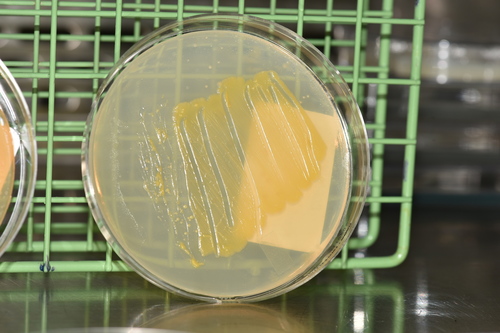
Verbatim
e0“the application of strain M. yunnanensis GKSM13 could provide a sustainable agricultural solution for Cu-affected mining areas”
e1“Rice seedlings”
The same questions in other papers
inoculation · growth · Oryza sativa (rice)Positive and negative results
361 papers in the same direction as this paper · 34 in the opposite direction · 3 reporting no difference from an alternative
- positive
- no effect
- negative
395 papers more in this group
See all 399 papers →Claims are grouped by organism, treatment and what was measured or targeted. A paper counts as positive when any of its claims in the group is positive.