Abstract
Peat has long been the primary substrate for the production of ornamental and horticultural plants in pots. Today, peat is no longer considered a renewable resource due to its very lengthy regeneration time. Biochar, a solid by-product of biomass pyrolysis, has been proposed as an agricultural soil amendment. We investigated the effects of two types of biochar, namely biochar from pruning wood waste and biochar activated with wood vinegar (“smoked biochar”), on two ornamental plants (Lavandula angustifolia and Salvia rosmarinus) and on strawberries (Fragaria × ananassa). For both types of biochar, we measured the following parameters: the pH, density, electrical conductivity, humidity, calcium carbonate, total carbon, nitrogen, potassium, calcium, magnesium, sodium, and water retention. For peat, we measured the following parameters: the pH, electrical conductivity, total carbon, and total nitrogen. Our results showed an overall increase in plant growth, particularly in L. angustifolia when using 10% and 50% biochar concentrations and a 10% concentration of biochar activated with wood vinegar. In S. rosmarinus, we observed a slight increase in the total plant weight with the application of 10% smoked biochar (biochar activated with wood vinegar). Finally, in F. × ananassa, we observed an increase in the plant weight and fruit production when 10% biochar was applied. On the other hand, when high concentrations of biochar (50% and 100%) and especially smoked biochar were applied, we observed a significant reduction in the growth of all plants. We concluded that biochar and biochar activated with wood vinegar showed remarkable biological activity with marked phytotoxicity at high concentrations. They promoted plant growth when applied diluted and their use as partial peat substitutes could help support more sustainable horticultural practices.
Abstract from the paper’s OpenAlex record; open copy licensed cc-by. Read at the source ↗
The text the model read, with the source record’s inline markup (italics, sub- and superscripts) rendered and its character entities decoded; quote offsets refer to the raw text.
Claims 6
Claim · model-written summary
Plant growth of Lavandula angustifolia increased with 10% and 50% biochar concentrations.
- Taxon
- Lavandula angustifolia
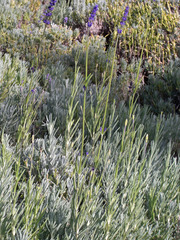 Lavandula angustifoliae0
- Treatment
- 10% and 50% biochar concentrationse1
- Outcome
- plant growthe1
- Direction
- increasee1
Not reportedComparator
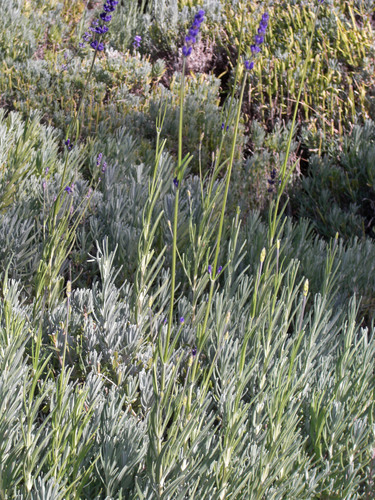
Organisms pictured · Representative pictures of the matched species, not figures from the paper.
Verbatim
e0“two ornamental plants (Lavandula angustifolia and Salvia rosmarinus)”
e1“Our results showed an overall increase in plant growth, particularly in L. angustifolia when using 10% and 50% biochar concentrations and a 10% concentration of biochar activated with wood vinegar”
Claim · model-written summary
Plant growth of Lavandula angustifolia increased with a 10% concentration of biochar activated with wood vinegar.
- Taxon
- Lavandula angustifoliaLavandula angustifoliae0
- Treatment
- a 10% concentration of biochar activated with wood vinegare1
- Outcome
- plant growthe1
- Direction
- increasee1
Not reportedComparator
Organisms pictured · Representative pictures of the matched species, not figures from the paper.
Verbatim
e0“two ornamental plants (Lavandula angustifolia and Salvia rosmarinus)”
e1“Our results showed an overall increase in plant growth, particularly in L. angustifolia when using 10% and 50% biochar concentrations and a 10% concentration of biochar activated with wood vinegar”
Claim · model-written summary
Total plant weight of Salvia rosmarinus showed a slight increase with 10% smoked biochar.
- Taxon
- Salvia rosmarinus
 Salvia rosmarinuse0
- Treatment
- 10% smoked biochare2
- Outcome
- total plant weighte2
- Direction
- increasee2
- Qualifier
- slighte2
Not reportedComparator
Organisms pictured · Representative pictures of the matched species, not figures from the paper.

Verbatim
e0“two ornamental plants (Lavandula angustifolia and Salvia rosmarinus)”
e2“In S. rosmarinus, we observed a slight increase in the total plant weight with the application of 10% smoked biochar”
Claim · model-written summary
Plant weight and fruit production of Fragaria × ananassa increased with 10% biochar.
- Taxon
- Fragaria × ananassa
 Fragaria ×ananassae4
- Treatment
- 10% biochare3
- Outcome
- plant weight and fruit productione3
- Direction
- increasee3
Not reportedComparator
Organisms pictured · Representative pictures of the matched species, not figures from the paper.

Verbatim
e4“on strawberries (Fragaria × ananassa)”
e3“Finally, in F. × ananassa, we observed an increase in the plant weight and fruit production when 10% biochar was applied”
Claim · model-written summary
High concentrations of biochar (50% and 100%) significantly reduced plant growth, especially with smoked biochar.
- Taxon
- ornamental plantse0
- Treatment
- high concentrations of biochar (50% and 100%)e5
- Outcome
- growthe5
- Direction
- reductione5
Not reportedComparator
Verbatim
e0“two ornamental plants (Lavandula angustifolia and Salvia rosmarinus)”
e5“when high concentrations of biochar (50% and 100%) and especially smoked biochar were applied, we observed a significant reduction in the growth of all plants”
Claim · model-written summary
Biochar and wood-vinegar-activated biochar showed marked phytotoxicity at high concentrations.
Verbatim
e0“two ornamental plants (Lavandula angustifolia and Salvia rosmarinus)”
e6“biochar and biochar activated with wood vinegar showed remarkable biological activity with marked phytotoxicity at high concentrations”
The same questions in other papers
biochar · yield · Fragaria x ananassa (strawberry)Positive and negative results
6 papers in the same direction as this paper · 1 in the opposite direction · 1 reporting no difference from an alternative
- no effect
- no effect
- positive
5 papers more in this group
See all 9 papers →biochar · growth · Lavandula angustifolia (lavender)Results agree
1 paper in the same direction as this paper
- positive
biochar · growth · Salvia rosmarinus (rosemary)Results agree
1 paper in the same direction as this paper
- positive
Claims are grouped by organism, treatment and what was measured or targeted. A paper counts as positive when any of its claims in the group is positive.