Abstract
Abstract The antifungal activity of Trichoderma hamatum K01 to control Colletotrichum gloeosporioides C01 was recorded. Pathogenicity of C. gloeosporioides C01 on citrus leaves was confirmed by the Koch postulate. T. hamatum K01 inhibited the colony growth and conidia production of C. gloeosporioides C01 by 70.55 and 79.07%, respectively. Crude extracts from T. hamatum K01 expressed an antifungal activity against C. gloeosporioides C01. The crude TK01-MeOH showed the most potent inhibitory effect on the colony growth and conidia production at the ED 50 values of 273 and 355 ppm, respectively. Nanofiber TK01M gave the highest inhibition on the colony growth and conidia production at the ED 50 values of 13 and 3 ppm, respectively. Control mechanism was related to the major pyrone metabolite group (6-pentyl-2 H -pyran-2-one), organic compounds (benzoic acid, hexadecane, tetracosane), fatty acids (palmitic acid, linoleic acid, tetradecanoic acid, pentadecanoic acid, hexadecenoic acid, ethyl ester, linoleic acid ethyl ester, and ethyl oleate), and sorbicillin from GC-MS analysis, which were produced by T. hamatum K01. It is reported for the first time to isolate secondary metabolite pyrone (6-pentyl-2 H -pyran-2-one) from T. hamatum K01, and the first report of nanofibers constructed from T. hamatum K01 against C. gloeosporioides.
Abstract from the paper’s OpenAlex record; open copy licensed cc-by. Read at the source ↗
The text the model read, with the source record’s inline markup (italics, sub- and superscripts) rendered and its character entities decoded; quote offsets refer to the raw text.
Claims 10
Claim · model-written summary
Colletotrichum gloeosporioides C01 was pathogenic on citrus leaves.
- Organ / stage
- leavese0
- Interactor
- C. gloeosporioides C01
 Colletotrichum gloeosporioidese0pathogen
- Outcome
- Pathogenicitye0
 Citrus
Organisms pictured · Representative pictures of the matched species, not figures from the paper.


Verbatim
e0“Pathogenicity of C. gloeosporioides C01 on citrus leaves was confirmed by the Koch postulate”
Claim · model-written summary
T. hamatum K01 inhibited pathogen colony growth by 70.55%.
- Treatment
- T. hamatum K01e0
- Interactor
- C. gloeosporioides C01Colletotrichum gloeosporioidese0pathogen
- Second interactor
- T. hamatum K01
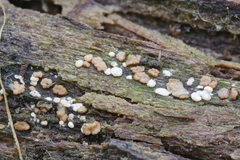 Trichoderma hamatume0biocontrol_agent
- Outcome
- colony growthe0
- Direction
- inhibitede0
- Value
- 70.55 and 79.07%e0
Not reportedComparator
Organisms pictured · Representative pictures of the matched species, not figures from the paper.
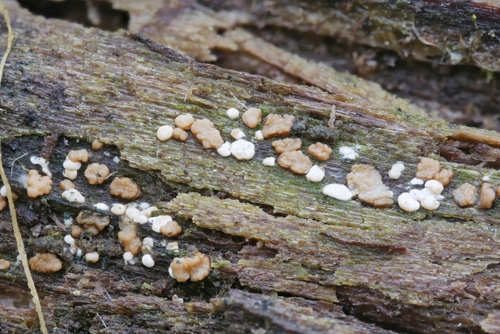
Verbatim
e0“T. hamatum K01 inhibited the colony growth and conidia production of C. gloeosporioides C01 by 70.55 and 79.07%, respectively”
t0“citrus”
Claim · model-written summary
T. hamatum K01 inhibited pathogen conidia production by 79.07%.
- Treatment
- T. hamatum K01e0
- Interactor
- C. gloeosporioides C01Colletotrichum gloeosporioidese0pathogen
- Second interactor
- T. hamatum K01Trichoderma hamatume0biocontrol_agent
- Outcome
- conidia production of C. gloeosporioides C01e0
- Direction
- inhibitede0
- Value
- 79.07%e0
Not reportedComparator
Organisms pictured · Representative pictures of the matched species, not figures from the paper.
Verbatim
e0“T. hamatum K01 inhibited the colony growth and conidia production of C. gloeosporioides C01 by 70.55 and 79.07%, respectively”
t0“citrus”
Claim · model-written summary
T. hamatum K01 crude extracts had antifungal activity against the pathogen.
- Interactor
- C. gloeosporioides C01Colletotrichum gloeosporioidese0pathogen
- Second interactor
- T. hamatum K01Trichoderma hamatume0biocontrol_agent
- Outcome
- antifungal activity against C. gloeosporioides C01e0
Organisms pictured · Representative pictures of the matched species, not figures from the paper.
Verbatim
e0“Crude extracts from T. hamatum K01 expressed an antifungal activity against C. gloeosporioides C01”
t0“citrus”
Claim · model-written summary
TK01-MeOH inhibited colony growth at ED 50 of 273 ppm.
Not reportedComparator
Organisms pictured · Representative pictures of the matched species, not figures from the paper.
Verbatim
e0“The crude TK01-MeOH showed the most potent inhibitory effect on the colony growth and conidia production at the ED 50 values of 273 and 355 ppm, respectively”
t0“citrus”
Claim · model-written summary
TK01-MeOH inhibited conidia production at ED 50 of 355 ppm.
Not reportedComparator
Organisms pictured · Representative pictures of the matched species, not figures from the paper.
Verbatim
e0“The crude TK01-MeOH showed the most potent inhibitory effect on the colony growth and conidia production at the ED 50 values of 273 and 355 ppm, respectively”
t0“citrus”
Claim · model-written summary
Nanofiber TK01M inhibited colony growth at ED 50 of 13 ppm.
Not reportedComparator
Organisms pictured · Representative pictures of the matched species, not figures from the paper.
Verbatim
e0“Nanofiber TK01M gave the highest inhibition on the colony growth and conidia production at the ED 50 values of 13 and 3 ppm, respectively”
t0“citrus”
Claim · model-written summary
Nanofiber TK01M inhibited conidia production at ED 50 of 3 ppm.
Not reportedComparator
Organisms pictured · Representative pictures of the matched species, not figures from the paper.
Verbatim
e0“Nanofiber TK01M gave the highest inhibition on the colony growth and conidia production at the ED 50 values of 13 and 3 ppm, respectively”
t0“citrus”
Claim · model-written summary
The authors relate control to pyrone, organic compounds, fatty acids and sorbicillin produced by T. hamatum K01.
- Interactor
- T. hamatum K01Trichoderma hamatume0biocontrol_agent
- Compound
- 6-pentyl-2 H -pyran-2-onee0
- Outcome
- Control mechanisme0
Organisms pictured · Representative pictures of the matched species, not figures from the paper.
Verbatim
e0“Control mechanism was related to the major pyrone metabolite group (6-pentyl-2 H -pyran-2-one), organic compounds (benzoic acid, hexadecane, tetracosane), fatty acids (palmitic acid, linoleic acid, tetradecanoic acid, pentadecanoic acid, hexadecenoic acid, ethyl ester, linoleic acid ethyl ester, and ethyl oleate), and sorbicillin from GC-MS analysis, which were produced by T. hamatum K01”
t0“citrus”
Claim · model-written summary
Secondary-metabolite pyrone was first isolated from T. hamatum K01.
- Interactor
- T. hamatum K01Trichoderma hamatume0biocontrol_agent
- Outcome
- secondary metabolite pyrone (6-pentyl-2 H -pyran-2-one)e0
Organisms pictured · Representative pictures of the matched species, not figures from the paper.
Verbatim
e0“It is reported for the first time to isolate secondary metabolite pyrone (6-pentyl-2 H -pyran-2-one) from T. hamatum K01”
t0“citrus”
The same questions in other papers
nanoparticle · disease · CitrusResults agree
5 papers in the same direction as this paper
- positive
- positive
- positive
2 papers more in this group
See all 6 papers →Claims are grouped by organism, treatment and what was measured or targeted. A paper counts as positive when any of its claims in the group is positive.