Abstract
The intensive use of inorganic fertilizer in agriculture for ensuring the world food security caused so many health problems and unrecoverable environmental pollution. In view of this context, a study was conducted during two seasons viz., season I (August-November 2021) and season II (January-April 2022) at Karur district, Tamil Nadu, India to study the influences of organic manures and bio-stimulants on the yield and quality parameters of snake gourd. The experiment was laid out in randomized block design with nine treatments replicated thrice. Organic manures used for the study were farm yard manure, vermicompost, phosphobacteria applied as basal form and the biostimulants like seaweed extract and effective microorganism were foliar sprayed on three stages i.e. 20, 35 and 50 days after sowing for both the seasons. Among two seasons, the maximum yield and quality parameters were obtained during season I (August to November). Results revealed that the application of vermicompost and seaweed extract along with recommended dosage of fertilizers increased number of fruits/vine (20.32 for season I and 18.05 for season II), single fruit weight (490.26 g for season I and 486.40 g for season II), fruit yield/vine (9.94 kg for season I and 8.88 kg for season II), total soluble solids (2.87 °Brix for season I and 2.83 °Brix for season II), ascorbic acid content (4.76 mg 100/g for season I and 4.70 mg for season II) and reduced crude fibre content (15.94% for season I and 16.53% for season II). The experiment revealed that the yield and quality parameters were highly influenced by the application of vermicompost (5 t/ha) and seaweed extract (3 ml/litre) along with recommended dosage of fertilizers which is an environment friendly option for sustainable agriculture. Among the two seasons tested, season I (Aadi pattam) was found to be the best season when compared to season II.
Abstract from the paper’s OpenAlex record, shown for indexing and research. Copyright remains with the authors or the publisher. Read at the source ↗
The text the model read, with the source record’s inline markup (italics, sub- and superscripts) rendered and its character entities decoded; quote offsets refer to the raw text.
Claims 15
Claim · model-written summary
Season I had maximum yield and quality parameters.
- Taxon
- snake gourd
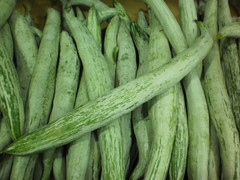 Trichosanthes cucumerinae0
- Outcome
- yield and quality parameterse1
- Direction
- maximume1
- Setting
- season I (August to November)e1
Organisms pictured · Representative pictures of the matched species, not figures from the paper.
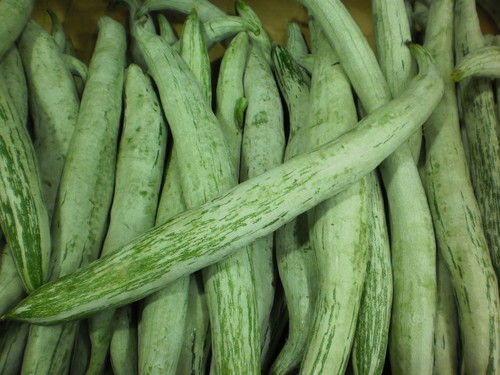
Verbatim
e0“snake gourd”
e1“Among two seasons, the maximum yield and quality parameters were obtained during season I (August to November)”
Claim · model-written summary
Vermicompost, seaweed extract and recommended fertilizer increased fruit number per vine to 20.32 in season I.
- Taxon
- snake gourdTrichosanthes cucumerinae0
- Treatment
- application of vermicompost and seaweed extract along with recommended dosage of fertilizerse1
- Outcome
- number of fruits/vinee1
- Direction
- increasede1
- Value
- 20.32e1
- Qualifier
- season Ie1
Not reportedComparator
Organisms pictured · Representative pictures of the matched species, not figures from the paper.
Verbatim
e0“snake gourd”
e1“the application of vermicompost and seaweed extract along with recommended dosage of fertilizers increased number of fruits/vine (20.32 for season I and 18.05 for season II)”
Claim · model-written summary
The treatment increased fruit number per vine to 18.05 in season II.
- Taxon
- snake gourdTrichosanthes cucumerinae0
- Treatment
- application of vermicompost and seaweed extract along with recommended dosage of fertilizerse1
- Outcome
- number of fruits/vinee1
- Direction
- increasede1
- Value
- 18.05e1
- Qualifier
- season IIe1
Not reportedComparator
Organisms pictured · Representative pictures of the matched species, not figures from the paper.
Verbatim
e0“snake gourd”
e1“the application of vermicompost and seaweed extract along with recommended dosage of fertilizers increased number of fruits/vine (20.32 for season I and 18.05 for season II)”
Claim · model-written summary
The treatment increased single fruit weight to 490.26 g in season I.
- Taxon
- snake gourdTrichosanthes cucumerinae0
- Treatment
- application of vermicompost and seaweed extract along with recommended dosage of fertilizerse1
- Outcome
- single fruit weighte1
- Direction
- increasede1
- Value
- 490.26 ge1
- Qualifier
- season Ie1
Not reportedComparator
Organisms pictured · Representative pictures of the matched species, not figures from the paper.
Verbatim
e0“snake gourd”
e1“the application of vermicompost and seaweed extract along with recommended dosage of fertilizers increased number of fruits/vine (20.32 for season I and 18.05 for season II), single fruit weight (490.26 g for season I and 486.40 g for season II)”
Claim · model-written summary
The treatment increased single fruit weight to 486.40 g in season II.
- Taxon
- snake gourdTrichosanthes cucumerinae0
- Treatment
- application of vermicompost and seaweed extract along with recommended dosage of fertilizerse1
- Outcome
- single fruit weighte1
- Direction
- increasede1
- Value
- 486.40 ge1
- Qualifier
- season IIe1
Not reportedComparator
Organisms pictured · Representative pictures of the matched species, not figures from the paper.
Verbatim
e0“snake gourd”
e1“the application of vermicompost and seaweed extract along with recommended dosage of fertilizers increased number of fruits/vine (20.32 for season I and 18.05 for season II), single fruit weight (490.26 g for season I and 486.40 g for season II)”
Claim · model-written summary
The treatment increased fruit yield per vine to 9.94 kg in season I.
- Taxon
- snake gourdTrichosanthes cucumerinae0
- Treatment
- application of vermicompost and seaweed extract along with recommended dosage of fertilizerse1
- Outcome
- fruit yield/vinee1
- Direction
- increasede1
- Value
- 9.94 kge1
- Qualifier
- season Ie1
Not reportedComparator
Organisms pictured · Representative pictures of the matched species, not figures from the paper.
Verbatim
e0“snake gourd”
e1“the application of vermicompost and seaweed extract along with recommended dosage of fertilizers increased number of fruits/vine (20.32 for season I and 18.05 for season II), single fruit weight (490.26 g for season I and 486.40 g for season II), fruit yield/vine (9.94 kg for season I and 8.88 kg for season II)”
Claim · model-written summary
The treatment increased fruit yield per vine to 8.88 kg in season II.
- Taxon
- snake gourdTrichosanthes cucumerinae0
- Treatment
- application of vermicompost and seaweed extract along with recommended dosage of fertilizerse1
- Outcome
- fruit yield/vinee1
- Direction
- increasede1
- Value
- 8.88 kge1
- Qualifier
- season IIe1
Not reportedComparator
Organisms pictured · Representative pictures of the matched species, not figures from the paper.
Verbatim
e0“snake gourd”
e1“the application of vermicompost and seaweed extract along with recommended dosage of fertilizers increased number of fruits/vine (20.32 for season I and 18.05 for season II), single fruit weight (490.26 g for season I and 486.40 g for season II), fruit yield/vine (9.94 kg for season I and 8.88 kg for season II)”
Claim · model-written summary
The treatment increased total soluble solids to 2.87 °Brix in season I.
- Taxon
- snake gourdTrichosanthes cucumerinae0
- Treatment
- application of vermicompost and seaweed extract along with recommended dosage of fertilizerse1
- Outcome
- total soluble solidse1
- Direction
- increasede1
- Value
- 2.87 °Brixe1
- Qualifier
- season Ie1
Not reportedComparator
Organisms pictured · Representative pictures of the matched species, not figures from the paper.
Verbatim
e0“snake gourd”
e1“the application of vermicompost and seaweed extract along with recommended dosage of fertilizers increased number of fruits/vine (20.32 for season I and 18.05 for season II), single fruit weight (490.26 g for season I and 486.40 g for season II), fruit yield/vine (9.94 kg for season I and 8.88 kg for season II), total soluble solids (2.87 °Brix for season I and 2.83 °Brix for season II)”
Claim · model-written summary
The treatment increased total soluble solids to 2.83 °Brix in season II.
- Taxon
- snake gourdTrichosanthes cucumerinae0
- Treatment
- application of vermicompost and seaweed extract along with recommended dosage of fertilizerse1
- Outcome
- total soluble solidse1
- Direction
- increasede1
- Value
- 2.83 °Brixe1
- Qualifier
- season IIe1
Not reportedComparator
Organisms pictured · Representative pictures of the matched species, not figures from the paper.
Verbatim
e0“snake gourd”
e1“the application of vermicompost and seaweed extract along with recommended dosage of fertilizers increased number of fruits/vine (20.32 for season I and 18.05 for season II), single fruit weight (490.26 g for season I and 486.40 g for season II), fruit yield/vine (9.94 kg for season I and 8.88 kg for season II), total soluble solids (2.87 °Brix for season I and 2.83 °Brix for season II)”
Claim · model-written summary
The treatment increased ascorbic acid content to 4.76 mg 100/g in season I.
- Taxon
- snake gourdTrichosanthes cucumerinae0
- Treatment
- application of vermicompost and seaweed extract along with recommended dosage of fertilizerse2
- Outcome
- ascorbic acid contente1
- Direction
- increasede2
- Value
- 4.76 mg 100/ge1
- Qualifier
- season Ie1
Not reportedComparator
Organisms pictured · Representative pictures of the matched species, not figures from the paper.
Verbatim
e0“snake gourd”
e1“ascorbic acid content (4.76 mg 100/g for season I and 4.70 mg for season II)”
e2“the application of vermicompost and seaweed extract along with recommended dosage of fertilizers increased number of fruits/vine”
Claim · model-written summary
The treatment increased ascorbic acid content to 4.70 mg in season II.
- Taxon
- snake gourdTrichosanthes cucumerinae0
- Treatment
- application of vermicompost and seaweed extract along with recommended dosage of fertilizerse2
- Outcome
- ascorbic acid contente1
- Direction
- increasede2
- Value
- 4.70 mge1
- Qualifier
- season IIe1
Not reportedComparator
Organisms pictured · Representative pictures of the matched species, not figures from the paper.
Verbatim
e0“snake gourd”
e1“ascorbic acid content (4.76 mg 100/g for season I and 4.70 mg for season II)”
e2“the application of vermicompost and seaweed extract along with recommended dosage of fertilizers increased number of fruits/vine”
Claim · model-written summary
The treatment reduced crude fibre content to 15.94% in season I.
- Taxon
- snake gourdTrichosanthes cucumerinae0
- Treatment
- application of vermicompost and seaweed extract along with recommended dosage of fertilizerse2
- Outcome
- crude fibre contente1
- Direction
- reducede1
- Value
- 15.94%e1
- Qualifier
- season Ie1
Not reportedComparator
Organisms pictured · Representative pictures of the matched species, not figures from the paper.
Verbatim
e0“snake gourd”
e1“reduced crude fibre content (15.94% for season I and 16.53% for season II)”
e2“the application of vermicompost and seaweed extract along with recommended dosage of fertilizers increased number of fruits/vine”
Claim · model-written summary
The treatment reduced crude fibre content to 16.53% in season II.
- Taxon
- snake gourdTrichosanthes cucumerinae0
- Treatment
- application of vermicompost and seaweed extract along with recommended dosage of fertilizerse2
- Outcome
- crude fibre contente1
- Direction
- reducede1
- Value
- 16.53%e1
- Qualifier
- season IIe1
Not reportedComparator
Organisms pictured · Representative pictures of the matched species, not figures from the paper.
Verbatim
e0“snake gourd”
e1“reduced crude fibre content (15.94% for season I and 16.53% for season II)”
e2“the application of vermicompost and seaweed extract along with recommended dosage of fertilizers increased number of fruits/vine”
Claim · model-written summary
Season I was judged better than season II.
- Taxon
- snake gourdTrichosanthes cucumerinae0
- Outcome
- season I (Aadi pattam) was found to be the best seasone1
- Comparator
- season IIe1
Organisms pictured · Representative pictures of the matched species, not figures from the paper.
Verbatim
e0“snake gourd”
e1“season I (Aadi pattam) was found to be the best season when compared to season II”
Claim · model-written summary
The authors recommend vermicompost at 5 t/ha with seaweed extract at 3 ml/litre and standard fertilizer for sustainable production.
- Taxon
- snake gourdTrichosanthes cucumerinae0
- Treatment
- application of vermicompost (5 t/ha) and seaweed extract (3 ml/litre) along with recommended dosage of fertilizerse1
- Outcome
- environment friendly option for sustainable agriculturee1
Organisms pictured · Representative pictures of the matched species, not figures from the paper.
Verbatim
e0“snake gourd”
e1“the application of vermicompost (5 t/ha) and seaweed extract (3 ml/litre) along with recommended dosage of fertilizers which is an environment friendly option for sustainable agriculture”
The same questions in other papers
other · yield · Trichosanthes cucumerina (snake gourd)Results agree
1 paper in the same direction as this paper
- positive
fertilization · quality: phytochemicals · Trichosanthes cucumerina (snake gourd)Results agree
1 paper in the same direction as this paper
- positive
fertilization · yield · Trichosanthes cucumerina (snake gourd)Results agree
4 papers in the same direction as this paper
- positive
- positive
- positive
1 paper more in this group
See all 5 papers →Claims are grouped by organism, treatment and what was measured or targeted. A paper counts as positive when any of its claims in the group is positive.