Abstract
BACKGROUND: Intercropping is commonly implemented as a way of promoting sustainable agriculture. Some of the benefits of intercropping include improving resource-use efficiency and soil quality as well as promoting pest control. As for pest control, intercropping can often engender pest repellency/confusion and promote natural biological control. Nevertheless, intercropping is not always a win-win strategy for pest management, with chances of sometimes either favoring or hampering pests and their natural enemies. Brazilian farmers commonly row-intercrop maize with brachiaria with the intent of forming a grass pasture for the feeding of livestock after maize harvest. However, very little is known about whether this intercropping can influence key pests and natural enemies in the maize agroecosystem. The overall aim of this study was to investigate how multiple groups of maize pests and natural enemies respond in terms of temporal abundance to this intercropping. RESULTS: Defoliation caused by caterpillars was higher in the intercropping treatment. Intercropping appeared to promote Dalbulus maidis while hampering aphids and Diabrotica speciosa. In general, the abundance of natural enemies was favored by intercropping. There was a reduction in maize productivity (i.e. fresh weight) in the intercropping treatment. Most results were season dependent. CONCLUSION: We believe that by considering together the pros and cons of intercropping maize and brachiaria in terms of pest management and soil conservation/fertility, the benefits of implementing this intercropping shall still outweigh its potential challenges. Nevertheless, the results and ensuing recommendations should be considered under the context of time and arthropod species. © 2022 Society of Chemical Industry.
Abstract from the paper’s OpenAlex record, shown for indexing and research. Copyright remains with the authors or the publisher. Read at the source ↗
The text the model read, with the source record’s inline markup (italics, sub- and superscripts) rendered and its character entities decoded; quote offsets refer to the raw text.
Claims 9
Claim · model-written summary
Caterpillar defoliation was higher under maize and brachiaria intercropping.
- Treatment
- intercropping treatmente0
- Interactor
- caterpillarse0pest
- Outcome
- Defoliation caused by caterpillarse0
- Direction
- highere0
 Zea mays
Not reportedComparator
Organisms pictured · Representative pictures of the matched species, not figures from the paper.

Verbatim
e0“Defoliation caused by caterpillars was higher in the intercropping treatment”
t0“Intercropping maize with brachiaria”
Claim · model-written summary
Intercropping appeared to promote Dalbulus maidis.
- Treatment
- Intercroppinge0
- Interactor
- Dalbulus maidis
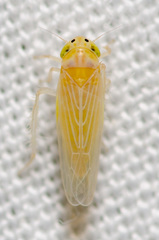 Dalbulus maidise0pest
- Outcome
- Dalbulus maidise0
- Direction
- promotee0
Not reportedComparator
Organisms pictured · Representative pictures of the matched species, not figures from the paper.

Verbatim
e0“Intercropping appeared to promote Dalbulus maidis while hampering aphids and Diabrotica speciosa”
t0“Intercropping maize with brachiaria”
Claim · model-written summary
Intercropping appeared to hamper aphids.
- Treatment
- Intercroppinge0
- Interactor
- aphidsAphidomorphae0pest
- Outcome
- aphidse0
- Direction
- hamperinge0
Not reportedComparator
Organisms pictured · Representative pictures of the matched species, not figures from the paper.
Verbatim
e0“Intercropping appeared to promote Dalbulus maidis while hampering aphids and Diabrotica speciosa”
t0“Intercropping maize with brachiaria”
Claim · model-written summary
Intercropping appeared to hamper Diabrotica speciosa.
- Treatment
- Intercroppinge0
- Interactor
- Diabrotica speciosa
 Diabrotica speciosae0pest
- Outcome
- Diabrotica speciosae0
- Direction
- hamperinge0
Not reportedComparator
Organisms pictured · Representative pictures of the matched species, not figures from the paper.

Verbatim
e0“Intercropping appeared to promote Dalbulus maidis while hampering aphids and Diabrotica speciosa”
t0“Intercropping maize with brachiaria”
Claim · model-written summary
Intercropping generally favored natural enemy abundance.
- Treatment
- intercroppinge0
- Interactor
- natural enemiese0biocontrol_agent
- Outcome
- abundance of natural enemiese0
- Direction
- favorede0
Not reportedComparator
Organisms pictured · Representative pictures of the matched species, not figures from the paper.
Verbatim
e0“the abundance of natural enemies was favored by intercropping”
t0“Intercropping maize with brachiaria”
Claim · model-written summary
Maize fresh weight productivity declined with intercropping.
- Treatment
- intercropping treatmente0
- Outcome
- maize productivity (i.e. fresh weight)e0
- Direction
- reductione0
Not reportedComparator
Organisms pictured · Representative pictures of the matched species, not figures from the paper.
Verbatim
e0“There was a reduction in maize productivity (i.e. fresh weight) in the intercropping treatment”
Claim · model-written summary
Most intercropping results varied by season.
- Outcome
- season dependente0
Organisms pictured · Representative pictures of the matched species, not figures from the paper.
Verbatim
e0“Most results were season dependent”
t0“Intercropping maize with brachiaria”
Claim · model-written summary
The authors conclude that overall benefits of maize and brachiaria intercropping outweigh the challenges.
- Outcome
- benefits of implementing this intercropping shall still outweigh its potential challengese0
Organisms pictured · Representative pictures of the matched species, not figures from the paper.
Verbatim
e0“the benefits of implementing this intercropping shall still outweigh its potential challenges”
t0“Intercropping maize with brachiaria”
Claim · model-written summary
The authors recommend considering season and arthropod species when applying their intercropping recommendations.
- Outcome
- recommendations should be considered under the context of time and arthropod speciese0
Organisms pictured · Representative pictures of the matched species, not figures from the paper.
Verbatim
e0“the results and ensuing recommendations should be considered under the context of time and arthropod species”
t0“Intercropping maize with brachiaria”
The same questions in other papers
intercropping · Aphidomorpha · Zea mays (maize)Positive and negative results
1 paper in the same direction as this paper · 1 in the opposite direction
- negative
- positive
intercropping · pest · Zea mays (maize)Positive and negative results
30 papers in the same direction as this paper · 7 in the opposite direction
- negative
- no effect
- no effect
34 papers more in this group
See all 38 papers →intercropping · yield · Zea mays (maize)Positive and negative results
220 papers in the same direction as this paper · 613 in the opposite direction
- positive
- positive
- no effect
830 papers more in this group
See all 834 papers →Claims are grouped by organism, treatment and what was measured or targeted. A paper counts as positive when any of its claims in the group is positive.