Abstract
Cassava (Manihot esculenta) yields are severely affected by the interference of weed plants. Using cover crops for weed control appears as a sustainable alternative practice because it maintains the soil covered and reduces the need for herbicides. The aim of this study was to assess cassava crop yields and the soil chemical properties as a function of use of cover crops for weed management. Treatments were three cover crops (Brachiaria ruziziensis, Canavalia ensiformis, and Mucuna pruriens), chemical control, mechanical control, and treatment with no weed control. Cover crops reduced the diversity of species and the quantity of individuals of the weed community in cassava cultivation. The treatments with chemical and physical weed control achieved higher yields. The cover crops B. ruziziensis and C. ensiformis increased cassava yields by 30% and 14%, respectively, when compared with the treatment with no control. The cover crops increased the pH, MO, K, Ca, and Mg values when compared with the treatments with chemical and mechanical weed control. Brachiaria ruziziensis and C. ensiformis are recommended as a cover plants in cassava production systems in the Amazon region. The use of cover crops associated with cassava is a sustainable management option because, in addition to the suppressive effect on weeds, cover crops improve the chemical properties of soil, which may contribute to increasing cassava production in the long term.
Abstract from the paper’s OpenAlex record; open copy licensed cc-by. Read at the source ↗
The text the model read, with the source record’s inline markup (italics, sub- and superscripts) rendered and its character entities decoded; quote offsets refer to the raw text.
Claims 8
Claim · model-written summary
Cover crops reduced weed species diversity and abundance in cassava cultivation.
- Taxon
- cassava
 Manihot esculentae0
- Treatment
- Cover cropse0
- Interactor
- weed communitye0weed
- Outcome
- diversity of species and the quantity of individuals of the weed communitye0
- Direction
- reducede0
Not reportedComparator
Organisms pictured · Representative pictures of the matched species, not figures from the paper.

Verbatim
e0“Cover crops reduced the diversity of species and the quantity of individuals of the weed community in cassava cultivation.”
Claim · model-written summary
Chemical and physical weed control achieved higher cassava yields.
- Taxon
- CassavaManihot esculentat0
- Treatment
- chemical and physical weed controle0
- Outcome
- yieldse0
- Direction
- highere0
Not reportedComparator
Organisms pictured · Representative pictures of the matched species, not figures from the paper.
Verbatim
e0“The treatments with chemical and physical weed control achieved higher yields.”
t0“Cassava”
Claim · model-written summary
Brachiaria ruziziensis increased cassava yield by 30% versus no weed control.
- Taxon
- cassavaManihot esculentae0
- Treatment
- B. ruziziensise0
- Interactor
- B. ruziziensis
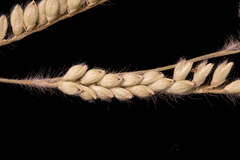 Urochloa ruziziensise0weed
- Outcome
- cassava yieldse0
- Direction
- increasede0
- Value
- 30%e0
- Comparator
- treatment with no controle0
Organisms pictured · Representative pictures of the matched species, not figures from the paper.

Verbatim
e0“The cover crops B. ruziziensis and C. ensiformis increased cassava yields by 30% and 14%, respectively, when compared with the treatment with no control.”
Claim · model-written summary
Canavalia ensiformis increased cassava yield by 14% versus no weed control.
- Taxon
- cassavaManihot esculentae0
- Treatment
- C. ensiformise0
- Interactor
- C. ensiformis
 Canavalia ensiformise0weed
- Outcome
- cassava yieldse0
- Direction
- increasede0
- Value
- 14%e0
- Comparator
- treatment with no controle0
Organisms pictured · Representative pictures of the matched species, not figures from the paper.

Verbatim
e0“The cover crops B. ruziziensis and C. ensiformis increased cassava yields by 30% and 14%, respectively, when compared with the treatment with no control.”
Claim · model-written summary
Cover crops increased soil pH and organic matter relative to chemical and mechanical weed control.
- Taxon
- CassavaManihot esculentat0
- Treatment
- cover cropse0
- Outcome
- pH, MOe0
- Direction
- increasede0
- Comparator
- treatments with chemical and mechanical weed controle0
Organisms pictured · Representative pictures of the matched species, not figures from the paper.
Verbatim
e0“The cover crops increased the pH, MO, K, Ca, and Mg values when compared with the treatments with chemical and mechanical weed control.”
t0“Cassava”
Claim · model-written summary
Cover crops increased soil K, Ca and Mg relative to chemical and mechanical weed control.
- Taxon
- CassavaManihot esculentat0
- Treatment
- cover cropse0
- Outcome
- K, Ca, and Mg valuese0
- Direction
- increasede0
- Comparator
- treatments with chemical and mechanical weed controle0
Organisms pictured · Representative pictures of the matched species, not figures from the paper.
Verbatim
e0“The cover crops increased the pH, MO, K, Ca, and Mg values when compared with the treatments with chemical and mechanical weed control.”
t0“Cassava”
Claim · model-written summary
The authors recommend Brachiaria ruziziensis and C. ensiformis as cover plants for Amazon cassava production.
- Taxon
- cassavaManihot esculentae0
- Interactor
- Brachiaria ruziziensisUrochloa ruziziensise0weed
- Second interactor
- C. ensiformisCanavalia ensiformise0weed
- Outcome
- recommended as a cover plantse0
- Setting
- Amazon regione0
Organisms pictured · Representative pictures of the matched species, not figures from the paper.
Verbatim
e0“Brachiaria ruziziensis and C. ensiformis are recommended as a cover plants in cassava production systems in the Amazon region.”
Claim · model-written summary
The authors consider cover crops associated with cassava a sustainable management option because they suppress weeds and improve soil chemistry.
- Taxon
- cassavaManihot esculentae0
- Interactor
- weedse0weed
- Outcome
- sustainable management optione0
Organisms pictured · Representative pictures of the matched species, not figures from the paper.
Verbatim
e0“The use of cover crops associated with cassava is a sustainable management option because, in addition to the suppressive effect on weeds, cover crops improve the chemical properties of soil, which may contribute to increasing cassava production in the long term.”
The same questions in other papers
Canavalia ensiformis · yield · Manihot esculenta (cassava)Results agree
1 paper in the same direction as this paper
- positive
herbicide · yield · Manihot esculenta (cassava)Positive and negative results
18 papers in the same direction as this paper · 5 in the opposite direction · 1 reporting no difference from an alternative
- positive
- negative
- negative
21 papers more in this group
See all 25 papers →Claims are grouped by organism, treatment and what was measured or targeted. A paper counts as positive when any of its claims in the group is positive.