Abstract
A series of greenhouse experiments was conducted to evaluate the effect of Plasmodiophora brassicae virulence on clubroot development and propagation of resting spores in 86 plant species from 19 botanical families. Plants were artificially inoculated with two isolates of P. brassicae, which were virulent on clubroot-resistant oilseed rape cultivar Mendel [pathotype 1; P1 (+)] or avirulent on this cultivar (P1). Clubroot severity and the number of resting spores inside the roots were assessed 35 days post inoculation. Typical clubroot symptoms were observed only in the Brassicaceae family. P1 (+)–inoculated species exhibited more severe symptoms (two- to 10-fold more severe), bigger galls (1.1- to 5.8-fold heavier), and greater numbers of resting spores than the P1-inoculated plants. Among all Brassica species, Bunias orientalis, Coronopus squamatus, and Raphanus sativus were fully resistant against both isolates, whereas Camelina sativa, Capsella bursa-pastoris, Coincya monensis, Descurainia sophia, Diplotaxis muralis, Erucastrum gallicum, Neslia paniculata, Sinapis alba, Sinapis arvensis, Sisymbrium altissimum, Sisymbrium loeselii, and Thlaspi arvense were highly susceptible. Conringia orientalis, Diplotaxis tenuifolia, Hirschfeldia incana, Iberis amara, Lepidium campestre, and N. paniculata were completely or partially resistant to P1 isolate but highly susceptible to P1 (+). These results suggest that the basis for resistance in these species may be similar to that found in some commercial cultivars, and that these species could contribute to the buildup of inoculum of virulent pathotypes. Furthermore, the pathogen DNA was detected in Alopecurus myosuroides, Phacelia tanacetifolia, Papaver rhoeas, and Pisum sativum. It can be concluded that the number and diversity of hosts for P. brassicae are greater than previously reported.
Abstract from the paper’s OpenAlex record, shown for indexing and research. Copyright remains with the authors or the publisher. Read at the source ↗
The text the model read, with the source record’s inline markup (italics, sub- and superscripts) rendered and its character entities decoded; quote offsets refer to the raw text.
Claims 11
Claim · model-written summary
Typical clubroot symptoms were observed only in the Brassicaceae family among the tested species.
- Taxon
- Brassicaceae familye0
- Interactor
- Plasmodiophora brassicae
 Plasmodiophora brassicaet0pathogen
- Outcome
- Typical clubroot symptomse0
Organisms pictured · Representative pictures of the matched species, not figures from the paper.

Verbatim
t0“Plasmodiophora brassicae”
e0“Typical clubroot symptoms were observed only in the Brassicaceae family”
Claim · model-written summary
Species inoculated with the P1 (+) isolate showed two- to 10-fold more severe symptoms than P1-inoculated plants.
- Taxon
- 86 plant speciese5
- Treatment
- P1 (+)–inoculatede0
- Interactor
- Plasmodiophora brassicaePlasmodiophora brassicaet0pathogen
- Outcome
- symptomse0
- Direction
- more severee0
- Value
- two- to 10-fold more severee0
- Comparator
- P1-inoculated plantse1
Organisms pictured · Representative pictures of the matched species, not figures from the paper.
Verbatim
t0“Plasmodiophora brassicae”
e5“86 plant species”
e0“P1 (+)–inoculated species exhibited more severe symptoms (two- to 10-fold more severe)”
e1“than the P1-inoculated plants”
Claim · model-written summary
Species inoculated with the P1 (+) isolate had bigger galls, 1.1- to 5.8-fold heavier, than P1-inoculated plants.
- Taxon
- 86 plant speciese5
- Treatment
- P1 (+)–inoculatede0
- Interactor
- Plasmodiophora brassicaePlasmodiophora brassicaet0pathogen
- Outcome
- gallse1
- Direction
- biggere1
- Value
- 1.1- to 5.8-fold heaviere1
- Comparator
- P1-inoculated plantse2
Organisms pictured · Representative pictures of the matched species, not figures from the paper.
Verbatim
t0“Plasmodiophora brassicae”
e5“86 plant species”
e0“P1 (+)–inoculated species”
e1“bigger galls (1.1- to 5.8-fold heavier)”
e2“than the P1-inoculated plants”
Claim · model-written summary
Species inoculated with the P1 (+) isolate had greater numbers of resting spores than P1-inoculated plants.
- Taxon
- 86 plant speciese5
- Treatment
- P1 (+)–inoculatede0
- Interactor
- Plasmodiophora brassicaePlasmodiophora brassicaet0pathogen
- Outcome
- numbers of resting sporese1
- Direction
- greatere1
- Comparator
- P1-inoculated plantse2
Organisms pictured · Representative pictures of the matched species, not figures from the paper.
Verbatim
t0“Plasmodiophora brassicae”
e5“86 plant species”
e0“P1 (+)–inoculated species”
e1“greater numbers of resting spores”
e2“than the P1-inoculated plants”
Claim · model-written summary
Bunias orientalis, Coronopus squamatus and Raphanus sativus were fully resistant against both isolates.
- Taxon
- Bunias orientalis, Coronopus squamatus, and Raphanus sativus
 Raphanus sativus
 Lepidium squamatum
 Bunias orientalise0
- Interactor
- Plasmodiophora brassicaePlasmodiophora brassicaet0pathogen
- Outcome
- fully resistante0
- Qualifier
- against both isolatese0
Organisms pictured · Representative pictures of the matched species, not figures from the paper.


Verbatim
t0“Plasmodiophora brassicae”
e0“Bunias orientalis, Coronopus squamatus, and Raphanus sativus were fully resistant against both isolates”
Claim · model-written summary
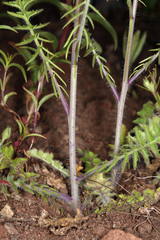
Twelve Brassicaceae species, including Camelina sativa and Sinapis alba, were highly susceptible to both isolates.
- Taxon
- Camelina sativa, Capsella bursa-pastoris, Coincya monensis, Descurainia sophia, Diplotaxis muralis, Erucastrum gallicum, Neslia paniculata, Sinapis alba, Sinapis arvensis, Sisymbrium altissimum, Sisymbrium loeselii, and Thlaspi arvense
 Capsella bursa-pastoris
 Sinapis alba
 Thlaspi arvense
 Coincya monensis
 Sisymbrium altissimum
 Descurainia sophia
 Camelina sativa
 Neslia paniculata
 Erucastrum gallicum
 Sisymbrium loeselii
 Diplotaxis muralis
 Mutarda arvensise0
- Interactor
- Plasmodiophora brassicaePlasmodiophora brassicaet0pathogen
- Outcome
- highly susceptiblee0
Organisms pictured · Representative pictures of the matched species, not figures from the paper.


Verbatim
t0“Plasmodiophora brassicae”
e0“Camelina sativa, Capsella bursa-pastoris, Coincya monensis, Descurainia sophia, Diplotaxis muralis, Erucastrum gallicum, Neslia paniculata, Sinapis alba, Sinapis arvensis, Sisymbrium altissimum, Sisymbrium loeselii, and Thlaspi arvense were highly susceptible”
Claim · model-written summary
Six species were completely or partially resistant to the P1 isolate but highly susceptible to P1 (+).
- Taxon
- Conringia orientalis, Diplotaxis tenuifolia, Hirschfeldia incana, Iberis amara, Lepidium campestre, and N. paniculata
 Lepidium campestre
 Hirschfeldia incanaNeslia paniculata
 Iberis amara
 Conringia orientalis
 Diplotaxis tenuifoliae0
- Interactor
- Plasmodiophora brassicaePlasmodiophora brassicaet0pathogen
- Outcome
- completely or partially resistant to P1 isolate but highly susceptible to P1 (+)e0
Organisms pictured · Representative pictures of the matched species, not figures from the paper.


Verbatim
t0“Plasmodiophora brassicae”
e0“Conringia orientalis, Diplotaxis tenuifolia, Hirschfeldia incana, Iberis amara, Lepidium campestre, and N. paniculata were completely or partially resistant to P1 isolate but highly susceptible to P1 (+)”
Claim · model-written summary
Pathogen DNA was detected in Alopecurus myosuroides, Phacelia tanacetifolia, Papaver rhoeas and Pisum sativum.
- Taxon
- Alopecurus myosuroides, Phacelia tanacetifolia, Papaver rhoeas, and Pisum sativum
 Lathyrus oleraceus
 Papaver rhoeas
 Alopecurus myosuroides
 Phacelia tanacetifoliae0
- Interactor
- Plasmodiophora brassicaePlasmodiophora brassicaet0pathogen
- Outcome
- pathogen DNA was detectede0
Organisms pictured · Representative pictures of the matched species, not figures from the paper.


Verbatim
t0“Plasmodiophora brassicae”
e0“the pathogen DNA was detected in Alopecurus myosuroides, Phacelia tanacetifolia, Papaver rhoeas, and Pisum sativum”
Claim · model-written summary
The authors conclude that the number and diversity of hosts of P. brassicae are greater than previously reported.
- Interactor
- P. brassicaePlasmodiophora brassicaee0pathogen
- Outcome
- number and diversity of hostse0
- Direction
- greatere0
Not reportedTaxon
Organisms pictured · Representative pictures of the matched species, not figures from the paper.
Verbatim
e0“the number and diversity of hosts for P. brassicae are greater than previously reported”
Claim · model-written summary
The authors suggest that the basis of resistance in these species may be similar to that in some commercial cultivars.
- Taxon
- these speciese0
- Interactor
- Plasmodiophora brassicaePlasmodiophora brassicaet0pathogen
- Outcome
- basis for resistancee0
- Qualifier
- may be similar to that found in some commercial cultivarse0
Organisms pictured · Representative pictures of the matched species, not figures from the paper.
Verbatim
t0“Plasmodiophora brassicae”
e0“the basis for resistance in these species may be similar to that found in some commercial cultivars”
Claim · model-written summary
The authors suggest that these species could contribute to the buildup of inoculum of virulent pathotypes.
- Taxon
- these speciese0
- Interactor
- Plasmodiophora brassicaePlasmodiophora brassicaet0pathogen
- Outcome
- buildup of inoculum of virulent pathotypese0
- Qualifier
- could contributee0
Organisms pictured · Representative pictures of the matched species, not figures from the paper.
Verbatim
t0“Plasmodiophora brassicae”
e0“these species could contribute to the buildup of inoculum of virulent pathotypes”