Abstract
Valeriana carnosa and V. clarionifolia stand out as principal elements in the indigenous pharmacopeias of Patagonia; however, their phytochemical characterization is unknown. This study constitutes the starting point of a general project that aims to characterize secondary metabolites in these species. The variability of phenolic compounds in root ethanolic extracts was analyzed and compared for thirteen populations of V. carnosa and two of V. clarionifolia from the south of Argentinean Patagonia. Phenolic content was quantified by the Folin-Ciocalteu method and the putative phenolic compound profiles were investigated using HPLC-UV-MS. Antioxidant activity was evaluated through 2, 2-diphenyl-1-picrylhydrazyl (DPPH) radical scavenging assays. Total phenolic content values ranged from 5.6 to 16.6 mg GAE/g in V. carnosa and 7.3 to 9.7 mg GAE/g in V. clarionifolia. Antioxidant evaluation results evidenced that the percentage of neutralized DPPH varied between 26% and 85% in V. carnosa and 39% and 58% in V. clarionifolia. A positive correlation between total phenolic content and antioxidant activity (r = 0.90) was observed. In V. carnosa total phenolic content was not correlated with altitude or latitude (p > 0.05), and chemical variability seems to be associated with genetic variability and/or different growing habitats (microclimatic conditions). However, the presence of some specific phenolic compounds was associated with latitude. In V. carnosa and V. clarionifolia 15 and 10 phenolic compounds were tentatively identified, respectively, and several of these are reported to have beneficial attributes from a phytomedical viewpoint. This study contributes to the phytochemical characterization project of these two medicinal valerians from Patagonia.
Abstract from the paper’s OpenAlex record; open copy licensed cc-by. Read at the source ↗
The text the model read, with the source record’s inline markup (italics, sub- and superscripts) rendered and its character entities decoded; quote offsets refer to the raw text.
Claims 9
Claim · model-written summary
Total phenolic content in V. carnosa ranged from 5.6 to 16.6 mg GAE/g.
- Taxon
- V. carnosa
 Valeriana carnosae0
- Outcome
- Total phenolic contente0
- Value
- 5.6 to 16.6 mg GAE/ge0
Not reportedSetting
Organisms pictured · Representative pictures of the matched species, not figures from the paper.

Verbatim
e0“Total phenolic content values ranged from 5.6 to 16.6 mg GAE/g in V. carnosa and 7.3 to 9.7 mg GAE/g in V. clarionifolia.”
Claim · model-written summary
Total phenolic content in V. clarionifolia ranged from 7.3 to 9.7 mg GAE/g.
- Taxon
- V. clarionifolia
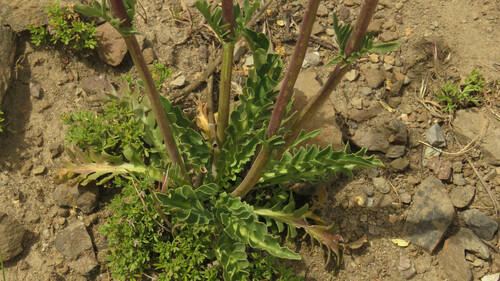
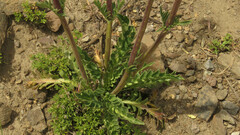 Valeriana clarionifoliae0
- Outcome
- Total phenolic contente0
- Value
- 7.3 to 9.7 mg GAE/ge0
Not reportedSetting
Organisms pictured · Representative pictures of the matched species, not figures from the paper.
Verbatim
e0“Total phenolic content values ranged from 5.6 to 16.6 mg GAE/g in V. carnosa and 7.3 to 9.7 mg GAE/g in V. clarionifolia.”
Claim · model-written summary
DPPH neutralization in V. carnosa varied between 26% and 85%.
- Taxon
- V. carnosaValeriana carnosae0
- Outcome
- the percentage of neutralized DPPHe0
- Value
- 26% and 85%e0
Organisms pictured · Representative pictures of the matched species, not figures from the paper.
Verbatim
e0“the percentage of neutralized DPPH varied between 26% and 85% in V. carnosa and 39% and 58% in V. clarionifolia.”
Claim · model-written summary
DPPH neutralization in V. clarionifolia varied between 39% and 58%.
- Taxon
- V. clarionifoliaValeriana clarionifoliae0
- Outcome
- the percentage of neutralized DPPHe0
- Value
- 39% and 58%e0
Organisms pictured · Representative pictures of the matched species, not figures from the paper.
Verbatim
e0“the percentage of neutralized DPPH varied between 26% and 85% in V. carnosa and 39% and 58% in V. clarionifolia.”
Claim · model-written summary
Total phenolic content and antioxidant activity were positively correlated.
- Taxon
- Valeriana carnosa and V. clarionifoliaValeriana carnosaValeriana clarionifoliae1
- Outcome
- antioxidant activitye0
- Direction
- positive correlatione0
- Value
- r = 0.90e0
- Qualifier
- total phenolic contente0
Not reportedMaterialGeneCompoundOrgan / stageInteractorTreatmentComparatorSetting
Organisms pictured · Representative pictures of the matched species, not figures from the paper.
Verbatim
e0“A positive correlation between total phenolic content and antioxidant activity (r = 0.90) was observed.”
e1“Valeriana carnosa and V. clarionifolia stand out as principal elements”
Claim · model-written summary
Total phenolic content of V. carnosa was not correlated with altitude or latitude.
- Taxon
- V. carnosaValeriana carnosae0
- Outcome
- total phenolic contente0
- Direction
- not correlatede0
- Setting
- altitude or latitudee0
Organisms pictured · Representative pictures of the matched species, not figures from the paper.
Verbatim
e0“In V. carnosa total phenolic content was not correlated with altitude or latitude (p > 0.05)”
Claim · model-written summary
Specific phenolic compounds were associated with latitude.
- Taxon
- V. carnosaValeriana carnosae1
- Outcome
- the presence of some specific phenolic compoundse0
- Setting
- latitudee0
Not reportedDirection
Organisms pictured · Representative pictures of the matched species, not figures from the paper.
Verbatim
e0“However, the presence of some specific phenolic compounds was associated with latitude.”
e1“In V. carnosa total phenolic content was not correlated”
Claim · model-written summary
15 phenolic compounds were tentatively identified in V. carnosa.
- Taxon
- V. carnosaValeriana carnosae0
- Outcome
- phenolic compounds were tentatively identifiede0
- Value
- 15e0
Organisms pictured · Representative pictures of the matched species, not figures from the paper.
Verbatim
e0“In V. carnosa and V. clarionifolia 15 and 10 phenolic compounds were tentatively identified, respectively”
Claim · model-written summary
10 phenolic compounds were tentatively identified in V. clarionifolia.
- Taxon
- V. clarionifoliaValeriana clarionifoliae0
- Outcome
- phenolic compounds were tentatively identifiede0
- Value
- 10e0
Organisms pictured · Representative pictures of the matched species, not figures from the paper.
Verbatim
e0“In V. carnosa and V. clarionifolia 15 and 10 phenolic compounds were tentatively identified, respectively”