Abstract
In order to investigate whether SfPR1a, a pathogenesis-related protein gene from an annual halophytic species Salsola ferganica Drob., was involved in the response to plant defense, qRT-PCR was employed to detect its expression patterns under abscisic acid (ABA), jasmonic acid (JAs), ethylene synthesis direct precursor (ACC), and NaCl treatments. We also identified resistances to salt, drought and Pseudomonas syringae tomato (PstDC3000) of transgenic tobacco were identified. The expression of SfPR1a gene in roots was significantly higher than that in shoots, and positively induced by ABA, JAs, ACC, and NaCl treatments. The malondialdehyde (MDA) content of transgenic tobacco was significantly lower than that of wild-type tobacco, showing a strong resistance to drought. The ectopic expression of SfPR1a gene improved plant growth under salt stress. After infection of P. syringae, transgenic tobacco leaves showed serious necrosis reaction, but the overall resistance phenotype of the plants was significantly better than that of WT. Subcellular localization analysis showed SfPR1a was localized in the plant cell apoplastic space. The above results indicated that the SfPR1a gene is involved in plant resistance to abiotic and biotic stresses.
Abstract from the paper’s OpenAlex record, shown for indexing and research. Copyright remains with the authors or the publisher. Read at the source ↗
The text the model read, with the source record’s inline markup (italics, sub- and superscripts) rendered and its character entities decoded; quote offsets refer to the raw text.
Claims 7
Claim · model-written summary
SfPR1a expression was significantly higher in roots than shoots.
- Taxon
- Salsola ferganica
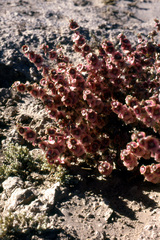 Climacoptera ferganicat0
- Organ / stage
- rootse0
- Gene
- SfPR1ae0
- Outcome
- expression of SfPR1a genee0
- Direction
- highere0
- Comparator
- shootse0
Organisms pictured · Representative pictures of the matched species, not figures from the paper.
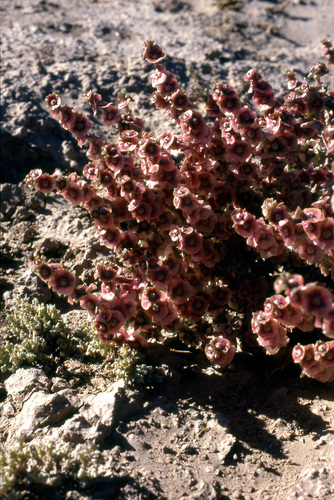
Verbatim
e0“The expression of SfPR1a gene in roots was significantly higher than that in shoots”
t0“Salsola ferganica”
Claim · model-written summary
ABA, JAs, ACC, and NaCl induced SfPR1a expression.
- Taxon
- Salsola ferganicaClimacoptera ferganicat0
- Treatment
- ABA, JAs, ACC, and NaCl treatmentse0
- Gene
- SfPR1ae1
- Outcome
- expression of SfPR1a genee1
- Direction
- inducede0
Not reportedComparator
Organisms pictured · Representative pictures of the matched species, not figures from the paper.
Verbatim
e0“positively induced by ABA, JAs, ACC, and NaCl treatments”
e1“The expression of SfPR1a gene in roots was significantly higher than that in shoots”
t0“Salsola ferganica”
Claim · model-written summary
Transgenic tobacco had significantly lower MDA content than wild type under drought.
- Taxon
- tobacco
 Nicotiana tabacume0
- Material
- transgenic tobaccoe0
- Treatment
- droughte0
- Outcome
- malondialdehyde (MDA) contente0
- Direction
- lowere0
- Comparator
- wild-type tobaccoe0
Organisms pictured · Representative pictures of the matched species, not figures from the paper.

Verbatim
e0“The malondialdehyde (MDA) content of transgenic tobacco was significantly lower than that of wild-type tobacco, showing a strong resistance to drought”
Claim · model-written summary
Ectopic SfPR1a expression improved growth under salt stress.
- Taxon
- tobaccoNicotiana tabacumt0
- Treatment
- salt stresse0
- Gene
- SfPR1ae0
- Outcome
- plant growthe0
- Direction
- improvede0
Not reportedComparator
Organisms pictured · Representative pictures of the matched species, not figures from the paper.
Verbatim
e0“The ectopic expression of SfPR1a gene improved plant growth under salt stress”
t0“tobacco”
Claim · model-written summary
After P. syringae infection, transgenic tobacco leaves showed serious necrosis.
- Taxon
- tobaccoNicotiana tabacume0
- Material
- transgenic tobaccoe0
- Organ / stage
- leavese0
- Interactor
- P. syringae
 Pseudomonas syringaee0pathogen
- Outcome
- serious necrosis reactione0
Not reportedDirection
Organisms pictured · Representative pictures of the matched species, not figures from the paper.

Verbatim
e0“After infection of P. syringae, transgenic tobacco leaves showed serious necrosis reaction”
Claim · model-written summary
Transgenic tobacco had significantly better overall resistance than WT after P. syringae infection.
- Taxon
- tobaccoNicotiana tabacumt0
- Material
- transgenic tobaccoe0
- Treatment
- infection of P. syringaee0
- Interactor
- P. syringaePseudomonas syringaee0pathogen
- Outcome
- overall resistance phenotypee0
- Direction
- bettere0
- Comparator
- WTe0
Organisms pictured · Representative pictures of the matched species, not figures from the paper.
Verbatim
e0“After infection of P. syringae, transgenic tobacco leaves showed serious necrosis reaction, but the overall resistance phenotype of the plants was significantly better than that of WT”
t0“tobacco”
Claim · model-written summary
SfPR1a localized to the plant cell apoplastic space.
- Taxon
- Salsola ferganicaClimacoptera ferganicat0
- Gene
- SfPR1ae0
- Outcome
- localized in the plant cell apoplastic spacee0
Not reportedDirection
Organisms pictured · Representative pictures of the matched species, not figures from the paper.
Verbatim
e0“Subcellular localization analysis showed SfPR1a was localized in the plant cell apoplastic space”
t0“Salsola ferganica”
The same questions in other papers
salinity · growth · Nicotiana tabacum (tobacco)Positive and negative results
3 papers in the same direction as this paper · 10 in the opposite direction
- negative
- no effect
- negative
10 papers more in this group
See all 14 papers →Claims are grouped by organism, treatment and what was measured or targeted. A paper counts as positive when any of its claims in the group is positive.