Abstract
Fusarium wilt of cumin (Cuminum cyminum L.) caused by Fusarium oxysporum f. sp. cumini is a destructive disease, responsible for pre-mature plant death leading to serious economic losses in all cumin-growing areas in Middle and Upper Egypt. The fungus was isolated from the four surveyed governorates (Beni-Sueif, Minia, Assiut and Fayoum). Pathogenicity tests showed that the isolates obtained from Matai County followed by those from Beni Mazar, Minia governorate were the most aggressive and showed the highest frequencies (%) compared to other isolates. Efficiency of some biocides namely Bio-Cure–F (Trichoderma viride, 2x10⁶ spore/cm3), Bio-Cure-B (Pseudomonas fluorescens, 1x10⁸ spore/cm3) and inducer resistance chemicals (chitosan, kinetin and salicylic acid) either individually or in combinations was evaluated in controlling the disease in the greenhouse. Combined treatments between bioagents and the tested elicitors were more effective in reducing the disease incidence than using each treatment alone. P. fluorescens combined with chitosan was the superior treatment in this respect
Abstract from the paper’s OpenAlex record, shown for indexing and research. Copyright remains with the authors or the publisher. Read at the source ↗
The text the model read, with the source record’s inline markup (italics, sub- and superscripts) rendered and its character entities decoded; quote offsets refer to the raw text.
Claims 3
Claim · model-written summary
Fusarium isolates from Matai County were most aggressive, followed by Beni Mazar isolates.
- Taxon
- cumin
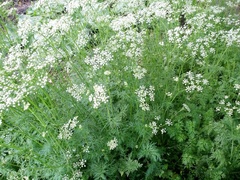 Cuminum cyminume1
- Interactor
- Fusarium oxysporum f. sp. cumini
 Fusarium oxysporum f. sp. cuminie1pathogen
- Outcome
- most aggressivee0
- Setting
- Matai Countye0
Organisms pictured · Representative pictures of the matched species, not figures from the paper.
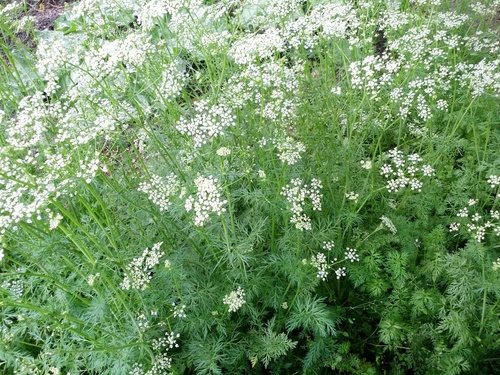

Verbatim
e0“Pathogenicity tests showed that the isolates obtained from Matai County followed by those from Beni Mazar, Minia governorate were the most aggressive and showed the highest frequencies (%) compared to other isolates”
e1“Fusarium wilt of cumin (Cuminum cyminum L.) caused by Fusarium oxysporum f. sp. cumini”
Claim · model-written summary
Combined bioagents and elicitors reduced disease incidence more effectively than either alone.
- Taxon
- cuminCuminum cyminume1
- Treatment
- Combined treatments between bioagents and the tested elicitorse0
- Interactor
- Fusarium oxysporum f. sp. cuminiFusarium oxysporum f. sp. cuminie1pathogen
- Outcome
- disease incidencee0
- Direction
- reducinge0
- Comparator
- each treatment alonee0
Organisms pictured · Representative pictures of the matched species, not figures from the paper.
Verbatim
e0“Combined treatments between bioagents and the tested elicitors were more effective in reducing the disease incidence than using each treatment alone”
e1“Fusarium wilt of cumin (Cuminum cyminum L.) caused by Fusarium oxysporum f. sp. cumini”
Claim · model-written summary
P. fluorescens with chitosan was the superior treatment for disease control.
- Taxon
- cuminCuminum cyminume2
- Treatment
- P. fluorescens combined with chitosane0
- Interactor
- Fusarium oxysporum f. sp. cuminiFusarium oxysporum f. sp. cuminie2pathogen
- Second interactor
- P. fluorescens
 Pseudomonas fluorescense0biocontrol_agent
- Outcome
- disease incidencee1
- Direction
- superiore0
Not reportedComparator
Organisms pictured · Representative pictures of the matched species, not figures from the paper.

Verbatim
e0“P. fluorescens combined with chitosan was the superior treatment in this respect”
e1“reducing the disease incidence than using each treatment alone”
e2“Fusarium wilt of cumin (Cuminum cyminum L.) caused by Fusarium oxysporum f. sp. cumini”
The same questions in other papers
Pseudomonas fluorescens · Fusarium oxysporum f. sp. cumini · Cuminum cyminum (cumin)Results agree
1 paper in the same direction as this paper
- positive
Claims are grouped by organism, treatment and what was measured or targeted. A paper counts as positive when any of its claims in the group is positive.