Abstract
Carbon sources are exuded and deposited by different soil cover plants. They promote growth, diversity and enhancement of soil microbial community functionality, due to organic matter degradation by participating in major biochemical cycles and the availability of inorganic nutrients to plants. In this way, it is necessary to evaluate the microbiological attributes of the soil after cover cropping, which allows for surveying and monitoring the soil quality, thereby enabling rapid responses in relation to managing changes in the soil. Thus, the objective of this study was to evaluate soil microbiological attributes and soybean grain yield under the influence of different cover crops. The experiment was installed in the year 2015. The treatments were constituted by the following vegetation coverages: sorghum, millet, Urochloa ruziziensis, forage turnip, Urochloa brizantha, crambe and fallow area, with cover crops sown in succession to the soybean crop for three years prior to the date of installation of the experiment .The evaluated parameters were soil microbial biomass carbon, soil basal respiration, metabolic quotient, enzymatic activity of acid phosphatase and soil β-glucosidase, plant phytomass produced by the different cover crops and soybean yield in each area. The use of cover crops promotes higher soybean yield. The microbial activity and its efficiency were modulated according to the type of cover crop used. Soil under sorghum mulch provided lower microbial efficiency. The U. ruziziensis plant residues remain for less time on the soil. The results show that U. brizantha may be the most suitable for its use as a soil cover plant, providing improvements in its attributes.
Abstract from the paper’s OpenAlex record, shown for indexing and research. Copyright remains with the authors or the publisher. Read at the source ↗
The text the model read, with the source record’s inline markup (italics, sub- and superscripts) rendered and its character entities decoded; quote offsets refer to the raw text.
Claims 5
Claim · model-written summary
Cover crops increased soybean yield.
- Taxon
- soybean
 Glycine maxe0
- Treatment
- cover cropse0
- Outcome
- soybean yielde0
- Direction
- highere0
Not reportedComparator
Organisms pictured · Representative pictures of the matched species, not figures from the paper.

Verbatim
e0“The use of cover crops promotes higher soybean yield”
Claim · model-written summary
Soil microbial activity and efficiency varied with cover crop type.
- Taxon
- soybeanGlycine maxe1
- Treatment
- type of cover crope0
- Outcome
- microbial activity and its efficiencye0
Not reportedDirection
Organisms pictured · Representative pictures of the matched species, not figures from the paper.
Verbatim
e0“The microbial activity and its efficiency were modulated according to the type of cover crop used”
t0“Cover crops”
e1“The use of cover crops promotes higher soybean yield”
Claim · model-written summary
Sorghum mulch was associated with lower soil microbial efficiency.
- Taxon
- soybeanGlycine maxe1
- Treatment
- sorghum mulche0
- Outcome
- microbial efficiencye0
- Direction
- lowere0
Not reportedComparator
Organisms pictured · Representative pictures of the matched species, not figures from the paper.
Verbatim
e0“Soil under sorghum mulch provided lower microbial efficiency”
t0“Cover crops”
e1“The use of cover crops promotes higher soybean yield”
Claim · model-written summary
U. ruziziensis residues persisted for less time on soil.
- Taxon
- U. ruziziensis
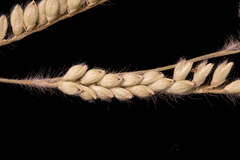 Urochloa ruziziensise0
- Outcome
- plant residues remain for less time on the soile0
- Direction
- lesse0
Organisms pictured · Representative pictures of the matched species, not figures from the paper.

Verbatim
e0“The U. ruziziensis plant residues remain for less time on the soil”
Claim · model-written summary
The authors suggest U. brizantha may be the most suitable cover plant for improving soil attributes.
- Taxon
- U. brizantha
 Urochloa brizanthae0
- Outcome
- use as a soil cover plante0
- Qualifier
- providing improvements in its attributese0
Organisms pictured · Representative pictures of the matched species, not figures from the paper.

Verbatim
e0“U. brizantha may be the most suitable for its use as a soil cover plant, providing improvements in its attributes”
The same questions in other papers
cover crop · yield · Glycine max (soybean)Positive and negative results
32 papers in the same direction as this paper · 57 in the opposite direction · 11 reporting no difference from an alternative
- no effect
- no effect
- negative
97 papers more in this group
See all 101 papers →Claims are grouped by organism, treatment and what was measured or targeted. A paper counts as positive when any of its claims in the group is positive.