Abstract
It has been found that the bacteria Bacillus subtilis Cohn. (strain 26 D) and Bacillus thuringiensis Berliner (strains V-6066 and V-5689) are able to suppress the vital activity of the greenbug aphid Schizaphis graminum Rond. The protective effects of the studied Bacillus spp. strains consisted of direct aphicidal activity, and they indirectly induce systemic resistance in wheat plants via the regulation of hydrogen peroxide generation, the activity of peroxidase and catalase, and an increased expression of defense-related genes, such us NADPH oxidases, PR-6, and PR-9. It has been shown that B. thuringiensis strains induced genes of the jasmonate-dependent signaling pathway, and B. subtilis strain induced genes of the salicylate-dependent signaling pathway. It has been found that the composition of the studied Bacillus spp. strains had an additive effect of wheat plant resistance to pests. These results support the use of these Bacillus spp. strains as a basis for the further development of a biopreparation against cereal aphids.
Abstract from the paper’s OpenAlex record, shown for indexing and research. Copyright remains with the authors or the publisher. Read at the source ↗
The text the model read, with the source record’s inline markup (italics, sub- and superscripts) rendered and its character entities decoded; quote offsets refer to the raw text.
Claims 8
Claim · model-written summary
Bacillus subtilis strain 26 D suppresses greenbug aphid activity.
- Taxon
- Wheat
 Triticum aestivumt0
- Treatment
- Bacillus subtilis Cohn. (strain 26 D)e0
- Interactor
- Schizaphis graminum Rond.
 Schizaphis graminume0pest
- Second interactor
- Bacillus subtilis Cohn.
 Bacillus subtilise0biocontrol_agent
- Outcome
- vital activity of the greenbug aphid Schizaphis graminum Rond.e0
- Direction
- suppresse0
Not reportedComparator
Organisms pictured · Representative pictures of the matched species, not figures from the paper.


Verbatim
e0“the bacteria Bacillus subtilis Cohn. (strain 26 D) and Bacillus thuringiensis Berliner (strains V-6066 and V-5689) are able to suppress the vital activity of the greenbug aphid Schizaphis graminum Rond.”
t0“Wheat”
Claim · model-written summary
Bacillus thuringiensis strains V-6066 and V-5689 suppress greenbug aphid activity.
- Taxon
- WheatTriticum aestivumt0
- Treatment
- Bacillus thuringiensis Berliner (strains V-6066 and V-5689)e0
- Interactor
- Schizaphis graminum Rond.Schizaphis graminume0pest
- Second interactor
- Bacillus thuringiensis BerlinerBacillus thuringiensis serovar berlinere0biocontrol_agent
- Outcome
- vital activity of the greenbug aphid Schizaphis graminum Rond.e0
- Direction
- suppresse0
Not reportedComparator
Organisms pictured · Representative pictures of the matched species, not figures from the paper.
Verbatim
e0“Bacillus thuringiensis Berliner (strains V-6066 and V-5689) are able to suppress the vital activity of the greenbug aphid Schizaphis graminum Rond.”
t0“Wheat”
Claim · model-written summary
Studied Bacillus strains induce systemic resistance in wheat.
- Taxon
- wheat plantsTriticum aestivume0
- Interactor
- Bacillus spp.t0biocontrol_agent
- Outcome
- systemic resistancee0
- Qualifier
- regulation of hydrogen peroxide generatione0
Organisms pictured · Representative pictures of the matched species, not figures from the paper.
Verbatim
e0“they indirectly induce systemic resistance in wheat plants via the regulation of hydrogen peroxide generation, the activity of peroxidase and catalase, and an increased expression of defense-related genes”
t0“Bacillus spp.”
Claim · model-written summary
Bacillus strains increased expression of defense-related genes.
- Taxon
- WheatTriticum aestivumt0
- Treatment
- Bacillus spp.t0
- Interactor
- Bacillus spp.t0biocontrol_agent
- Gene
- NADPH oxidases, PR-6, and PR-9e0
- Outcome
- expression of defense-related genese0
- Direction
- increasede0
Not reportedComparator
Organisms pictured · Representative pictures of the matched species, not figures from the paper.
Verbatim
e0“an increased expression of defense-related genes, such us NADPH oxidases, PR-6, and PR-9”
t0“Bacillus spp. Regulate Wheat”
Claim · model-written summary
B. thuringiensis strains induced jasmonate pathway genes.
- Taxon
- WheatTriticum aestivumt0
- Treatment
- B. thuringiensis strainse0
- Interactor
- B. thuringiensis
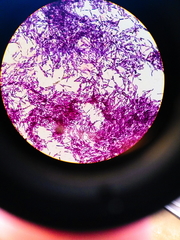 Bacillus thuringiensise0biocontrol_agent
- Outcome
- genes of the jasmonate-dependent signaling pathwaye0
- Direction
- inducede0
Not reportedComparator
Organisms pictured · Representative pictures of the matched species, not figures from the paper.
Verbatim
e0“B. thuringiensis strains induced genes of the jasmonate-dependent signaling pathway”
t0“Wheat”
Claim · model-written summary
B. subtilis strain induced salicylate pathway genes.
- Taxon
- WheatTriticum aestivumt0
- Treatment
- B. subtilis straine0
- Interactor
- B. subtilisBacillus subtilise0biocontrol_agent
- Outcome
- genes of the salicylate-dependent signaling pathwaye0
- Direction
- inducede0
Not reportedComparator
Organisms pictured · Representative pictures of the matched species, not figures from the paper.
Verbatim
e0“B. subtilis strain induced genes of the salicylate-dependent signaling pathway”
t0“Wheat”
Claim · model-written summary
The combined Bacillus strains had an additive effect on wheat resistance to pests.
- Taxon
- wheat plantTriticum aestivume0
- Treatment
- composition of the studied Bacillus spp. strainse0
- Interactor
- Bacillus spp.e0biocontrol_agent
- Outcome
- resistance to pestse0
- Direction
- additive effecte0
Not reportedComparator
Organisms pictured · Representative pictures of the matched species, not figures from the paper.
Verbatim
e0“the composition of the studied Bacillus spp. strains had an additive effect of wheat plant resistance to pests”
Claim · model-written summary
Authors support developing a biopreparation based on the Bacillus strains against cereal aphids.
- Taxon
- WheatTriticum aestivumt0
- Interactor
- cereal aphidse0pest
- Outcome
- further development of a biopreparation against cereal aphidse0
Organisms pictured · Representative pictures of the matched species, not figures from the paper.
Verbatim
e0“These results support the use of these Bacillus spp. strains as a basis for the further development of a biopreparation against cereal aphids”
t0“Wheat”
The same questions in other papers
Bacillus subtilis · Schizaphis graminum · Triticum aestivum (wheat)Positive and negative results
1 in the opposite direction
- negative
Bacillus subtilis · molecular: expression · Triticum aestivum (wheat)Results agree
4 papers in the same direction as this paper
- positive
- positive
- positive
1 paper more in this group
See all 5 papers →Claims are grouped by organism, treatment and what was measured or targeted. A paper counts as positive when any of its claims in the group is positive.