Abstract
Bemisia tabaci Gennadius (Hemiptera: Aleyrodidae) and Bactericera cockerelli Sulcer (Hemiptera: Psyllidae) are important pests in tomato, and the mirid Dicyphus hesperus Knight (Heteroptera: Miridae) has been shown as an effective predator of both pests. Although the predator was able to suppress populations of both pests, the remaining levels could still exceed tolerable levels. Thus, we here hypothesized whether the combination of D. hesperus with the specialist parasitoids Eretmocerus eremicus Rose y Zolnerowich (Hymenoptera: Aphelinidae) (whitefly) and Tamarixia triozae (Burks) (Hymenoptera: Eulophidae) (psyllid) would result in better pest control on a greenhouse scale. For that, we conducted a trial in which we compared the results against B. tabaci and B. cockerelli in greenhouses treated with D. hesperus alone or the predator in combination with the specialist parasitoids. The results showed that the predator was able to establish and suppress B. tabaci and B. cockerelli in tomato, but the addition of the specialist parasitoids resulted in better and more cost-effective pest control. Implementation of this method would therefore increase the robustness and reliability of biocontrol-based integrated pest management programmes for tomato crops, over methods based exclusively on D. hesperus release.
Abstract from the paper’s OpenAlex record, shown for indexing and research. Copyright remains with the authors or the publisher. Read at the source ↗
The text the model read, with the source record’s inline markup (italics, sub- and superscripts) rendered and its character entities decoded; quote offsets refer to the raw text.
Claims 6
Claim · model-written summary
Dicyphus hesperus established and suppressed Bemisia tabaci in tomato.
- Taxon
- tomato
 Solanum lycopersicume0
- Treatment
- predatore0
- Interactor
- B. tabaci
 Bemisia tabacie0pest
- Second interactor
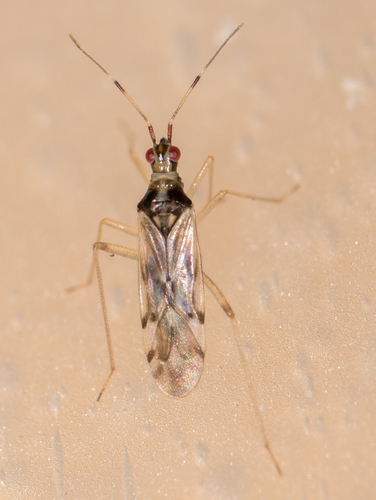
- Dicyphus hesperus
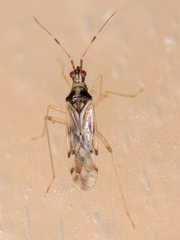 Dicyphus hesperust0biocontrol_agent
- Outcome
- B. tabacie0
- Direction
- suppresse0
Not reportedComparator
Organisms pictured · Representative pictures of the matched species, not figures from the paper.


Verbatim
e0“the predator was able to establish and suppress B. tabaci and B. cockerelli in tomato”
t0“Dicyphus hesperus”
Claim · model-written summary
Dicyphus hesperus established and suppressed Bactericera cockerelli in tomato.
- Taxon
- tomatoSolanum lycopersicume0
- Treatment
- predatore0
- Interactor
- B. cockerelli
 Bactericera cockerellie0pest
- Second interactor
- Dicyphus hesperusDicyphus hesperust0biocontrol_agent
- Outcome
- B. cockerellie0
- Direction
- suppresse0
Not reportedComparator
Organisms pictured · Representative pictures of the matched species, not figures from the paper.

Verbatim
e0“the predator was able to establish and suppress B. tabaci and B. cockerelli in tomato”
t0“Dicyphus hesperus”
Claim · model-written summary
Adding Eretmocerus eremicus to Dicyphus hesperus improved whitefly control over Dicyphus alone.
- Taxon
- tomatoSolanum lycopersicumt0
- Treatment
- addition of the specialist parasitoidse0
- Interactor
- whiteflye1pest
- Second interactor
- Eretmocerus eremicusEretmocerus eremicuse1biocontrol_agent
- Outcome
- pest controle0
- Direction
- bettere0
- Comparator
- D. hesperus alonee2
Organisms pictured · Representative pictures of the matched species, not figures from the paper.
Verbatim
e0“the addition of the specialist parasitoids resulted in better and more cost-effective pest control”
e1“Eretmocerus eremicus Rose y Zolnerowich (Hymenoptera: Aphelinidae) (whitefly)”
e2“greenhouses treated with D. hesperus alone or the predator in combination with the specialist parasitoids”
t0“tomato”
Claim · model-written summary
Adding Tamarixia triozae to Dicyphus hesperus improved psyllid control over Dicyphus alone.
- Taxon
- tomatoSolanum lycopersicumt0
- Treatment
- addition of the specialist parasitoidse0
- Interactor
- psyllide1pest
- Second interactor
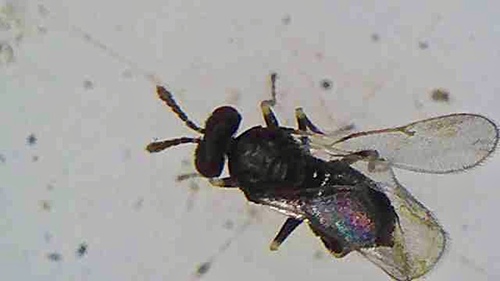
- Tamarixia triozae
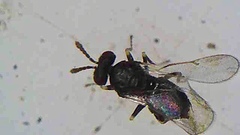 Tamarixia triozaee1biocontrol_agent
- Outcome
- pest controle0
- Direction
- bettere0
- Comparator
- D. hesperus alonee2
Organisms pictured · Representative pictures of the matched species, not figures from the paper.
Verbatim
e0“the addition of the specialist parasitoids resulted in better and more cost-effective pest control”
e1“Tamarixia triozae (Burks) (Hymenoptera: Eulophidae) (psyllid)”
e2“greenhouses treated with D. hesperus alone or the predator in combination with the specialist parasitoids”
t0“tomato”
Claim · model-written summary
Combining the predator and parasitoids was more cost-effective for tomato pest control than predator release alone.
- Taxon
- tomatoSolanum lycopersicumt0
- Treatment
- addition of the specialist parasitoidse0
- Outcome
- cost-effective pest controle0
- Direction
- more cost-effectivee0
- Comparator
- D. hesperus alonee1
Organisms pictured · Representative pictures of the matched species, not figures from the paper.
Verbatim
e0“the addition of the specialist parasitoids resulted in better and more cost-effective pest control”
e1“greenhouses treated with D. hesperus alone or the predator in combination with the specialist parasitoids”
t0“tomato”
Claim · model-written summary
The authors conclude combined predator and parasitoid releases would improve robustness and reliability of tomato biocontrol programmes.
- Taxon
- tomatoSolanum lycopersicume0
- Outcome
- robustness and reliability of biocontrol-based integrated pest management programmese0
- Comparator
- methods based exclusively on D. hesperus releasee0
Organisms pictured · Representative pictures of the matched species, not figures from the paper.
Verbatim
e0“Implementation of this method would therefore increase the robustness and reliability of biocontrol-based integrated pest management programmes for tomato crops, over methods based exclusively on D. hesperus release.”
The same questions in other papers
biocontrol · Bemisia tabaci · Solanum lycopersicum (tomato)Results agree
9 papers in the same direction as this paper
- positive
- positive
- positive
6 papers more in this group
See all 10 papers →biocontrol · control · Solanum lycopersicum (tomato)Results agree
12 papers in the same direction as this paper
- positive
- positive
- positive
9 papers more in this group
See all 13 papers →Claims are grouped by organism, treatment and what was measured or targeted. A paper counts as positive when any of its claims in the group is positive.