Abstract
River red gum (Eucalyptus camaldulensis Dehnh.), the most commonly planted eucalypt species globally, has several advantages and is widely used for many purposes, which makes the tree important. Mycorrhizal establishment in eucalyptus has been known for many years, and the benefits of this symbiosis have been commercially explored. The main goal of this research was to assess the diversity and distribution of arbuscular mycorrhizal fungi (AMF) on eucalyptus planted in agricultural fields in the rainy and dry season. Fields were chosen in ten different sites located in four provinces in the northeast of Thailand. Rhizosphere soil and root samples were collected and the number of AMF spores and AMF root colonization were assessed. The number of AMF spores was higher in the rainy season than in the dry season, while AMF root colonization was higher in the dry season than in the rainy season. On the basis of morphological identification of AMF, a total of 35 AMF fungal taxa in eight genera were identified, ten belonging to Acaulospora, one to Dentiscutata, one to Entrophospora, 16 to Glomus, three to Gigaspora, one to Racocetra, two to Scutellospora, and one to Septoglomus. Glomus was the dominant genus followed by Acaulospora. Relative abundance, and frequency of occurrence were higher in the rainy season than in the dry season. Racocetra fulgida was the most common species with a frequency of occurrence of 90% in rainy season, and 80% in dry season. Species richness, Simpson's index of dominance and Shannon-Wiener index of diversity were not significantly different between both seasons.
Abstract from the paper’s OpenAlex record; open copy licensed other-oa. Read at the source ↗
The text the model read, with the source record’s inline markup (italics, sub- and superscripts) rendered and its character entities decoded; quote offsets refer to the raw text.
Claims 16
Claim · model-written summary
AMF spore numbers were higher in the rainy season.
- Taxon
- AMFe0
- Interactor
- Eucalyptus camaldulensis Dehnh.
 Eucalyptus camaldulensist0host
- Outcome
- number of AMF sporese0
- Direction
- highere0
- Comparator
- dry seasone0
- Setting
- rainy seasone0
Organisms pictured · Representative pictures of the matched species, not figures from the paper.

Verbatim
e0“The number of AMF spores was higher in the rainy season than in the dry season”
t0“Eucalyptus camaldulensis Dehnh.”
Claim · model-written summary
AMF root colonization was higher in the dry season.
- Taxon
- Eucalyptus camaldulensis Dehnh.Eucalyptus camaldulensist0
- Interactor
- AMFe0symbiont
- Outcome
- AMF root colonizatione0
- Direction
- highere0
- Comparator
- rainy seasone0
- Setting
- dry seasone0
Organisms pictured · Representative pictures of the matched species, not figures from the paper.
Verbatim
e0“AMF root colonization was higher in the dry season than in the rainy season.”
t0“Eucalyptus camaldulensis Dehnh.”
Claim · model-written summary
Thirty-five AMF taxa in eight genera were identified.
Verbatim
e0“On the basis of morphological identification of AMF, a total of 35 AMF fungal taxa in eight genera were identified”
Claim · model-written summary
Ten identified taxa belonged to Acaulospora.
- Taxon
- AcaulosporaAcaulosporae0
- Outcome
- belonging to Acaulosporae0
- Value
- tene0
Verbatim
e0“ten belonging to Acaulospora”
Claim · model-written summary
One identified taxon belonged to Dentiscutata.
- Taxon
- DentiscutataDentiscutatae0
- Outcome
- Dentiscutatae0
- Value
- onee0
Verbatim
e0“one to Dentiscutata”
Claim · model-written summary
One identified taxon belonged to Entrophospora.
- Taxon
- EntrophosporaEntrophosporae0
- Outcome
- Entrophosporae0
- Value
- onee0
Verbatim
e0“one to Entrophospora”
Claim · model-written summary
Sixteen identified taxa belonged to Glomus.
 Glomus
Organisms pictured · Representative pictures of the matched species, not figures from the paper.

Verbatim
e0“16 to Glomus”
Claim · model-written summary
Three identified taxa belonged to Gigaspora.
 Gigaspora
Organisms pictured · Representative pictures of the matched species, not figures from the paper.

Verbatim
e0“three to Gigaspora”
Claim · model-written summary
One identified taxon belonged to Racocetra.
Verbatim
e0“one to Racocetra”
Claim · model-written summary
Two identified taxa belonged to Scutellospora.
- Taxon
- Scutellospora
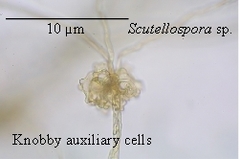 Scutellosporae0
- Outcome
- Scutellosporae0
- Value
- twoe0
Organisms pictured · Representative pictures of the matched species, not figures from the paper.
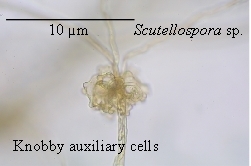
Verbatim
e0“two to Scutellospora”
Claim · model-written summary
One identified taxon belonged to Septoglomus.
- Taxon
- SeptoglomusSeptoglomuse0
- Outcome
- Septoglomuse0
- Value
- onee0
Verbatim
e0“one to Septoglomus”
Claim · model-written summary
Glomus was dominant, followed by Acaulospora.
Organisms pictured · Representative pictures of the matched species, not figures from the paper.
Verbatim
e0“Glomus was the dominant genus followed by Acaulospora.”
Claim · model-written summary
AMF relative abundance and occurrence frequency were higher in the rainy season.
Verbatim
e0“Relative abundance, and frequency of occurrence were higher in the rainy season than in the dry season.”
e1“On the basis of morphological identification of AMF”
Claim · model-written summary
Racocetra fulgida was most common, with 90% occurrence in the rainy season.
Verbatim
e0“Racocetra fulgida was the most common species with a frequency of occurrence of 90% in rainy season, and 80% in dry season.”
Claim · model-written summary
Racocetra fulgida had 80% occurrence in the dry season.
- Taxon
- Racocetra fulgidaRacocetra fulgidae0
- Outcome
- frequency of occurrencee0
- Value
- 80%e0
- Setting
- dry seasone0
Not reportedDirection
Verbatim
e0“Racocetra fulgida was the most common species with a frequency of occurrence of 90% in rainy season, and 80% in dry season.”
Claim · model-written summary
AMF richness, dominance and diversity indices did not differ significantly between seasons.
Verbatim
e0“Species richness, Simpson's index of dominance and Shannon-Wiener index of diversity were not significantly different between both seasons.”
e1“On the basis of morphological identification of AMF”