Abstract
Background and Aims: Current strategies for increased crop protection of susceptible tomato plants against pathogen infections include treatment with synthetic chemicals, application of natural pathogen-derived compounds or transfer of resistance genes from wild tomato species within breeding programmes. In this study, a series of 45 genes potentially involved in defence mechanisms was retrieved from the genome sequence of inbred reference tomato cultivar Solanum lycopersicum 'Heinz 1706'. The aim of the study was to analyse expression of these selected genes in wild and cultivated tomato plants contrasting in resistance to the biotrophic pathogen Oidium neolycopersici , the causative agent of powdery mildew. Plants were treated either solely with potential resistance inducers or by inducers together with the pathogen. Methods: The resistance against O. neolycopersici infection as well as RT-PCR-based analysis of gene expression in response to the oomycete elicitor oligandrin and chemical agent β-aminobutyric acid (BABA) were investigated in the highly susceptible domesticated inbred genotype Solanum lycopersicum 'Amateur' and resistant wild genotype Solanum habrochaites . Key Results: Differences in basal expression levels of defensins, germins, β-1,3-glucanases, heveins, chitinases, osmotins and PR1 proteins in non-infected and non-elicited plants were observed between the highly resistant and susceptible genotypes. Moreover, these defence genes showed an extensive up-regulation following O. neolycopersici infection in both genotypes. Application of BABA and elicitin induced expression of multiple defence-related transcripts and, through different mechanisms, enhanced resistance against powdery mildew in the susceptible tomato genotype. Conclusions: The results indicate that non-specific resistance in the resistant genotype S. habrochaites resulted from high basal levels of transcripts with proven roles in defence processes. In the susceptible genotype S. lycopersicum 'Amateur', oligandrin- and BABA-induced resistance involved different signalling pathways, with BABA-treated leaves displaying direct activation of the ethylene-dependent signalling pathway, in contrast to previously reported jasmonic acid-mediated signalling for elicitins.
Abstract from the paper’s OpenAlex record, shown for indexing and research. Copyright remains with the authors or the publisher. Read at the source ↗
The text the model read, with the source record’s inline markup (italics, sub- and superscripts) rendered and its character entities decoded; quote offsets refer to the raw text.
Claims 9
Claim · model-written summary
Basal expression of several defence gene families differed between resistant wild and susceptible cultivated tomato.
- Taxon
- tomato
 Solanum lycopersicumt0
- Material
- highly resistant and susceptible genotypese0
- Gene
- defensins, germins, β-1,3-glucanases, heveins, chitinases, osmotins and PR1 proteinse0
- Outcome
- basal expression levelse0
Organisms pictured · Representative pictures of the matched species, not figures from the paper.

Verbatim
e0“Differences in basal expression levels of defensins, germins, β-1,3-glucanases, heveins, chitinases, osmotins and PR1 proteins in non-infected and non-elicited plants were observed between the highly resistant and susceptible genotypes”
t0“tomato”
Claim · model-written summary
Oidium infection extensively upregulated the defence genes in both tomato genotypes.
- Taxon
- tomatoSolanum lycopersicumt0
- Treatment
- O. neolycopersici infectione0
- Interactor
- O. neolycopersiciErysiphe neolycopersicie0pathogen
- Outcome
- defence genese0
- Direction
- extensive up-regulatione0
Not reportedComparator
Organisms pictured · Representative pictures of the matched species, not figures from the paper.
Verbatim
e0“these defence genes showed an extensive up-regulation following O. neolycopersici infection in both genotypes”
t0“tomato”
Claim · model-written summary
BABA induced multiple defence-related transcripts in susceptible tomato.
- Taxon
- tomatoSolanum lycopersicume1
- Treatment
- BABAe0
- Outcome
- expression of multiple defence-related transcriptse0
- Direction
- inducede0
Not reportedComparator
Organisms pictured · Representative pictures of the matched species, not figures from the paper.
Verbatim
e0“Application of BABA and elicitin induced expression of multiple defence-related transcripts”
e1“in the susceptible tomato genotype”
Claim · model-written summary
Elicitin induced multiple defence-related transcripts in susceptible tomato.
- Taxon
- tomatoSolanum lycopersicume1
- Treatment
- elicitine0
- Outcome
- expression of multiple defence-related transcriptse0
- Direction
- inducede0
Not reportedComparator
Organisms pictured · Representative pictures of the matched species, not figures from the paper.
Verbatim
e0“Application of BABA and elicitin induced expression of multiple defence-related transcripts”
e1“in the susceptible tomato genotype”
Claim · model-written summary
BABA enhanced powdery mildew resistance in susceptible tomato.
- Taxon
- tomatoSolanum lycopersicume0
- Treatment
- BABAe0
- Interactor
- powdery mildewe0pathogen
- Outcome
- resistance against powdery mildewe0
- Direction
- enhancede0
Not reportedComparator
Organisms pictured · Representative pictures of the matched species, not figures from the paper.
Verbatim
e0“Application of BABA and elicitin induced expression of multiple defence-related transcripts and, through different mechanisms, enhanced resistance against powdery mildew in the susceptible tomato genotype”
Claim · model-written summary
Elicitin enhanced powdery mildew resistance in susceptible tomato.
- Taxon
- tomatoSolanum lycopersicume0
- Treatment
- elicitine0
- Interactor
- powdery mildewe0pathogen
- Outcome
- resistance against powdery mildewe0
- Direction
- enhancede0
Not reportedComparator
Organisms pictured · Representative pictures of the matched species, not figures from the paper.
Verbatim
e0“Application of BABA and elicitin induced expression of multiple defence-related transcripts and, through different mechanisms, enhanced resistance against powdery mildew in the susceptible tomato genotype”
Claim · model-written summary
High basal defence transcript levels were interpreted as the basis of nonspecific resistance in wild S. habrochaites.
- Taxon
- S. habrochaites
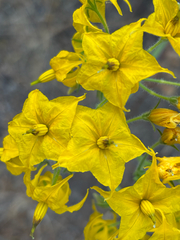 Solanum habrochaitese0
- Outcome
- non-specific resistancee0
- Qualifier
- high basal levels of transcripts with proven roles in defence processese0
Organisms pictured · Representative pictures of the matched species, not figures from the paper.
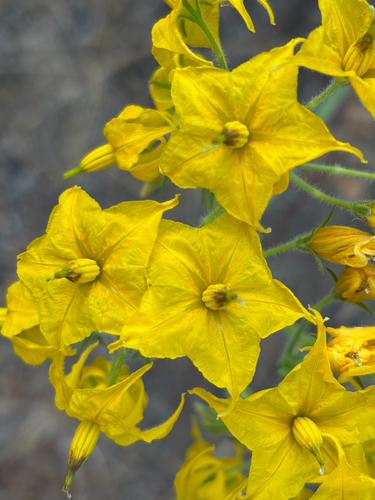
Verbatim
e0“non-specific resistance in the resistant genotype S. habrochaites resulted from high basal levels of transcripts with proven roles in defence processes”
Claim · model-written summary
BABA-induced resistance in susceptible tomato involved direct activation of ethylene-dependent signalling.
- Taxon
- S. lycopersicumSolanum lycopersicume0
- Treatment
- BABA-treatede0
- Outcome
- ethylene-dependent signalling pathwaye0
- Qualifier
- direct activatione0
Organisms pictured · Representative pictures of the matched species, not figures from the paper.
Verbatim
e0“In the susceptible genotype S. lycopersicum 'Amateur', oligandrin- and BABA-induced resistance involved different signalling pathways, with BABA-treated leaves displaying direct activation of the ethylene-dependent signalling pathway”
Claim · model-written summary
Oligandrin- and BABA-induced resistance used different signalling pathways in susceptible tomato.
- Taxon
- S. lycopersicumSolanum lycopersicume0
- Outcome
- resistancee0
- Qualifier
- different signalling pathwayse0
Organisms pictured · Representative pictures of the matched species, not figures from the paper.
Verbatim
e0“In the susceptible genotype S. lycopersicum 'Amateur', oligandrin- and BABA-induced resistance involved different signalling pathways”
The same questions in other papers
3-aminobutanoic acid · molecular: expression · Solanum lycopersicum (tomato)Positive and negative results
2 papers in the same direction as this paper · 2 in the opposite direction
- no effect
- no effect
- positive
1 paper more in this group
See all 5 papers →3-aminobutanoic acid · disease · Solanum lycopersicum (tomato)Positive and negative results
3 papers in the same direction as this paper · 2 in the opposite direction
- no effect
- negative
- positive
2 papers more in this group
See all 6 papers →infection · molecular: expression · Solanum lycopersicum (tomato)Positive and negative results
25 papers in the same direction as this paper · 12 in the opposite direction
- negative
- negative
- negative
34 papers more in this group
See all 38 papers →Claims are grouped by organism, treatment and what was measured or targeted. A paper counts as positive when any of its claims in the group is positive.