Abstract
Hydrogen sulfide (H 2 S) has been shown to be a gaseous molecule in the regulation of many processes in plants such as abiotic stress tolerance, root organogenesis, stomatal movement, and postharvest fruit senescence. We studied the role of H 2 S in the regulation of senescence and fungal decay in fresh-cut sweetpotato ( Ipomoea batatas L., cv. Xushu 18) roots. H 2 S donor sodium hydrosulfide (NaHS) alleviated senescence in fresh-cut sweetpotato root tissue in a dose-dependent manner with the optimal concentration of 2.0 mmol·L −1 NaHS solution. At the optimal concentration of 2.0 mmol·L −1 NaHS, H 2 S fumigation maintained higher levels of reducing sugar in sweetpotato fresh-cut root. H 2 S treatment also significantly increased the activities of guaiacol peroxidase (POD) and decreased those of polyphenol oxidase (PPO) in sweetpotato during storage. Further investigation showed that H 2 S treatment maintained a lower level of lipoxygenase (LOX) activity compared with water control. Consistently, the accumulation of malondialdehyde (MDA) was reduced in H 2 S-treated groups. Three fungal pathogens, Rhizopus nigricans , Mucor rouxianus, and Geotrichum candidum , were isolated from sweetpotato tissue infected with black rot or soft rot. H 2 S fumigation at 1 to 2.5 mmol·L −1 NaHS resulted in effective inhibition of the three fungi when grown on medium. When the three fungi were inoculated on the surface of sweetpotato slices, H 2 S fumigation greatly reduced the percentage of fungal infection. In conclusion, these data suggest that H 2 S effectively alleviated the senescence and decay in sweetpotato slices and might be developed into a novel fungicide for reduction of black rot or soft rot in sweetpotato.
Abstract from the paper’s OpenAlex record, shown for indexing and research. Copyright remains with the authors or the publisher. Read at the source ↗
The text the model read, with the source record’s inline markup (italics, sub- and superscripts) rendered and its character entities decoded; quote offsets refer to the raw text.
Claims 10
Claim · model-written summary
NaHS alleviated senescence in fresh-cut sweetpotato root tissue dose-dependently, optimally at 2.0 mmol·L −1.
- Taxon
- sweetpotato
 Ipomoea batatase0
- Organ / stage
- root tissuee0
- Treatment
- sodium hydrosulfide (NaHS)e0
- Outcome
- senescencee0
- Direction
- alleviatede0
- Value
- 2.0 mmol·L −1e0
Not reportedComparator
Organisms pictured · Representative pictures of the matched species, not figures from the paper.

Verbatim
e0“H 2 S donor sodium hydrosulfide (NaHS) alleviated senescence in fresh-cut sweetpotato root tissue in a dose-dependent manner with the optimal concentration of 2.0 mmol·L −1 NaHS solution”
Claim · model-written summary
H2S fumigation maintained higher reducing sugar levels in sweetpotato fresh-cut root.
- Taxon
- sweetpotatoIpomoea batatase0
- Organ / stage
- fresh-cut roote0
- Treatment
- H 2 S fumigatione0
- Outcome
- levels of reducing sugare0
- Direction
- highere0
Not reportedComparator
Organisms pictured · Representative pictures of the matched species, not figures from the paper.
Verbatim
e0“At the optimal concentration of 2.0 mmol·L −1 NaHS, H 2 S fumigation maintained higher levels of reducing sugar in sweetpotato fresh-cut root”
Claim · model-written summary
H2S increased guaiacol peroxidase activity during sweetpotato storage.
- Taxon
- sweetpotatoIpomoea batatase0
- Treatment
- H 2 S treatmente0
- Gene
- guaiacol peroxidase (POD)e0
- Outcome
- activities of guaiacol peroxidase (POD)e0
- Direction
- increasede0
Not reportedComparator
Organisms pictured · Representative pictures of the matched species, not figures from the paper.
Verbatim
e0“H 2 S treatment also significantly increased the activities of guaiacol peroxidase (POD) and decreased those of polyphenol oxidase (PPO) in sweetpotato during storage”
Claim · model-written summary
H2S decreased polyphenol oxidase activity during sweetpotato storage.
- Taxon
- sweetpotatoIpomoea batatase0
- Treatment
- H 2 S treatmente0
- Gene
- polyphenol oxidase (PPO)e0
- Outcome
- polyphenol oxidase (PPO)e0
- Direction
- decreasede0
Not reportedComparator
Organisms pictured · Representative pictures of the matched species, not figures from the paper.
Verbatim
e0“H 2 S treatment also significantly increased the activities of guaiacol peroxidase (POD) and decreased those of polyphenol oxidase (PPO) in sweetpotato during storage”
Claim · model-written summary
H2S maintained lower lipoxygenase activity than water control.
- Taxon
- sweetpotatoIpomoea batatast0
- Treatment
- H 2 S treatmente0
- Gene
- lipoxygenase (LOX)e0
- Outcome
- lipoxygenase (LOX) activitye0
- Direction
- lowere0
- Comparator
- water controle0
Organisms pictured · Representative pictures of the matched species, not figures from the paper.
Verbatim
e0“H 2 S treatment maintained a lower level of lipoxygenase (LOX) activity compared with water control”
t0“Sweetpotato”
Claim · model-written summary
H2S reduced malondialdehyde accumulation.
- Taxon
- SweetpotatoIpomoea batatast0
- Treatment
- H 2 S-treated groupse0
- Outcome
- accumulation of malondialdehyde (MDA)e0
- Direction
- reducede0
Not reportedComparator
Organisms pictured · Representative pictures of the matched species, not figures from the paper.
Verbatim
e0“the accumulation of malondialdehyde (MDA) was reduced in H 2 S-treated groups”
t0“Sweetpotato”
Claim · model-written summary
Three fungal pathogens were isolated from sweetpotato tissue with black or soft rot.
- Taxon
- sweetpotatoIpomoea batatase0
- Interactor
- Rhizopus nigricans
 Rhizopus stolonifere0pathogen
- Second interactor
- Mucor rouxianus
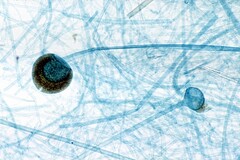 Mucor rouxianuse0pathogen
- Outcome
- were isolated from sweetpotato tissue infected with black rot or soft rote0
- Qualifier
- Geotrichum candidume0
Organisms pictured · Representative pictures of the matched species, not figures from the paper.


Verbatim
e0“Three fungal pathogens, Rhizopus nigricans , Mucor rouxianus, and Geotrichum candidum , were isolated from sweetpotato tissue infected with black rot or soft rot”
Claim · model-written summary
H2S fumigation inhibited growth of the three isolated fungi on medium.
- Taxon
- sweetpotatoIpomoea batatast0
- Treatment
- H 2 S fumigation at 1 to 2.5 mmol·L −1 NaHSe0
- Outcome
- inhibition of the three fungie0
- Direction
- inhibitione0
Not reportedComparator
Organisms pictured · Representative pictures of the matched species, not figures from the paper.
Verbatim
e0“H 2 S fumigation at 1 to 2.5 mmol·L −1 NaHS resulted in effective inhibition of the three fungi when grown on medium”
t0“Sweetpotato”
Claim · model-written summary
H2S fumigation greatly reduced fungal infection of inoculated sweetpotato slices.
- Taxon
- sweetpotatoIpomoea batatase0
- Organ / stage
- sweetpotato slicese0
- Treatment
- H 2 S fumigatione0
- Outcome
- percentage of fungal infectione0
- Direction
- reducede0
Not reportedComparator
Organisms pictured · Representative pictures of the matched species, not figures from the paper.
Verbatim
e0“When the three fungi were inoculated on the surface of sweetpotato slices, H 2 S fumigation greatly reduced the percentage of fungal infection”
Claim · model-written summary
The authors propose H2S as a fungicide for reducing sweetpotato black or soft rot.
- Taxon
- sweetpotatoIpomoea batatase0
- Outcome
- developed into a novel fungicide for reduction of black rot or soft rote0
Organisms pictured · Representative pictures of the matched species, not figures from the paper.
Verbatim
e0“might be developed into a novel fungicide for reduction of black rot or soft rot in sweetpotato”
The same questions in other papers
solarization · disease · Ipomoea batatas (sweet potato)Results agree
1 paper in the same direction as this paper
- positive
Claims are grouped by organism, treatment and what was measured or targeted. A paper counts as positive when any of its claims in the group is positive.