Abstract
Tropical peat-swamp forests are one of the largest near-surface reserves of terrestrial organic carbon, but rnany peat-swamp forest tree species decreased due over-exploitation, forest fire and conversion of natural forests into agricultural lands. Among those species are slow-growing Ca lophyllum hosei and Ploiarium alternifolium , two species are good for construction of boats, furniture, house building and considerable attention from pharmacological viewpoint for human healthly. This study was aimed at understanding the effects of arbuscular mycorrhizal (AM) fungi on early growth of C. h os e i and P . alternifolium under greenhouse condition. Seedlings of C. h osei and P . alternifolium were inoculated with AM fungi: G lomus cl a rum and Glomus aggregatum , or uninoculated under greenhouse condition during 6 months. AM colonization, plant growth, survival rate and nutrient content (P, Zn and B) were measured. The percentage of C. h o s e i and P . alternifolium ranged from 27-32% and 18-19%, respectively. Both inoculated seedling species had greater plant height, diameter, leaf number, shoot and root dry weight than control seedlings. Nutrient content of inoculated plants were increased with AM colonization- Survival rates of inoculated plants were higher (100%) than those of control plants (67%). The results suggested that inoculation of AM fungi could improve the early growth of C. h os e i and P . alternifolium grown in tropical peat-swamp forest therefore this finding has greater potential impact if this innovative technology applied in field scales which are socially acceptable, commercially profitable and environmentally friendly.
Abstract from the paper’s OpenAlex record; open copy licensed cc-by-nc-sa. Read at the source ↗
The text the model read, with the source record’s inline markup (italics, sub- and superscripts) rendered and its character entities decoded; quote offsets refer to the raw text.
Claims 8
Claim · model-written summary
AM colonization was 27-32% for C. hosei.
- Taxon
- Calophyllum hoseiCalophyllum hoseit0
- Outcome
- percentage of C. h o s e ie0
- Value
- 27-32%e0
Not reportedInteractor
Verbatim
e0“The percentage of C. h o s e i and P . alternifolium ranged from 27-32% and 18-19%, respectively”
t0“Calophyllum hosei and Ploiarium alternifolium”
Claim · model-written summary
AM colonization was 18-19% for P. alternifolium.
- Taxon
- Ploiarium alternifolium
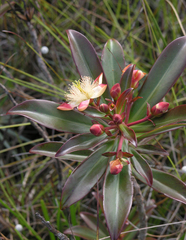 Ploiarium eleganst0
- Outcome
- percentage of C. h o s e i and P . alternifoliume0
- Value
- 18-19%e0
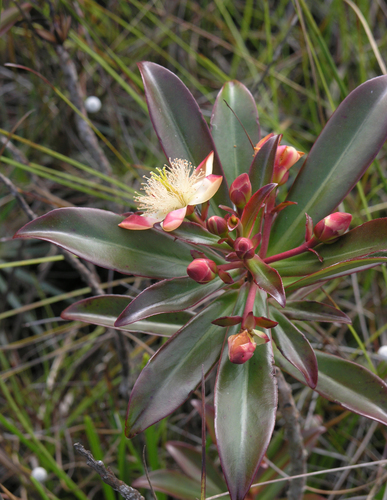
Organisms pictured · Representative pictures of the matched species, not figures from the paper.
Verbatim
e0“The percentage of C. h o s e i and P . alternifolium ranged from 27-32% and 18-19%, respectively”
t0“Ploiarium alternifolium”
Claim · model-written summary
Inoculated C. hosei seedlings had greater height, diameter and leaf number than controls.
Verbatim
e0“Both inoculated seedling species had greater plant height, diameter, leaf number, shoot and root dry weight than control seedlings”
t0“Calophyllum hosei”
Claim · model-written summary
Inoculated P. alternifolium seedlings had greater height, diameter and leaf number than controls.
- Taxon
- Ploiarium alternifoliumPloiarium eleganst0
- Treatment
- inoculatede0
- Outcome
- plant height, diameter, leaf numbere0
- Direction
- greatere0
- Comparator
- control seedlingse0
Organisms pictured · Representative pictures of the matched species, not figures from the paper.
Verbatim
e0“Both inoculated seedling species had greater plant height, diameter, leaf number, shoot and root dry weight than control seedlings”
t0“Ploiarium alternifolium”
Claim · model-written summary
Inoculated C. hosei seedlings had greater shoot and root dry weight than controls.
Verbatim
e0“Both inoculated seedling species had greater plant height, diameter, leaf number, shoot and root dry weight than control seedlings”
t0“Calophyllum hosei”
Claim · model-written summary
Inoculated P. alternifolium seedlings had greater shoot and root dry weight than controls.
- Taxon
- Ploiarium alternifoliumPloiarium eleganst0
- Treatment
- inoculatede0
- Outcome
- shoot and root dry weighte0
- Direction
- greatere0
- Comparator
- control seedlingse0
Organisms pictured · Representative pictures of the matched species, not figures from the paper.
Verbatim
e0“Both inoculated seedling species had greater plant height, diameter, leaf number, shoot and root dry weight than control seedlings”
t0“Ploiarium alternifolium”
Claim · model-written summary
Nutrient content increased with AM colonization in inoculated seedlings.
- Taxon
- plantsViridiplantaee0
- Interactor
- AMe0symbiont
- Outcome
- Nutrient contente0
- Direction
- increasede0
Verbatim
e0“Nutrient content of inoculated plants were increased with AM colonization”
Claim · model-written summary
Inoculated seedlings of both species had 100% survival versus 67% for controls.
- Taxon
- Calophyllum hosei and Ploiarium alternifoliumPloiarium elegansCalophyllum hoseit0
- Treatment
- inoculated plantse0
- Outcome
- Survival ratese0
- Direction
- highere0
- Value
- 100%e0
- Qualifier
- 67%e0
- Comparator
- control plantse0
Organisms pictured · Representative pictures of the matched species, not figures from the paper.
Verbatim
e0“Survival rates of inoculated plants were higher (100%) than those of control plants (67%)”
t0“Calophyllum hosei and Ploiarium alternifolium”