Abstract
Lygus bug, Lygus hesperus Knight, and beneficial insect populations ( Orius sp., Geocoris spp., and Nabis spp.) were quantified in alfalfa strips, which were interplanted within cotton fields. The propensity of alfalfa strips to retain lygus bugs, thereby keeping them out of cotton, and the utility of alfalfa strips as a reservoir for beneficial insects were evaluated from May to August in 1990 and 1991. The following three alfalfa cutting strategies were examined: (1) uncut alfalfa, (2) a 28-d strip-cut treatment, and (3) a 35-d strip-cut treatment. Insect populations were quantified in both the newer alfalfa growth and the older alfalfa growth of the strip-cut treatments. Lygus bug densities were significantly higher in the uncut treatment than in the other treatments, peaking at 520 per 1.9 m 2 in 1990 and 350 per 1.9 m 2 in 1991. Lygus bug levels in the strip-cut treatments were low in the newer alfalfa growth (averaging 41.8 per 1.9 m 2 ) and only slightly higher in the older alfalfa growth of the 28-d strip-cut treatment (averaging 65.3 per 1.9 m 2 ). Populations were relatively constant within these three treatments throughout the season. However, in the older growth of the 35-d cutting regime, Lygus bug populations averaged 103 per 1.9 m 2 . Densities of beneficial insects were also higher in the uncut than the strip-cut treatments, but the higher predator densities apparently did not offset the high Lygus bug population increase. The uncut treatment also lacked Lygus bug egg and nymphal mortality from the alfalfa cutting as compared with the strip-cut treatments. The less frequent cutting, in the 35-d compared with the 28-d treatment, probably also allowed for a buildup of the Lygus bug population. Lygus bug instar distribution, sex, and predator species were also examined in these treatments. It appears that to optimize Lygus bug management, while still producing high densities of predacious insects, strip-cut alfalfa should be used and cut on a 28-d schedule.
Abstract from the paper’s OpenAlex record, shown for indexing and research. Copyright remains with the authors or the publisher. Read at the source ↗
The text the model read, with the source record’s inline markup (italics, sub- and superscripts) rendered and its character entities decoded; quote offsets refer to the raw text.
Claims 10
Claim · model-written summary
Lygus bug densities in alfalfa strips were significantly higher in the uncut treatment than in the other treatments, peaking at 520 per 1.9 m2 in 1990.
- Taxon
- alfalfa
 Medicago sativae0
- Treatment
- uncut treatmente1
- Interactor
- Lygus hesperus
 Lygus hesperuse0pest
- Outcome
- Lygus bug densitiese1
- Direction
- highere1
- Value
- 520 per 1.9 m 2e1
- Qualifier
- in 1990e1
- Comparator
- the other treatmentse1
Organisms pictured · Representative pictures of the matched species, not figures from the paper.


Verbatim
e0“Lygus bug, Lygus hesperus Knight, and beneficial insect populations ( Orius sp., Geocoris spp., and Nabis spp.) were quantified in alfalfa strips, which were interplanted within cotton fields”
e1“Lygus bug densities were significantly higher in the uncut treatment than in the other treatments, peaking at 520 per 1.9 m 2 in 1990 and 350 per 1.9 m 2 in 1991”
Claim · model-written summary
Lygus bug densities in alfalfa strips were significantly higher in the uncut treatment than in the other treatments, peaking at 350 per 1.9 m2 in 1991.
- Taxon
- alfalfaMedicago sativae0
- Treatment
- uncut treatmente1
- Interactor
- Lygus hesperusLygus hesperuse0pest
- Outcome
- Lygus bug densitiese1
- Direction
- highere1
- Value
- 350 per 1.9 m 2e1
- Qualifier
- in 1991e1
- Comparator
- the other treatmentse1
Organisms pictured · Representative pictures of the matched species, not figures from the paper.
Verbatim
e0“Lygus bug, Lygus hesperus Knight, and beneficial insect populations ( Orius sp., Geocoris spp., and Nabis spp.) were quantified in alfalfa strips, which were interplanted within cotton fields”
e1“Lygus bug densities were significantly higher in the uncut treatment than in the other treatments, peaking at 520 per 1.9 m 2 in 1990 and 350 per 1.9 m 2 in 1991”
Claim · model-written summary
Beneficial insect densities were higher in the uncut alfalfa than in the strip-cut treatments, but this did not offset the Lygus bug increase.
- Taxon
- alfalfaMedicago sativae0
- Treatment
- uncute2
- Outcome
- Densities of beneficial insectse2
- Direction
- highere2
- Comparator
- strip-cut treatmentse2
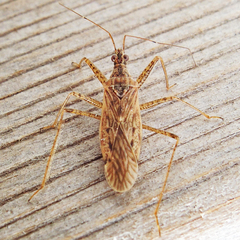 Nabis
 Geocoris
 Orius sp.
Organisms pictured · Representative pictures of the matched species, not figures from the paper.
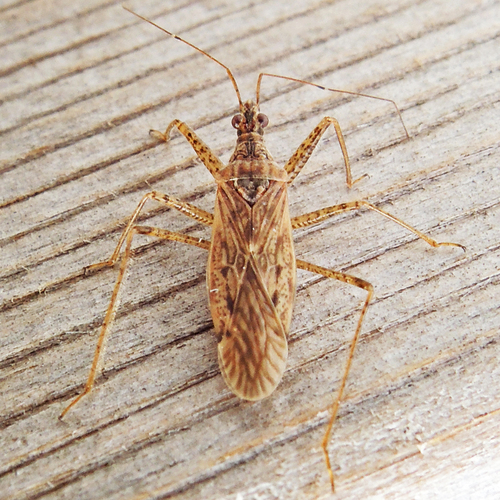


Verbatim
e0“Lygus bug, Lygus hesperus Knight, and beneficial insect populations ( Orius sp., Geocoris spp., and Nabis spp.) were quantified in alfalfa strips, which were interplanted within cotton fields”
e2“Densities of beneficial insects were also higher in the uncut than the strip-cut treatments, but the higher predator densities apparently did not offset the high Lygus bug population increase”
Claim · model-written summary
In the newer growth of strip-cut alfalfa, Lygus bug levels were low, averaging 41.8 per 1.9 m2.
- Taxon
- alfalfaMedicago sativae0
- Organ / stage
- newer alfalfa growthe3
- Treatment
- strip-cut treatmentse3
- Outcome
- Lygus bug levelse3
- Value
- 41.8 per 1.9 m 2e3
- Qualifier
- lowe3
Organisms pictured · Representative pictures of the matched species, not figures from the paper.
Verbatim
e0“Lygus bug, Lygus hesperus Knight, and beneficial insect populations ( Orius sp., Geocoris spp., and Nabis spp.) were quantified in alfalfa strips, which were interplanted within cotton fields”
e3“Lygus bug levels in the strip-cut treatments were low in the newer alfalfa growth (averaging 41.8 per 1.9 m 2 ) and only slightly higher in the older alfalfa growth of the 28-d strip-cut treatment (averaging 65.3 per 1.9 m 2 )”
Claim · model-written summary
In the older growth of the 28-d strip-cut treatment, Lygus bug levels were only slightly higher, averaging 65.3 per 1.9 m2.
- Taxon
- alfalfaMedicago sativae0
- Organ / stage
- older alfalfa growthe3
- Treatment
- 28-d strip-cut treatmente3
- Outcome
- Lygus bug levelse3
- Direction
- slightly highere3
- Value
- 65.3 per 1.9 m 2e3
Organisms pictured · Representative pictures of the matched species, not figures from the paper.
Verbatim
e0“Lygus bug, Lygus hesperus Knight, and beneficial insect populations ( Orius sp., Geocoris spp., and Nabis spp.) were quantified in alfalfa strips, which were interplanted within cotton fields”
e3“Lygus bug levels in the strip-cut treatments were low in the newer alfalfa growth (averaging 41.8 per 1.9 m 2 ) and only slightly higher in the older alfalfa growth of the 28-d strip-cut treatment (averaging 65.3 per 1.9 m 2 )”
Claim · model-written summary
Populations in the three alfalfa treatments were relatively constant throughout the season.
- Taxon
- alfalfaMedicago sativae0
- Outcome
- Populationse4
- Qualifier
- relatively constant within these three treatments throughout the seasone4
Organisms pictured · Representative pictures of the matched species, not figures from the paper.
Verbatim
e0“Lygus bug, Lygus hesperus Knight, and beneficial insect populations ( Orius sp., Geocoris spp., and Nabis spp.) were quantified in alfalfa strips, which were interplanted within cotton fields”
e4“Populations were relatively constant within these three treatments throughout the season”
Claim · model-written summary
In the older growth of the 35-d cutting regime, Lygus bug populations averaged 103 per 1.9 m2.
- Taxon
- alfalfaMedicago sativae0
- Organ / stage
- older growthe5
- Treatment
- 35-d cutting regimee5
- Outcome
- Lygus bug populationse5
- Value
- 103 per 1.9 m 2e5
Organisms pictured · Representative pictures of the matched species, not figures from the paper.
Verbatim
e0“Lygus bug, Lygus hesperus Knight, and beneficial insect populations ( Orius sp., Geocoris spp., and Nabis spp.) were quantified in alfalfa strips, which were interplanted within cotton fields”
e5“However, in the older growth of the 35-d cutting regime, Lygus bug populations averaged 103 per 1.9 m 2”
Claim · model-written summary
Less frequent cutting (35-d rather than 28-d) probably allowed a buildup of the Lygus bug population in alfalfa strips.
- Taxon
- alfalfaMedicago sativae0
- Treatment
- less frequent cuttinge6
- Outcome
- buildup of the Lygus bug populatione6
- Direction
- increaseinferrede6
- Comparator
- 28-d treatmente6
Organisms pictured · Representative pictures of the matched species, not figures from the paper.
Verbatim
e0“Lygus bug, Lygus hesperus Knight, and beneficial insect populations ( Orius sp., Geocoris spp., and Nabis spp.) were quantified in alfalfa strips, which were interplanted within cotton fields”
e6“The less frequent cutting, in the 35-d compared with the 28-d treatment, probably also allowed for a buildup of the Lygus bug population”
Claim · model-written summary
The uncut alfalfa treatment lacked Lygus bug egg and nymphal mortality from cutting, compared with strip-cut treatments.
- Taxon
- alfalfaMedicago sativae0
- Treatment
- uncut treatmente7
- Outcome
- Lygus bug egg and nymphal mortalitye7
- Direction
- lackede7
- Comparator
- strip-cut treatmentse7
Organisms pictured · Representative pictures of the matched species, not figures from the paper.
Verbatim
e0“Lygus bug, Lygus hesperus Knight, and beneficial insect populations ( Orius sp., Geocoris spp., and Nabis spp.) were quantified in alfalfa strips, which were interplanted within cotton fields”
e7“The uncut treatment also lacked Lygus bug egg and nymphal mortality from the alfalfa cutting as compared with the strip-cut treatments”
Claim · model-written summary
To optimize Lygus bug management while still producing high predator densities, strip-cut alfalfa should be cut on a 28-d schedule.
- Taxon
- alfalfaMedicago sativae1
- Treatment
- cut on a 28-d schedulee1
- Outcome
- optimize Lygus bug managemente1
Organisms pictured · Representative pictures of the matched species, not figures from the paper.
Verbatim
e1“It appears that to optimize Lygus bug management, while still producing high densities of predacious insects, strip-cut alfalfa should be used and cut on a 28-d schedule”