Abstract
The objective of the study was to examine the effectiveness of different seed sorting techniques for improving seed health of cowpea and rice seed. Two separate trials were conducted. In each trial, a sample of 1,400 seeds was drawn from which sets of 200 seeds were each sorted by hand, floated in water (as a standard), floated in 10% and 15% salt solutions (to separate floated and sunken seeds), dressed with Benlate (1g ai/kg), Mancozeb (2g ai/kg) (positive control) and the last set was an unsoned control. In comparison to the unsorted seeds (control), all the cowpea treatments significantly reduced the incidence of Fusarium moniliforme, Cladosporium sp., Fusarium poae, Nigrospora sp., Phoma sp., and Phomopsis vexans. Seeds floated in 15% salt solutions had significantly less fungal incidence than hand sorted seed and did not differ from the seed dressed treatments. Seeds skimmed off the three salt solutions as floated seed were all infected with F. moniliforme and F. semitectum and majority got rotten upon blotting. For rice, Bipolaris oryzae, Phyrularia were the predominant seed-borne pathogens. The lowest incidence of the seed-borne fungal pathogens was recorded in fungicide seed dressed samples followed by 15% and 10% salt floated samples. Hand sorted samples had similar incidence of fungal flora as the unsorted samples.
Abstract from the paper’s OpenAlex record; open copy licensed cc-by-nc-nd. Read at the source ↗
The text the model read, with the source record’s inline markup (italics, sub- and superscripts) rendered and its character entities decoded; quote offsets refer to the raw text.
Claims 6
Claim · model-written summary
All cowpea treatments reduced incidence of six seed fungi versus unsorted seed.
- Taxon
- cowpea
 Vigna unguiculatae0
- Treatment
- all the cowpea treatmentse0
- Interactor
- Fusarium moniliforme
 Fusarium verticillioidese0pathogen
- Outcome
- incidence of Fusarium moniliforme, Cladosporium sp., Fusarium poae, Nigrospora sp., Phoma sp., and Phomopsis vexanse0
- Direction
- reducede0
- Comparator
- unsorted seedst0
Organisms pictured · Representative pictures of the matched species, not figures from the paper.


Verbatim
e0“all the cowpea treatments significantly reduced the incidence of Fusarium moniliforme, Cladosporium sp., Fusarium poae, Nigrospora sp., Phoma sp., and Phomopsis vexans”
t0“unsorted seeds”
Claim · model-written summary
Cowpea seed in 15% salt had less fungal incidence than hand sorted seed and matched dressed seed.
- Taxon
- cowpeaVigna unguiculatat0
- Treatment
- 15% salt solutionse0
- Outcome
- fungal incidencee0
- Direction
- lesse0
- Qualifier
- did not differ from the seed dressed treatmentse0
- Comparator
- hand sorted seede0
Organisms pictured · Representative pictures of the matched species, not figures from the paper.
Verbatim
e0“Seeds floated in 15% salt solutions had significantly less fungal incidence than hand sorted seed and did not differ from the seed dressed treatments”
t0“cowpea”
Claim · model-written summary
Floated cowpea seed from salt solutions was infected with two Fusarium species and mostly rotted.
- Taxon
- cowpeaVigna unguiculatat0
- Treatment
- three salt solutionse0
- Interactor
- F. moniliformeFusarium verticillioidese0pathogen
- Outcome
- infected with F. moniliforme and F. semitectum and majority got rottene0
Organisms pictured · Representative pictures of the matched species, not figures from the paper.
Verbatim
e0“Seeds skimmed off the three salt solutions as floated seed were all infected with F. moniliforme and F. semitectum and majority got rotten upon blotting”
t0“cowpea”
Claim · model-written summary
Bipolaris oryzae and Phyrularia predominated among rice seed pathogens.
- Taxon
- rice
 Oryza sativae0
- Interactor
- Bipolaris oryzae
 Bipolaris oryzaee0pathogen
- Outcome
- predominant seed-borne pathogense0
Organisms pictured · Representative pictures of the matched species, not figures from the paper.

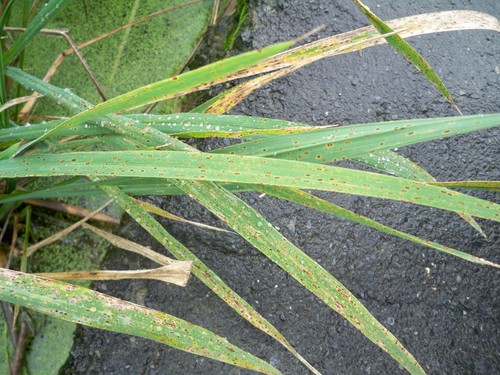
Verbatim
e0“For rice, Bipolaris oryzae, Phyrularia were the predominant seed-borne pathogens”
Claim · model-written summary
Fungicide dressing produced the lowest rice seed fungal incidence.
- Taxon
- riceOryza sativat0
- Treatment
- fungicide seed dressed samplese0
- Outcome
- incidence of the seed-borne fungal pathogense0
- Direction
- loweste0
- Comparator
- 15% and 10% salt floated samplese0
Organisms pictured · Representative pictures of the matched species, not figures from the paper.
Verbatim
e0“The lowest incidence of the seed-borne fungal pathogens was recorded in fungicide seed dressed samples followed by 15% and 10% salt floated samples”
t0“rice”
Claim · model-written summary
Hand sorted rice seed had fungal incidence similar to unsorted seed.
- Taxon
- riceOryza sativat0
- Treatment
- Hand sorted samplese0
- Outcome
- incidence of fungal florae0
- Direction
- similare0
- Comparator
- unsorted samplese0
Organisms pictured · Representative pictures of the matched species, not figures from the paper.
Verbatim
e0“Hand sorted samples had similar incidence of fungal flora as the unsorted samples”
t0“rice”
The same questions in other papers
salinity · disease · Vigna unguiculata (cowpea)Positive and negative results
1 in the opposite direction
- negative
fungicide · disease · Oryza sativa (rice)Positive and negative results
50 papers in the same direction as this paper · 2 in the opposite direction
- negative
- no effect
- positive
49 papers more in this group
See all 53 papers →Claims are grouped by organism, treatment and what was measured or targeted. A paper counts as positive when any of its claims in the group is positive.