Abstract
We studied the influence of internal ammonium and nitrate content on the temperature response of ammonium and nitrate uptake in both chilling sensitive and chilling resistant tomatoes. Three taxa were examined: Lycopersicon esculentum Mill. cv. T-5, a chilling sensitive cultivar, Lycopersicon hirsutum Humb. and Bompl. LA 1264, a wild, chilling sensitive accession from the lowlands of Ecuador, and Lycopersicon hirsutum LA1778, a chilling resistant accession from the highlands of Peru. Short exposures (4 h) of L. esculentum cv. T-5 to chilling temperatures irreversibly inhibited ammonium absorption for at least 6 h. Nitrate absorption in this taxon and ammonium and nitrate absorption in the L. hirsutum accessions recovered fully and immediately from such exposures. The chilling resistant accession, L. hirsutum LA1778, showed a lower Q10 for ammonium absorption (1·54±0·10, mean±s.e.) than its chilling sensitive relatives, L. hirsutum LA1264 (2·37±0·35) and L. esculentum cv. T-5 (1·92±0·11). The temperature response of nitrate absorption depended on internal nitrate status; plants grown at high levels of ammonium and nitrate (200 mmol m−3) showed higher Q10's for nitrate uptake (2·29±0·10) than those depleted of internal NO3- (1·86±0·12).
Abstract from the paper’s OpenAlex record, shown for indexing and research. Copyright remains with the authors or the publisher. Read at the source ↗
The text the model read, with the source record’s inline markup (italics, sub- and superscripts) rendered and its character entities decoded; quote offsets refer to the raw text.
Claims 5
Claim · model-written summary
A four-hour chilling exposure irreversibly inhibited ammonium absorption in L. esculentum T-5 for at least six hours.
- Taxon
- L. esculentum
 Solanum lycopersicume0
- Material
- T-5e0
- Treatment
- chilling temperaturese0
- Outcome
- ammonium absorptione0
- Direction
- inhibitede0
- Qualifier
- for at least 6 he0
Not reportedComparator
Organisms pictured · Representative pictures of the matched species, not figures from the paper.

Verbatim
e0“Short exposures (4 h) of L. esculentum cv. T-5 to chilling temperatures irreversibly inhibited ammonium absorption for at least 6 h.”
Claim · model-written summary
Nitrate absorption in L. esculentum T-5 recovered fully and immediately after chilling.
Verbatim
e0“Nitrate absorption in this taxon and ammonium and nitrate absorption in the L. hirsutum accessions recovered fully and immediately from such exposures.”
t0“LycopersiconTaxa”
Claim · model-written summary
Ammonium and nitrate absorption in the L. hirsutum accessions recovered fully and immediately after chilling.
- Taxon
- L. hirsutum
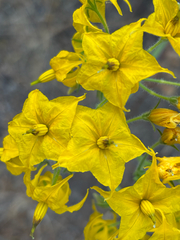 Solanum habrochaitese0
- Material
- accessionse0
- Treatment
- such exposurese0
- Outcome
- ammonium and nitrate absorptione0
- Direction
- recovered fully and immediatelye0
Organisms pictured · Representative pictures of the matched species, not figures from the paper.
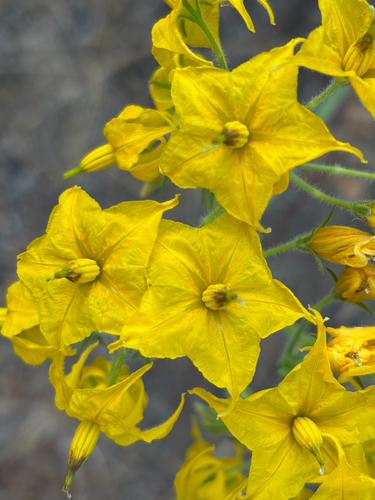
Verbatim
e0“ammonium and nitrate absorption in the L. hirsutum accessions recovered fully and immediately from such exposures”
Claim · model-written summary
Chilling-resistant L. hirsutum LA1778 had a lower ammonium-absorption Q10 than LA1264 and L. esculentum T-5.
- Taxon
- L. hirsutumSolanum habrochaitese0
- Material
- LA1778e0
- Outcome
- Q10 for ammonium absorptione0
- Direction
- lowere0
- Value
- 1·54±0·10e0
- Qualifier
- L. esculentum cv. T-5 (1·92±0·11)e0
- Comparator
- L. hirsutum LA1264e0
Organisms pictured · Representative pictures of the matched species, not figures from the paper.
Verbatim
e0“The chilling resistant accession, L. hirsutum LA1778, showed a lower Q10 for ammonium absorption (1·54±0·10, mean±s.e.) than its chilling sensitive relatives, L. hirsutum LA1264 (2·37±0·35) and L. esculentum cv. T-5 (1·92±0·11).”
Claim · model-written summary
High-ammonium and nitrate-grown plants had higher nitrate-uptake Q10 than nitrate-depleted plants.
Verbatim
e0“plants grown at high levels of ammonium and nitrate (200 mmol m−3) showed higher Q10's for nitrate uptake (2·29±0·10) than those depleted of internal NO3- (1·86±0·12)”
The same questions in other papers
cold · nutrient: content · Solanum lycopersicum (tomato)Positive and negative results
5 papers in the same direction as this paper · 4 in the opposite direction
- negative
- positive
- positive
6 papers more in this group
See all 10 papers →Claims are grouped by organism, treatment and what was measured or targeted. A paper counts as positive when any of its claims in the group is positive.